


In mid-August, the Christian David Moravian Primary School was gifted a new library that will cater to 411 pupils at the school.
Steenberg, South Africa (31 August 2022) – Christian David Moravian Primary School in Steenberg, Western Cape, opened its doors to a brand new 36m² prefabricated library, with shelving to display an assortment of language and age-appropriate books for the 411 learners enrolled at the school. The library, provided by Breadline Africa, was officially handed over on 16 August.
“The children displayed an eagerness to read, however did not have access to a functional library with local languages and age-appropriate books,” says Marion Wagner, Breadline Africa Director.
“When a child has access to books and a library, it facilitates their learning and development, broadening their imagination and creativity, and builds their capacity to communicate effectively. It is important that schools are equipped with the right resources to help children reach their literacy milestones.”
Christian David Moravian Primary School was established in 1937 and serves the wider Steenberg community.
“To foster a love for reading, an initiative that we introduced in the new term is a daily “stop and read” activity. This involves everyone on the school grounds, who at a set time, will down tools and read at the same time, for 30 minutes,” says Bernita Cornelius, Principal at the school. “Improving the literacy level at our school has always been a priority for us, and the new library that Breadline Africa has provided will help us with our literacy development.”

According to current statistics, 4.7 million South Africans are illiterate, with only 35% of children able to read by the age of 12. A child that is behind on their literacy will struggle with the standard education programmes and, therefore, with overall progress throughout school. According to The Progress in International Reading Literacy Study (PIRLS), eight out of every ten children in South Africa can’t read properly in their home language. The study highlighted that 78% of Grade 4 learners in South Africa cannot read for meaning in English, and this is significantly worse for children tested in other African languages; 93% of Grade 4 students tested in Sepedi could not read for meaning with equally large percentages among Setswana (90%), Tshivenda (89%), isiXhosa (88%), Xitsonga (88%), isiZulu (87%) and isiNdebele (87%).
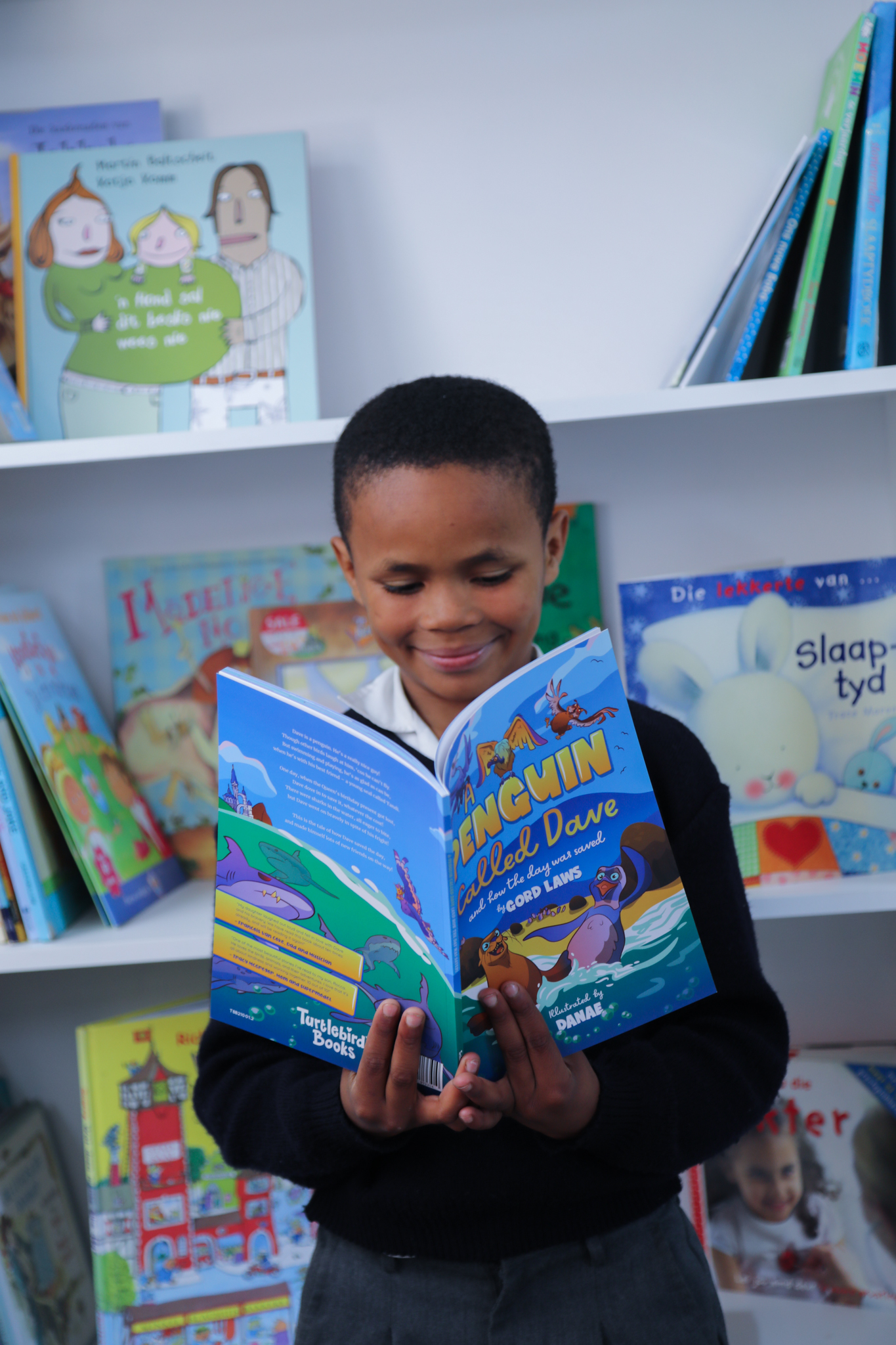
“If a child remains functionally illiterate at age nine, there is a strong correlation to them remaining so, which in turn leads to an inevitably steep school drop-out rate,” says Wagner. “We can break this cycle through access to more books, reading material, dedicated teachers, and well-equipped libraries. Ultimately, our objective is for children to develop a love for reading.”
Breadline Africa is working with many under-resourced communities across South Africa, providing critical infrastructure like classrooms, toilets, kitchens and libraries in schools. To date, they have provided nearly 900 educational infrastructure units, with the objective of reaching 1,000 units by 2023.
To find out more about Breadline Africa and the work they do, visit https://breadlineafrica.org/ or follow them on Facebook at @BreadlineAfrica
 by
by 