The Moon may soon become home to one of Africa’s most ambitious scientific projects yet… and it all starts with three rather clever little spheres.
South Africa (17 August 2026) – Africa has spent years building some of the world’s most exciting radio astronomy technology right here on our continent. Now, the expertise developed through projects like MeerKAT and the SKA is heading somewhere completely new. In 2029, African scientists and engineers are planning to put a working radio telescope on the Moon.
It is called Africa2Moon, the continent’s first space exploration mission and Rhodes University is part of the team helping to make it happen. Selected in 2025 to fly aboard China’s Chang’e-8 mission to the lunar south pole, Africa2Moon aims to become the first radio interferometer to operate on the lunar surface, with the mission overview now published in Nature Astronomy.
Rhodes University’s Distinguished Professor Oleg Smirnov is the principal investigator for radio astronomy, while Dr Adriana Marais, Director of the Foundation for Space Development Africa and Head of Science for Africa2Moon, is the lead author of the newly published paper.
“Africa2Moon has always been about more than a single instrument on the Moon. It is proof that African scientists and engineers can imagine something audacious and then build it, together. We are opening a window on the Universe that few have been able to look through before, and we are doing it from Africa, for the world,” says Marais.
For more than a century, radio astronomy has helped scientists understand parts of the Universe that ordinary telescopes cannot see but there is still a section of the cosmic radio spectrum that remains largely unexplored. Radio waves at frequencies below 20 MHz are blocked by Earth’s atmosphere, meaning astronomers on the ground simply cannot access them. The Moon offers a way around that problem. With almost no atmosphere and, on its far side at night, near-total shielding from human-made radio interference and the Sun, it provides an extraordinary location for radio astronomy.
“The lowest-frequency radio sky is one of the last unexplored frontiers in astronomy, and you cannot see it from the ground. To reach it, you can go to space, and what better place than the Moon. What excites me is that the very expertise South Africa has built through MeerKAT and the SKA is what this mission needs. This is Rhodes University, and African radio astronomy, stepping off the planet,” explains Professor Smirnov.
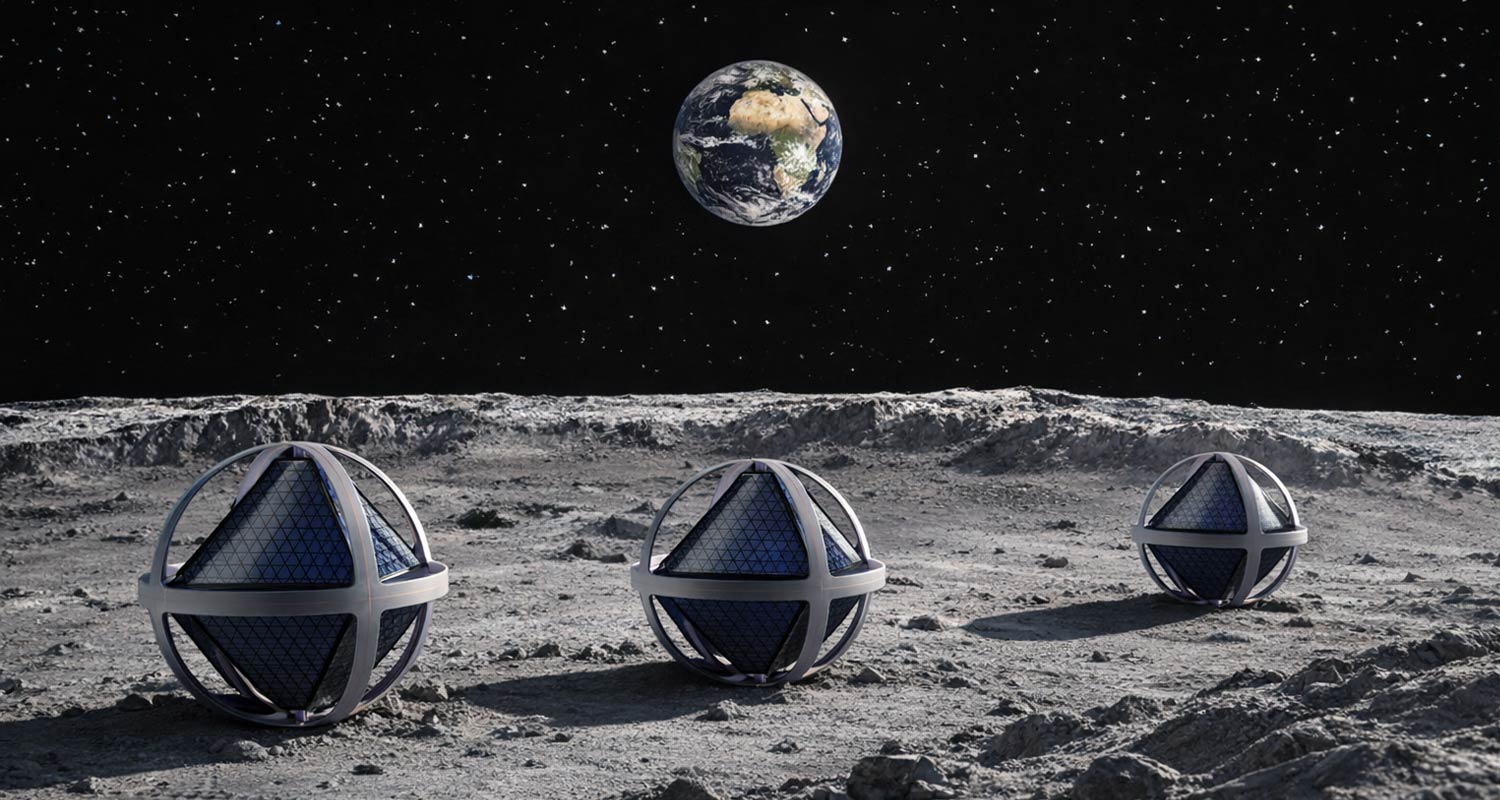
The technology itself is just as fascinating. Africa2Moon will use spheres known as BALLS, short for Bounced African Low Lunar Spheres, which are designed to roll across the lunar surface before spreading out and working together as a single telescope. The technology demonstrator heading to the Moon will consist of three spheres, each approximately 30 centimetres across and weighing less than four kilograms. Each carries its own antennas, electronics and solar power and will operate as an independent radio receiver.
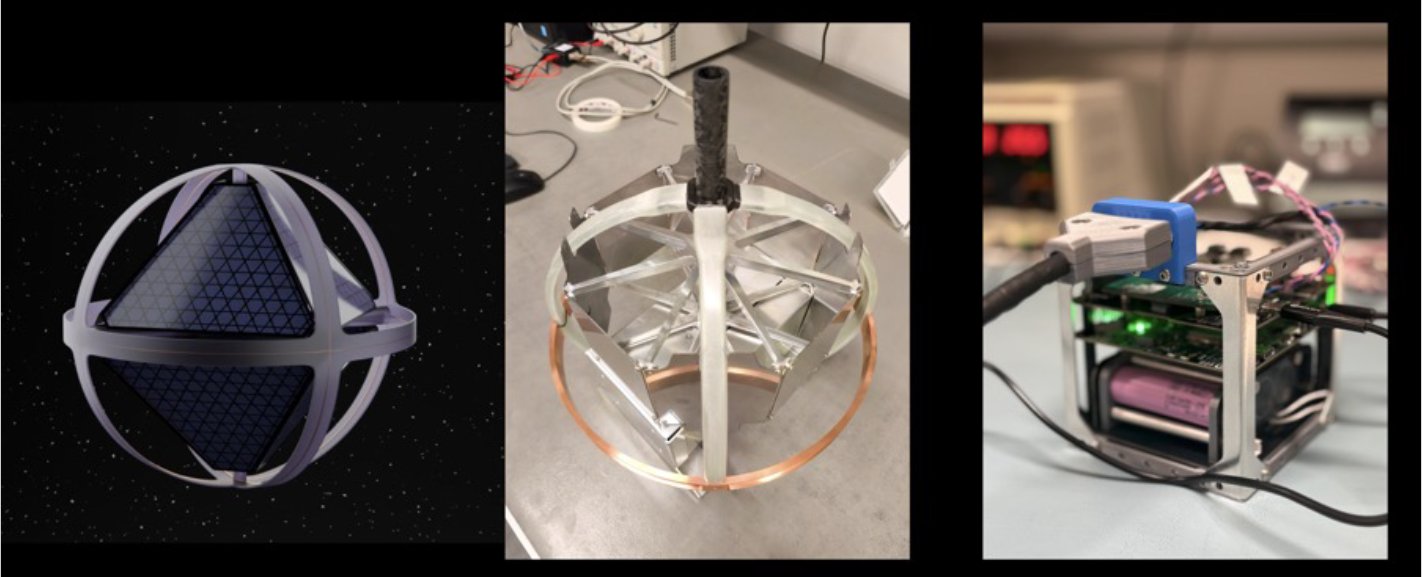
Left: a computer-generated simplified representation of one of the BALLS, including three concentric orthogonal loop antennas, eight solar panels and a contained electronics box. Centre and right: the structural and electrical functional test models | Photo Credit: Supplied
For at least six Earth days, the array will listen to signals from Earth, the Sun, our Galaxy and the lunar surface itself. It will also search for technosignatures, possible indications of technology beyond Earth.
Related Stories
 Turning Pee into a Possibility! South African Engineer Up for R1 Million Prize!
 A Global First for South Africa and Better Kidney Care
Much of the expertise needed to make this possible has been developed here in South Africa. Professor Smirnov’s Centre for Radio Astronomy Techniques and Technologies at Rhodes University has spent more than a decade working on complex radio astronomy challenges, including through MeerKAT and the SKA. Africa2Moon is taking those skills beyond our planet.
The three-sphere demonstrator is only the first step. The bigger Africa2Moon vision is to eventually place 55 antennas on the far side of the Moon, one representing each African nation. The project is also creating opportunities for students, universities, research institutions and engineering companies across the continent, building expertise in radio engineering, systems integration and space mission design.
Dr Carla Sharpe Mitchell, founding director of the Foundation for Space Development Africa and mission director of Africa2Moon, says the project demonstrates what can happen when African expertise comes together around a shared goal.
“Africa2Moon shows what becomes possible through collaboration, which is not only taking African technology to the Moon, but empowering Africa’s youth to see that they too can shape a collaborative and resilient future for our continent,” she says.
There is still plenty of work to be done before Chang’e-8 heads towards the lunar south pole in 2029 but Africa2Moon is already showing just how far African science has come. And we absolutely think this whole story is a good thing!
 by
by