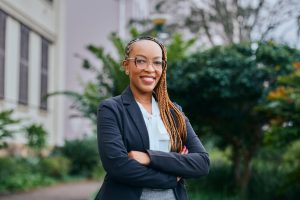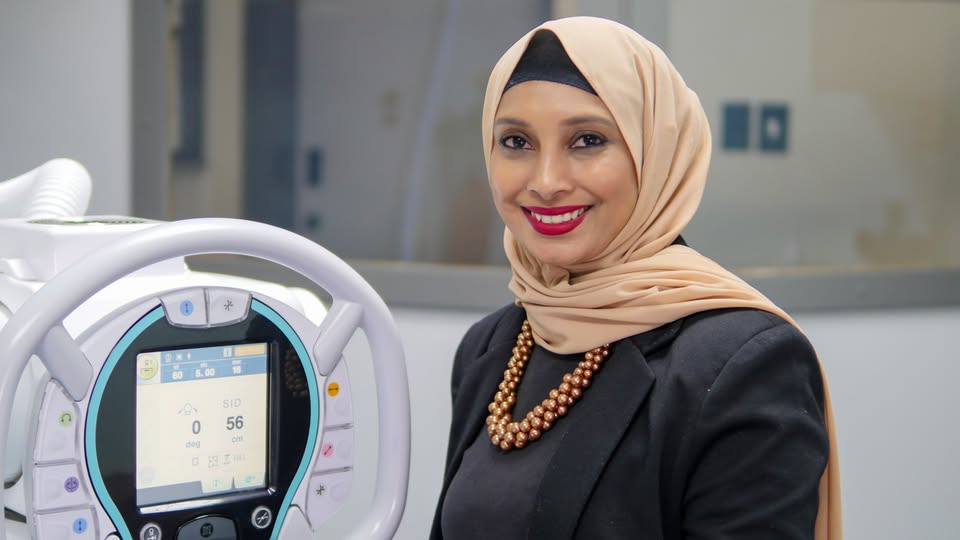
University of Pretoria’s Dr Hafsa Essop has been honoured for transforming complex radiation research into real-world policies that protect pregnant workers and ensure it does not remain confined to academic publications.
Pretoria, South Africa (26 August 2026) – Too often, scientific research and studies meant to improve everyday lives stay trapped inside academic journals instead of reaching the communities they were built to serve.
Dr Hafsa Essop is working to change that, making science accessible to wider audiences and advancing conversations around radiation protection, particularly the protection of pregnant radiation workers.
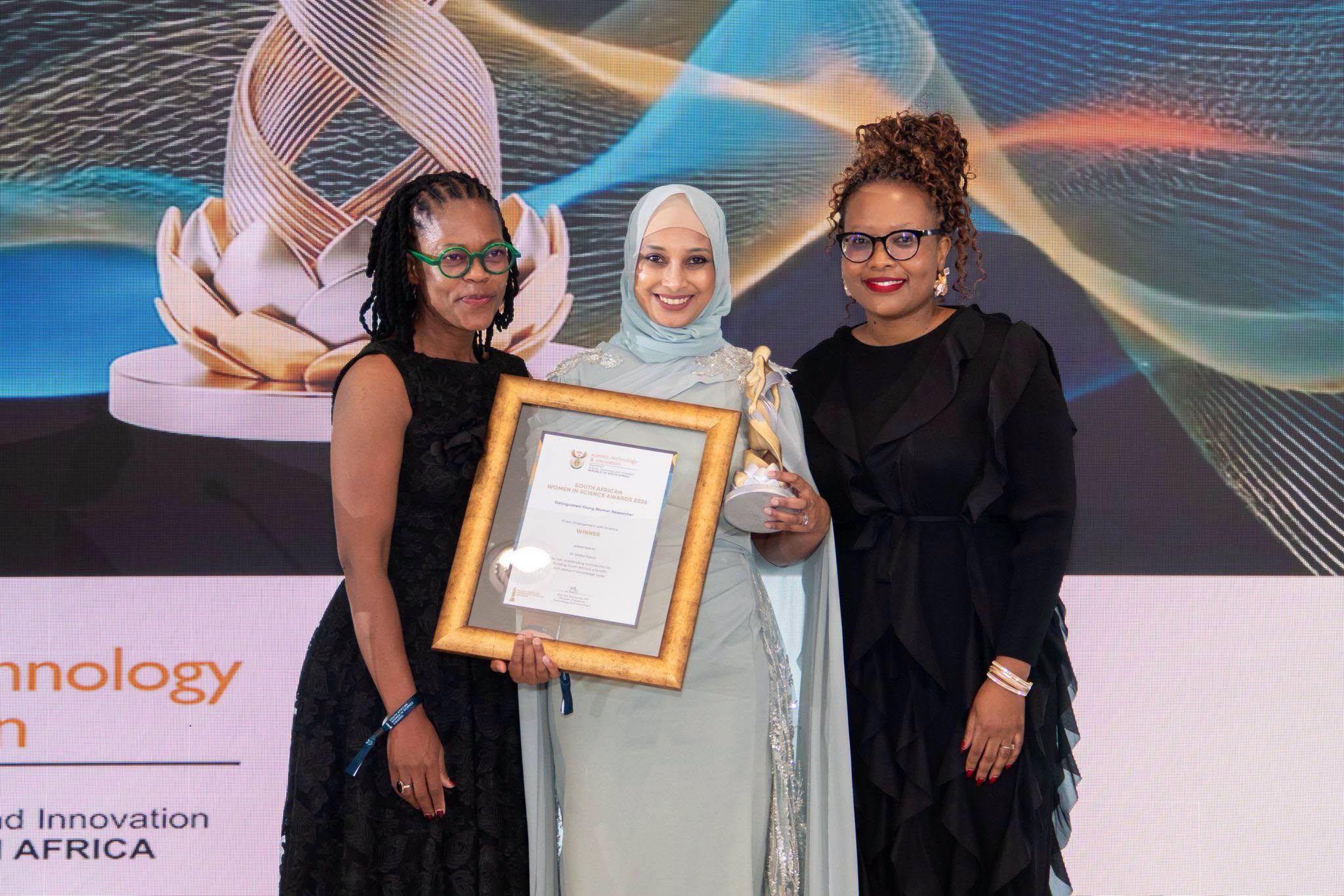
In recognition of her dedicated advocacy and research in radiation protection, Dr Essop has been honoured in the 2026 South African Women in Science Awards (SAWiSA) as the Distinguished Young Woman Researcher in the Public Engagement with Science category.
Her journey began with the development of PregiDose and has since grown into a passionate effort to improve fetal dose monitoring, occupational safety, and international policy. Currently a Senior Lecturer in Radiography at the University of Pretoria, her postdoctoral research centres on fetal dose record-keeping regulations with the aim of generating evidence-based recommendations that can contribute to international policy discussions on radiation protection.
For Dr Essop public engagement is an important part of ensuring that research does not remain confined to academic publications.
“Research visibility is incredibly important. I enjoy sharing my research and engaging with different audiences because I believe research should extend beyond publications and be understandable to everyone,” Dr Essop said.
Her commitment to public engagement is complemented by an expanding portfolio of national and international research and professional activities.
Nationally, Dr Essop shapes safety and clinical standards through the Society of South African Radiographers’ Pregnancy and Paediatrics Task Team and will serve as Scientific Chair for the SORSA 2027 Congress.
Globally, she brings a vital South African perspective to the International Commission on Radiological Protection (ICRP), collaborating on a task group to refine how harmful radiation effects are classified, and advocates for women in STEM through the Organisation for Women in Science for the Developing World (OWSD).
Related Stories
 Graham Howes’ Legacy Lives On Through New NSRI Rescue Vessel
 A Community’s Mission to Restore Dignity and Keep Hope Alive for Bhekani
These platforms have provided opportunities for her to contribute to conversations that extend beyond South Africa and to engage with international experts in radiation protection.
“Being part of international scientific platforms has challenged me to grow, to become more confident in contributing to scientific discussions and to recognise the value of the perspective I bring as a South African researcher,” she said.
Her research and professional journey has also been recognised internationally. In 2023, she received the ICRP Claire Cousins Award in Tokyo, Japan, an achievement she has described as one of the defining moments of her career.
Her latest recognition through the SAWiSA awards adds another dimension to this inspiring journey by acknowledging the importance of communicating research beyond specialist academic audiences.
Dr Essop’s research interest in radiation protection is rooted in her experience as a radiographer and researcher and has developed into a wider commitment to improving the protection of healthcare workers and patients exposed to ionising radiation.
Her current work will take another step onto the international stage in October, when she is scheduled to present her postdoctoral research findings at the International Atomic Energy Agency (IAEA) headquarters in Vienna. The presentation will provide an opportunity to share her research with international policymakers and experts in radiation protection.
“Presenting my postdoctoral research at the IAEA is an important milestone for me. It creates an opportunity to share findings from South Africa and to engage with policymakers and experts from around the world on issues that affect radiation protection practice,” Dr Essop said.
For the Faculty of Health Sciences, Dr Essop’s recognition reflects the value of research that connects academic enquiry with professional practice, policy and public understanding.
“We congratulate Dr Essop on this important recognition. Her work demonstrates how research can move across disciplines and audiences, from the academic environment into professional practice, public engagement and international policy discussions,” said Prof Mable Kekana, Head of the Department of Radiography and Chairperson of the School of Healthcare Sciences at the University of Pretoria.
As her research portfolio continues to develop, Dr Essop remains focused on ensuring that scientific evidence can contribute to meaningful improvements in radiation protection.
Her journey illustrates the evolving role of the academic researcher: not only generating new knowledge, but also communicating it, collaborating across disciplines, engaging with policymakers and working towards solutions that can ultimately benefit communities and healthcare professionals.
Sources: University of Pretoria
Don’t ever miss the Good Things. Download the Good Things Guy App now on Apple or Google.
Do you have something to add to this story? Please share it in the comments or follow GoodThingsGuy on Facebook and Twitter to keep up to date with good news as it happens, or share your good news with us by clicking here or click the link below to listen to the Good Things Guy Podcast with Brent Lindeque – South Africa’s very own Good Things Guy. He’s on a mission to change what the world pays attention to, and he truly believes there’s good news around us. In the Good Things Guy podcast, you’ll meet these everyday heroes and hear their incredible stories:
Or catch an episode of Good Things with Brent Lindeque or our Weekly Top 5 below. The videos here are always changing, updated with the latest episodes from these two shows. Both are part of Good Things TV, created to bring South Africans balance at a time when the news can feel overwhelmingly negative. Our goal is simple: to remind you that there are still so many good things happening in our country – and to leave you feeling a little more proudly South African.
 by
by