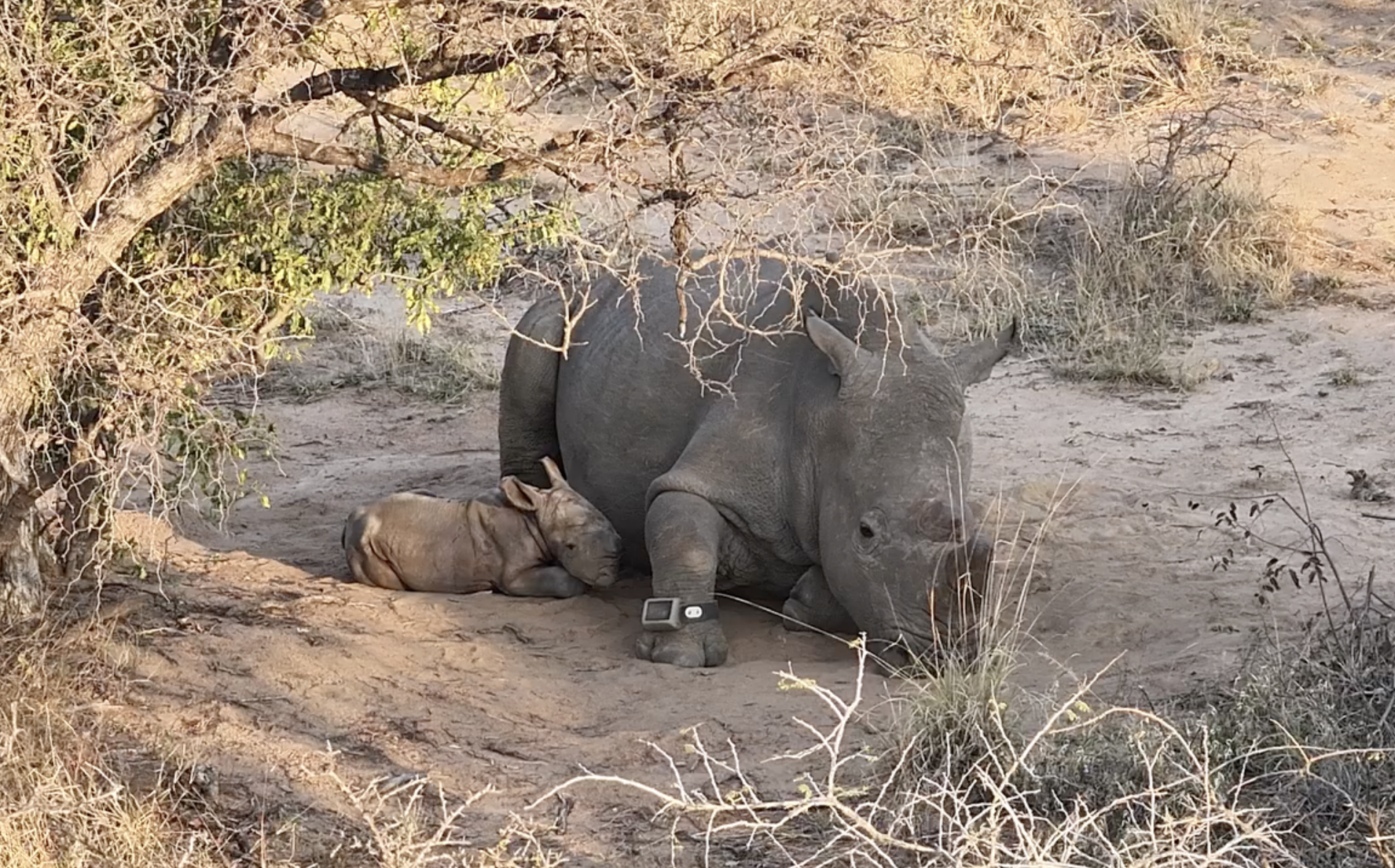
Lula lost her mom to poachers when she was just four months old. Almost two years after being released back into the wild as an adult, the once-orphaned rhino has become a mom herself!
Hoedspruit, South Africa (23 September 2026) – World Rhino Day brought with it some very special news this week. Lula, a rhino rescued and raised by the Hoedspruit Endangered Species Centre (HESC), has welcomed her very first calf. And it’s a little boy!
Lula arrived at HESC when she was only four months old after her mother was killed by poachers. The young rhino went into HESC’s care and found friends there. She formed a particularly close bond with a fellow orphan.
“Lula arrived at HESC as a terrified four-month-old, having witnessed her mother killed by poachers. Khulula arrived not long after, found smeared in blood beside her own slain mother, aggressive and skittish for a long time. The two orphans bonded at the boma fence and grew up side by side, with the endless patience of HESC’s curators helping them heal.” HESC shares on Facebook.
The pair grew up together before reaching a huge milestone in October 2024, when they were both released back into the wild. Now, Lula has reached another very special one.
She gave birth to her healthy calf on 7 September and, according to an update shared for World Rhino Day, mom and baby are doing well. After spending his first few cautious days close to cover, the curious little calf has already started venturing out and exploring the reserve.
Lula has been seen with fellow rescued and released rhino Ubuntu, which means there is a good chance that he could be the father.
“Two rhinos, each given a second chance by a different organisation after unimaginable starts in life, found each other in the wild and have now bred successfully. This calf isn’t just a new life — it’s living proof of what these rehabilitation programmes are for.”
HESC has rescued 19 rhinos to date, with 12 successfully released.
Related Stories
 They Made It! Young Animal Welfare Volunteers Off to Cape Town
 This Dog Saw Humanity at Its Cruellest – Then Came a Little Girl With R15
The organisation is currently working on its Reviving For Rewilding project, which will prepare a larger stretch of land for the rhinos currently in its care to take the next step in their rehabilitation. The area needs to be cleared, roads and fences repaired, and security upgraded before the rhinos can move there, where they will have more space and far less human contact as they continue adapting towards life in the wild.
If you’d like to support the Reviving For Rewilding project, click here. If you’d like to ‘foster’ a rhino in rehabilitation and contribute toward their care, follow this link!
 by
by