When two learners noticed that their deaf peers faced challenges studying Life Orientation at home, with no one around to sign explanations, they took matters into their own hands, turning a daily challenge into an opportunity to innovate!
Johannesburg, South Africa (25 September 2026) – It’s pretty incredible what happens when young people are given the space and tools to solve their own challenges. At St Vincent School for the Deaf, two bright sparks have noticed a real problem among their peers and are working to fix it.
Having recognised that some of their peers experience challenges when it comes to understanding unfamiliar terms in Life Orientation when no one is available to explain them at home, they decided to put their heads together to develop a South African Sign Language dictionary!
While the dictionary is still a work in progress, it already shows how much creativity and drive Deaf students have when designing solutions based on their own lived experiences.
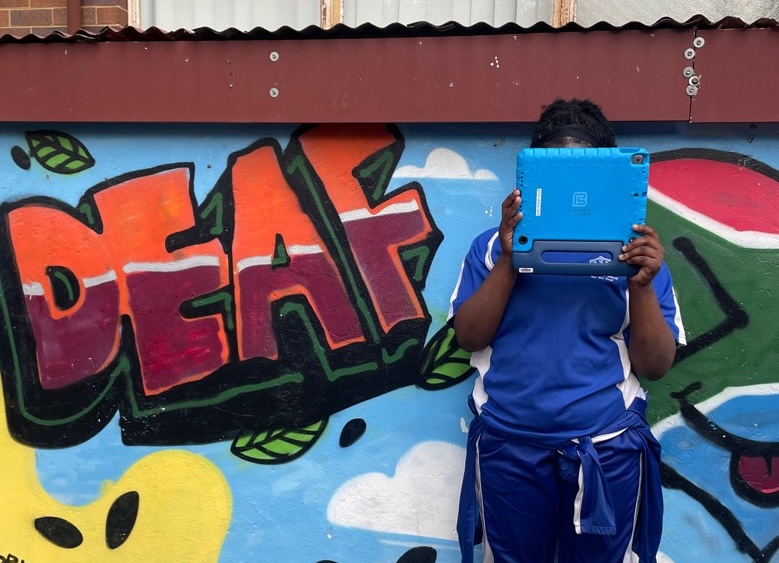
Their work has grown out of the school’s Coding for Inclusion club, established in 2024 through a partnership with iSchoolAfrica Education Trust. The club now brings together about 60 learners between the ages of seven and 20, who use iPads, coding applications and robotics kits to solve mazes, respond to app challenges, troubleshoot problems and create their own games.
“For learners with disabilities, the biggest barrier is often communication. Coding reaches beyond those barriers as it is its own language. Once learners grasp code, the possibilities are endless,” says Michelle Lissoos, Director of iSchoolAfrica Education Trust.
“What makes the Sign Language dictionary so special is that it was inspired by a challenge the learners experience themselves. Seeing learners use the skills they have gained through iSchoolAfrica Coding for Inclusion Programme to support one another and make learning more accessible is incredibly meaningful.”
Making inclusion practical
Because coding is highly visual, learners can see the relationship between the instructions they write and what happens on screen. This makes abstract logic more tangible while allowing learners to test an idea, identify what is not working and try again.
The programme combines access to technology with teacher training and ongoing coaching, helping the school build the capacity to sustain learning beyond individual sessions.
Learners have so far created games and coded mazes, while the club’s older participants are exploring possible futures in app development, game design, engineering and other technology-related fields. The intention is not to prescribe a career path, but to widen the range of futures learners can imagine and equip them with transferable skills such as teamwork, critical thinking, persistence and problem-solving.
Related Stories
 SA's Incredible Volunteer Therapy Dogs Are the Gentlest Heroes!
 The Cape Town Campaign Reframing Homelessness as Stories of Hope
“My world of possibilities has opened up through this club. I can aspire towards more than just what my academics can provide. I can use my passion to support my academics and, through that, I can be everything I wanted to be, all this because of an app that taught me to code,” says Leonardo Jordaan, a Coding for Inclusion club learner.
That shift is visible in the club’s growth, and in the way learners approach unfamiliar challenges. The programme begins with their ideas, capabilities and understanding of the barriers their community encounters.
Aquila Cassim, iSchoolAfrica programme champion at St Vincent School for the Deaf, explains:
“Learners are persistent and resilient and are eager to come in every week to learn new things and develop themselves. They are constantly inspiring us and showing us just how capable they are
Building from curiosity to opportunity
The next goal is to support learners as they develop more apps, games and animations, enter coding competitions and attend workshops where they can learn from what other young people are creating. Over time, their ideas could become entrepreneurial ventures or enable participants to lead coding clubs in their families and communities.
The St Vincent programme is sponsored by software development company Glucode, connecting school-based learning with industry expertise. For iSchoolAfrica, this combination of committed educators, relevant technology, practical support and long-term partnership is central to creating learning environments that respond to learners’ needs.
Deaf Awareness Month provides a timely platform for this story, but the work itself continues throughout the year. Its value lies in what learners are already doing: persisting through problems, building ideas and beginning to shape a more accessible digital world for themselves and others.
“The impact of iSchoolAfrica goes beyond giving learners access to technology. We are helping schools build sustainable digital learning environments where learners can develop confidence, solve problems and create solutions for their own communities. At St Vincent, we are seeing Deaf learners shaping technology around their needs, opening new possibilities for their education and future,” concludes Lissoos.
Sources: Supplied
Don’t ever miss the Good Things. Download the Good Things Guy App now on Apple or Google.
Do you have something to add to this story? Please share it in the comments or follow GoodThingsGuy on Facebook and Twitter to keep up to date with good news as it happens, or share your good news with us by clicking here or click the link below to listen to the Good Things Guy Podcast with Brent Lindeque – South Africa’s very own Good Things Guy. He’s on a mission to change what the world pays attention to, and he truly believes there’s good news around us. In the Good Things Guy podcast, you’ll meet these everyday heroes and hear their incredible stories:
Or catch an episode of Good Things with Brent Lindeque or our Weekly Top 5 below. The videos here are always changing, updated with the latest episodes from these two shows. Both are part of Good Things TV, created to bring South Africans balance at a time when the news can feel overwhelmingly negative. Our goal is simple: to remind you that there are still so many good things happening in our country – and to leave you feeling a little more proudly South African.
 by
by