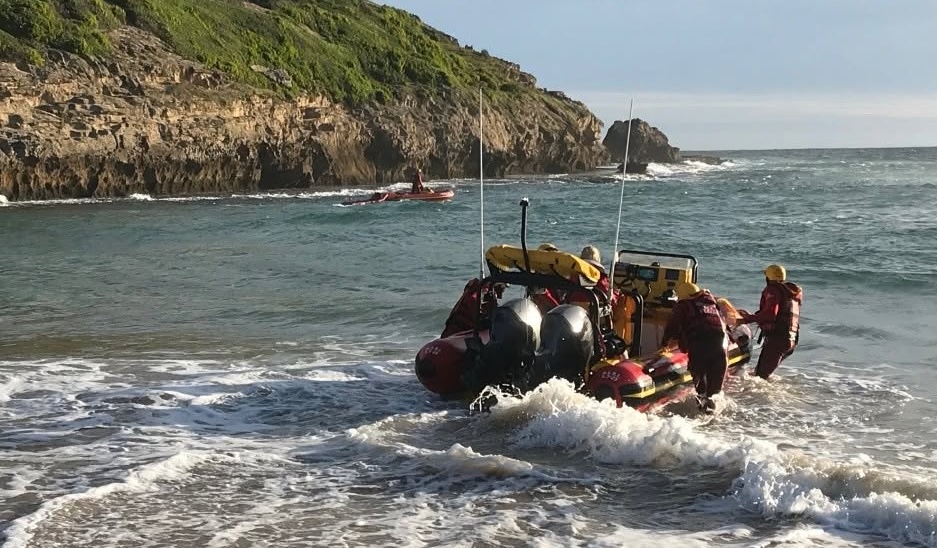
Planning a coastal getaway? The NSRI is urging extra caution as spring tides coincide with the school holidays and Heritage Day weekend.
South Africa (25 September 2026) – If you’re heading to the coast this weekend for the school holidays or Heritage Day long weekend, the National Sea Rescue Institute (NSRI) has a timely reminder: check the tides before you head out.
A full moon spring tide is expected to peak over the weekend, coinciding with the start of the school holidays and Heritage Day celebrations. The full moon takes place on Saturday, 26 September at 18h48, with the strongest spring tides expected from around Saturday through Tuesday, 29 September.
This particular spring tide also follows closely behind the September equinox on 23 September. Spring tides that occur around the equinox can be among the strongest of the year, meaning coastal conditions could be noticeably different from what visitors are used to seeing.
For anyone unfamiliar with the term, a spring tide isn’t anything to do with the season. It happens when the sun, moon and Earth align, strengthening the gravitational pull on the ocean and creating a greater difference between high and low tide. The effects can last for several days, bringing higher-than-usual high tides, lower low tides and stronger tidal currents.
With thousands of families expected to spend time at the coast, the NSRI is encouraging everyone to factor those conditions into their plans.
“With families heading to the coast for the holidays, we are asking everyone to plan around the tides this week,” says Andrew Ingram, NSRI Communications Manager. “Check the tide times where you are, swim at lifeguard-protected beaches, and if you are fishing from rocks, wear a life jacket and be sure to have flotation with you. If you see someone in trouble, call for help immediately.”
What does a strong spring tide mean for beachgoers?
One of the biggest things to remember is that the coastline can look very different depending on where the tide is in its cycle. Higher high tides mean water can reach further up the shore than usual, while lower low tides expose more rocks and seabed. The greater difference between the two also means tidal currents can be stronger.
That can have a knock-on effect for swimmers, hikers, anglers and anyone exploring the shoreline.
Rip currents can become stronger, creating additional risks for swimmers, while tidal flows through estuary mouths, harbour entrances and narrow inlets can be particularly powerful. Places such as the Knysna Heads can experience much stronger currents than usual during these conditions.
Related Stories
 SA's Incredible Volunteer Therapy Dogs Are the Gentlest Heroes!
 The Pink Society Blends Fashion and Philanthropy for Cancer Support
Coastal hiking routes can also be affected. A path that is perfectly accessible at low tide may become cut off as the water comes in, so anyone planning a coastal walk should check the local high tide times before setting off and avoid routes that could become dangerous or inaccessible.
For rock and shoreline anglers, the incoming tide deserves particular attention. Waves can reach areas that may usually appear safely above the waterline, making it important to keep a safe distance from the edge.
A few simple things can make a big difference
For swimmers, the NSRI’s advice is straightforward: stick to lifeguard-protected beaches and swim between the lifeguards’ flags. Take particular care on the outgoing tide, when rip currents can often be at their strongest, and check the South African Weather Service forecast and local tide tables before heading out.
If you’re planning a coastal hike, build the tide into your route planning rather than treating it as an afterthought.
Anglers should keep well back from the water’s edge and, if fishing from rocks, wear a life jacket and carry something that floats and can be thrown to someone in the water. The NSRI suggests something as simple as an empty five-litre plastic bottle.
Anyone heading out on a boat or paddle craft should wear a life jacket, carry the necessary safety equipment and keep a fully charged cellphone in a waterproof pouch. The free NSRI SafeTrx app can also be used to log a trip and make it easier to call for help if something goes wrong.
And while the focus this weekend is on the coast, the same basic water-safety principles apply at rivers, dams and lakes. Recent rain can cause water levels and currents to change quickly, while strong winds and changing weather can create additional hazards.
Perhaps most importantly, children should always have a responsible adult actively watching them when they are in or near water. Alcohol and swimming, boating or fishing also don’t mix.
Know the number before you need it
Most beach days will be exactly what families hope for: sunshine, fresh air, time together and a chance to enjoy South Africa’s beautiful coastline. A little preparation can help keep it that way.
Check the tides, pay attention to changing conditions and don’t take unnecessary chances around the water. If you see someone in trouble, get help immediately rather than putting yourself at risk by attempting a rescue.
The NSRI Emergency Operations Centre can be reached on 087 094 9774, or you can call 112 from a cellphone in an emergency.
A long weekend at the coast should be about making memories, not emergencies. Taking a few minutes to check the conditions before you head out could make all the difference.
 by
by