A giant dry ice experiment marks a milestone for Science2Go, a South African programme bringing practical science to thousands of learners.
South Africa (12 November 2026) – For some children, science lives between the pages of a textbook. For others, it comes to life in a classroom filled with curiosity, a little dry ice and a giant bubble of fog.
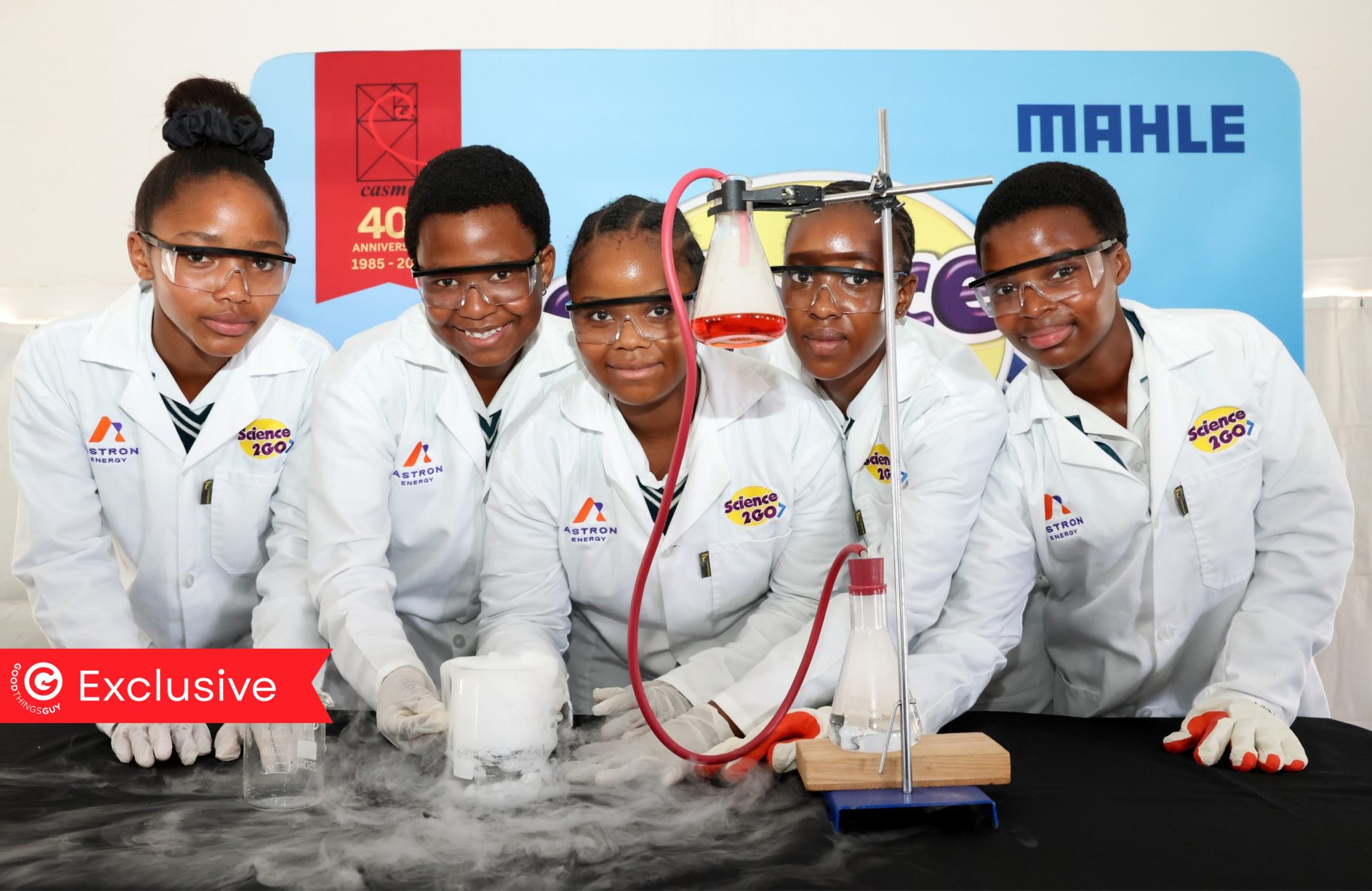
At KwaSanti Secondary School in KwaZulu-Natal, Grade 9 and 10 learners recently got to experience exactly that, celebrating a rather extraordinary milestone: the 1,000th practical experiment delivered through the Science2Go programme.
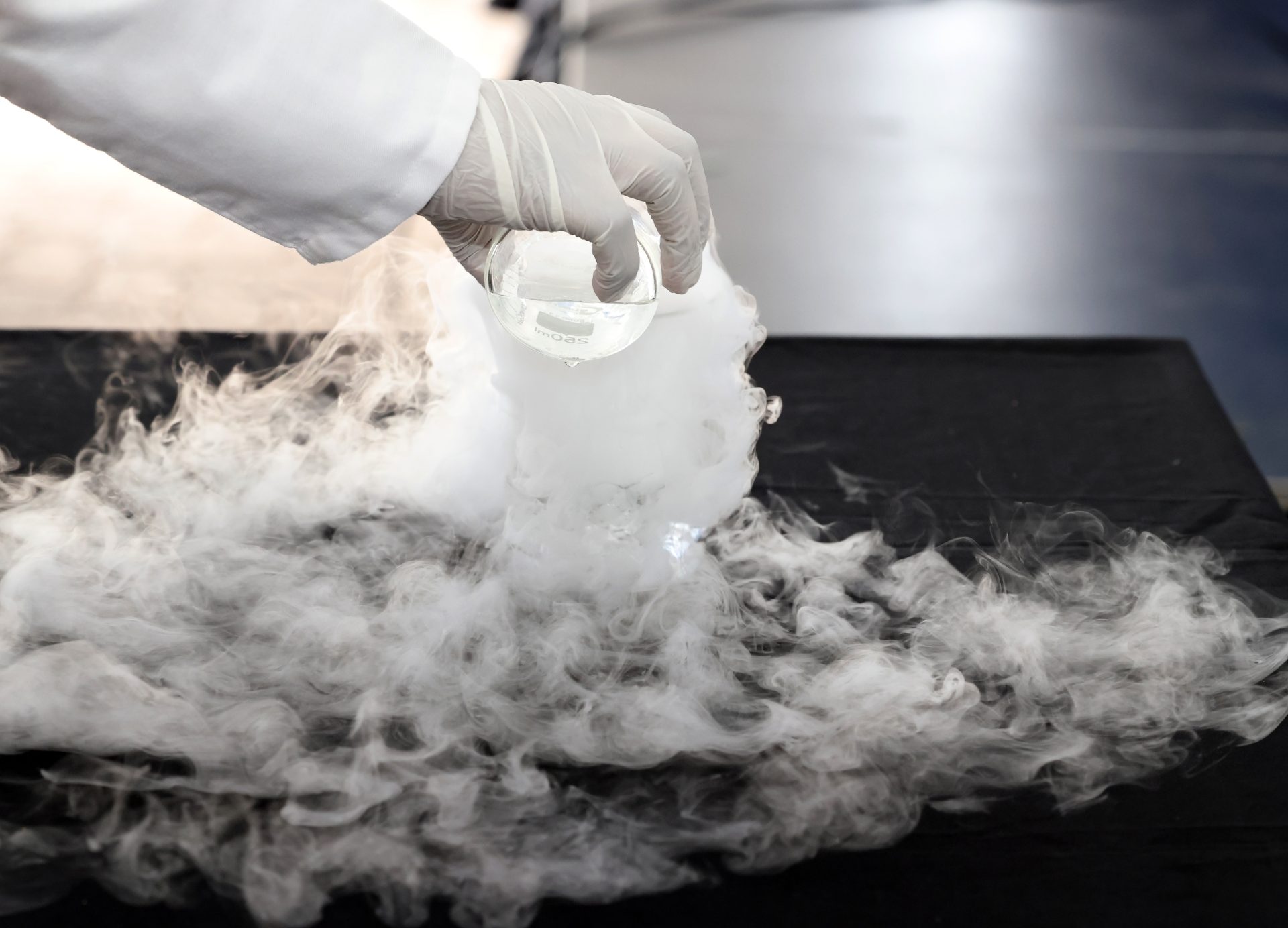
The experiment involved dry ice, giving learners a chance to watch solid carbon dioxide transform directly into gas in a spectacular demonstration of sublimation. It’s the kind of lesson that’s difficult to forget, particularly when science quite literally fills the room.
But behind the impressive milestone is something even more meaningful: a decade of making practical science accessible to children and the teachers who guide them.
Since 2015, Science2Go, supported by MAHLE Thermal and Fluid Systems South Africa and implemented in partnership with the Centre for the Advancement of Science and Mathematics Education (CASME), has reached more than 130,000 learners, 2,300 teachers and 650 schools.
For many of these schools, access to laboratory equipment and practical science facilities is far from guaranteed. Department of Basic Education infrastructure data published in 2021 found that 88.51% of KwaZulu-Natal’s ordinary operational schools did not have laboratory facilities.
It’s a gap that programmes like Science2Go are helping to bridge, bringing equipment, experiments and hands-on learning into participating schools while giving educators the practical training to bring science to life themselves. Giving teachers these tools boosts how many school pupils pursue STEM studies and careers in the future.
“MAHLE needs highly skilled people in engineering, manufacturing and technology to develop and produce the technologies of the future. Those skills start with strong mathematics and science foundations at school,” says Jürgen Wolf, Managing Director of MAHLE South Africa.
The perfect example is that of Ntombizonke Mngonyama, who first experienced Science2Go as a school pupil. Today, she works in Production at MAHLE. She says the programme didn’t determine her career path, but it helped her understand subjects like Physical Sciences and chemistry in a way that textbooks alone couldn’t.
Related Stories
 Alberton Walk/Runners Fill Pink Donation Bins for Stepping Stone Hospice
 A Christmas Tradition Is Bringing Joy to Hundreds of Durban Grannies and Grandpas!
“Growing up in a township, there was very little exposure to chemicals or instructions on how to mix those chemicals. So practical science made things more understandable. Remember, you hardly forget visuals, so practical science made it easier to understand and easier to remember in the exam,” says Mngonyama.
Being able to see experiments unfold made the theory easier to understand and remember. It was in those sessions that Ntombizonke found her passion for chemistry and led her down the path she is on today.
For MAHLE, supporting Science2Go is also an investment in the future skills needed in engineering, manufacturing and technology. But the programme’s 1,000th experiment is about more than preparing tomorrow’s workforce. It’s about giving today’s learners the confidence to explore, question and discover.
As MAHLE and CASME look to bring Science2Go to more schools, they’re inviting additional partners to help extend that opportunity.
“When we started Science2Go, the aim was simple, give teachers and learners access to practical science that many schools could not provide. Reaching 1,000 experiments shows the value of staying with that work over time. The next challenge is to make sure more schools can benefit from it,” says Henre Benson, Country Program Manager for VVOB South Africa and Vice-Chairperson of the CASME Board.
Tsepo Manzini was one of the students present for the milestone experiment.
“Before Science2Go, I thought science was difficult and mostly about theory. I now understand scientific concepts better because I could see and do them practically. Science is easier and more enjoyable when you learn it practically,” says Tsepo Manzini,
Science2Go is about sparking curiosity, making room for questions and showing young people that science can be exciting, accessible and full of possibility. With every experiment, another classroom gets to experience that sense of wonder, another learner discovers something new, and the joy of science has one more chance to spread.
 by