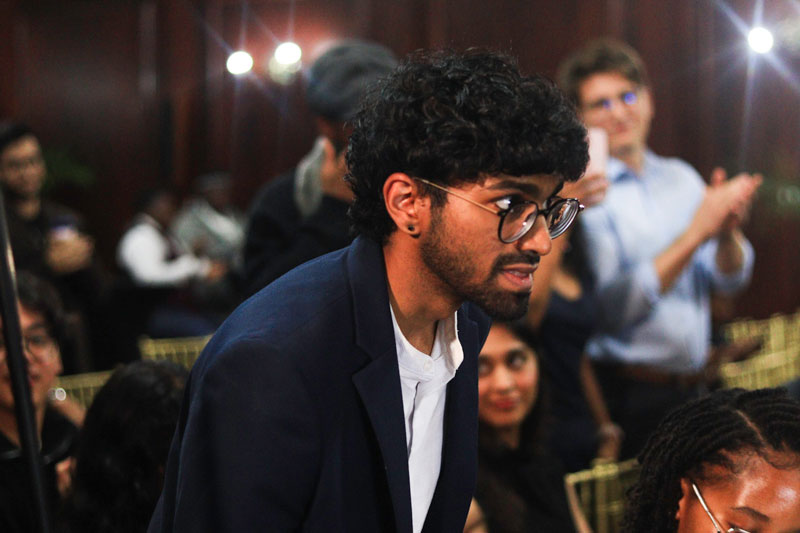
UCT was the only university that accepted Sayuran Pillay to study medicine. The inspiring fifth-year MBChB student has now won the university’s top student award for his leadership!
Cape Town, South Africa (12 November 2026) – Sayuran Pillay received the Vice-Chancellor’s Award at the UCT Student Leadership Awards on 16 October.
Sayuran grew up in Chatsworth, where his grandmother raised him. His parents are Deaf. One of his deans once called him ‘hlokoloza’, an isiZulu word for someone who pokes and prods at things. He says it suits him.
Speaking to UCT News, he says the university was the only one to accept him into medical studies.
“So, I often think about how much of my life has been shaped by that one opportunity.”
Sayuran went on to shine. He founded the Student Curriculum Lekgotla (SCL), a group that gives students a hand in shaping the medical curriculum. The SCL won Team of the Year at the same event.
Pillay brought deans and student leaders together to form a national student network for medical education, supports the youth forum of the Consortium of Medical Schools in Africa, and coordinated the student task force at a health professions education conference in Vienna.
His research looks at how Deaf and hard-of-hearing patients access surgical care.
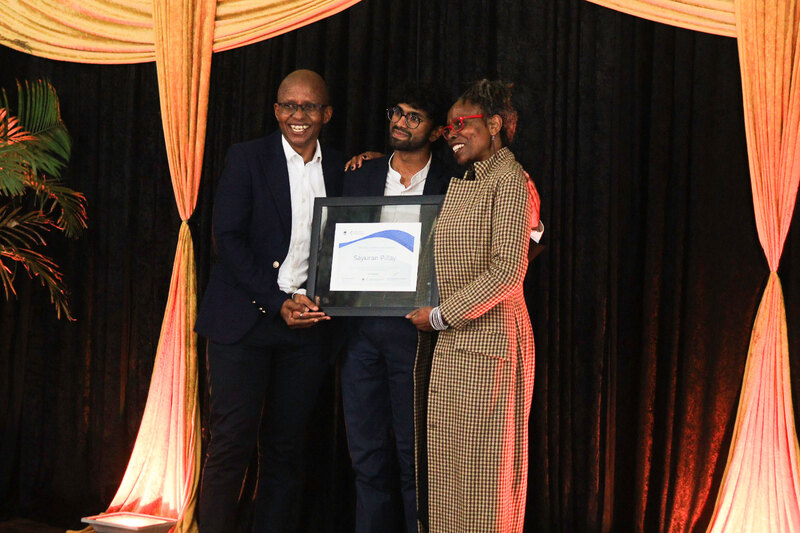
He wasn’t expecting the award. He says his years at university have included challenges and times he wondered if he was getting the balance right between his studies and his leadership.
“I really wasn’t expecting the award. I am still trying to appreciate the significance of it, actually. It’s the Vice-Chancellor’s Award, which is quite something!” he says.
Related Stories
“There have been real struggles, difficult trade-offs and moments when I’ve questioned whether I was getting the balance right. So, receiving an award like this has been quite difficult to reconcile with how I’ve sometimes experienced my own journey.” he adds.
 Tshireletso DitIho Takes on Fourth Cycling Challenge for Sanitary Products
 12-Year-Old Zara Greeff is Fundraising to Bring Vital Medical Supplies and Hope to Wolwerivier
Surayan says his leadership style leans toward facilitation.
“I’m not particularly good at telling people what to do, actually. I can be a little too laissez-faire!” he says.
“I do not think leadership is a fixed identity; [it is not] something you become once you’re elected or appointed to a position. It’s developmental: a way of thinking, engaging with people and taking responsibility that evolves as you do.” says Pillay.
Sayuran is stepping down as co-chair so the 2027 team can take over, but he will keep working with the SCL through its national team.
With co-founder Danika Govender, the SCL is working with the South African Committee of Medical Deans and has invited every South African university with a medical school to set up a local team.
It is also strengthening its fellowship programme and developing resources on educational scholarship, research, governance and project management that students across Africa can access. Next year, it hopes to hold Towards a Transformed Curriculum, which would bring together transformation initiatives across UCT.
The WHO projects Africa will be short of 5.85 million health workers by 2030, while about 943,000 trained health workers were unemployed in 2024. Sayuran wants the students coming through to be able to investigate problems like this and help fix them.
 by