When Cape Town’s Stormers couldn’t train together as South Africa went into strict lockdown, the rugby team found novel ways to stay connected, socialise and keep their team spirit alive.
Western Cape, South Africa (08 November 2020) – Cape Town’s DHL Stormers are now back on the rugby pitch doing what they do best, but six months ago the players were at home baking crumbles, rapping and trying to write songs in Afrikaans – competitively.
When South Africa entered a strict lockdown in March, coach John Dobson considered the best ways of keeping the team cohesive and how to create a spirit of community and competition.
“When we first went into hard lockdown here, we thought we’d be playing again in three weeks. We had maximum energy – the guys were divided into four groups so that they could compete against each other from home,” he said. “They were doing bake-offs, singing competitions, broken telegraph storytelling… it was fun.”
Besides the daily Zoom calls focusing on rugby skills, the players enjoyed the virtual social activities, which helped keep up the banter they were missing.
The baking competition “was won by one of our guys who is also a Springbok – a national player. He made an apple crumble, but it was suspiciously good… going into the oven it wasn’t quite the shape as what came out of the oven,” laughed Dobson.
The guys also boosted their musical talents, each delivering a verse of a rap or singing unaccompanied.
“The idea was that outside of that Zoom, which was with all of us – the coaches and the players – they had to interact amongst themselves. That was the key thing for us what was going on behind the scenes.”
However, three weeks became six months before the team got back on the field and so the virtual socialising eased to allow players to focus on their own wellbeing during an extended and difficult lockdown.
“Once it became clear that we weren’t getting back soon, we told them to focus on their friends and family,” said Dobson. “It was hard because it felt like you weren’t doing your job. You could feel people getting more stressed; you feared this group is getting unhappier, you’re losing the team – that’s what you feel as a coach. That was the biggest learning. If the foundation is so stressed, we’re throwing seeds on fallow soil – the guys were better off out of that schedule.”
Related Stories
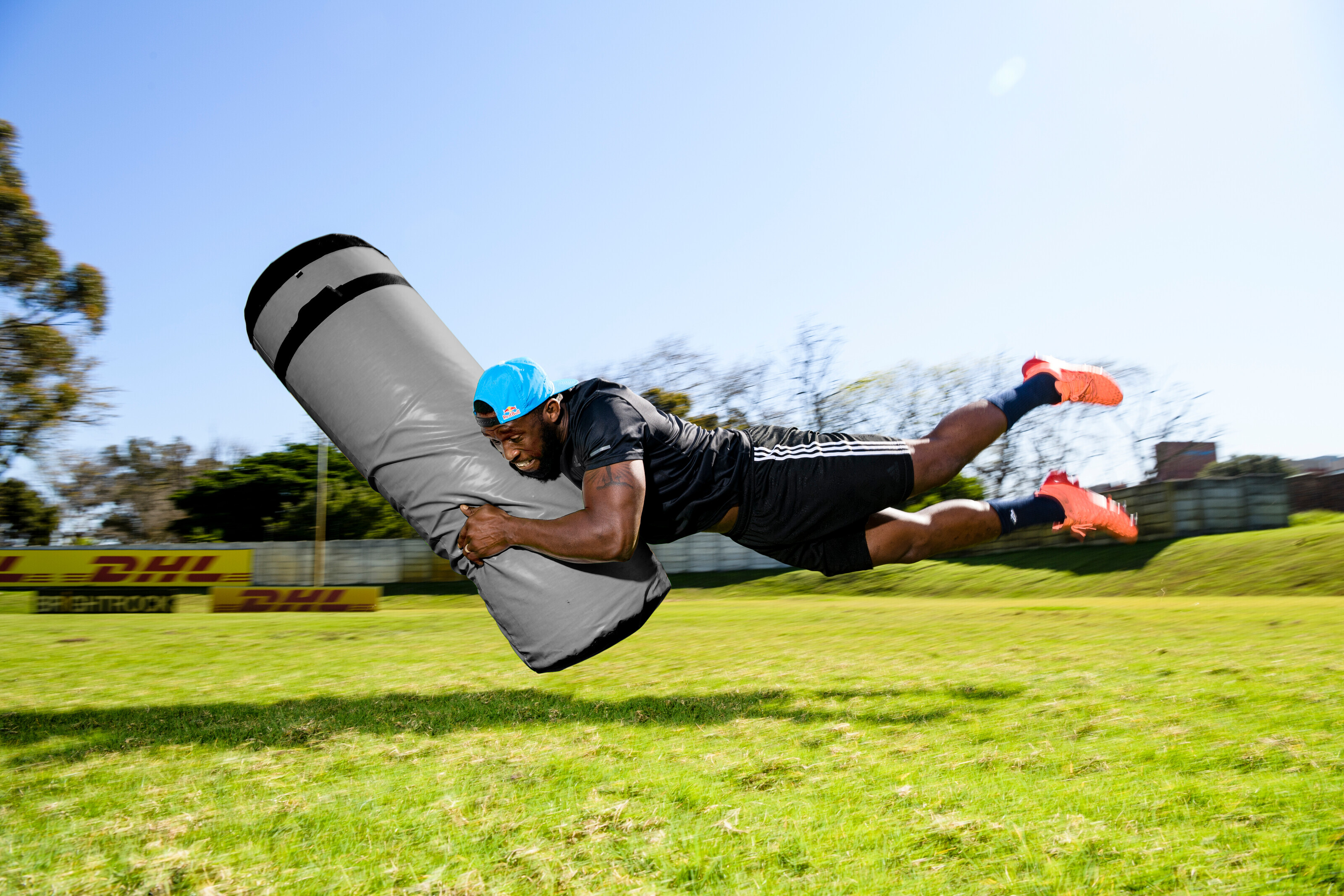
“I was keeping fit during the lockdown in my home gym,” said Stormers flanker and South Africa captain Siya Kolisi. “I’m fortunate to have a great setup at home. It so was nice to train with my wife and kids and siblings during the lockdown.”
 15-Year-Old South African Driver Selected for International Formula 4 Shootout
 Mahlogonolo Buthelezi Is Chasing Rugby and Education But Needs a Helping Hand
He enjoyed the extra family time but missed seeing his team-mates in person.
Once they knew when they could train again, the team resumed the virtual challenges and contests. Social outreach work also really helped them through this year.
“Our guys were in townships and rural areas giving out food, mostly from food donations. They got a lot of wellbeing out of that. They raised quite a lot of money and also went into their own pockets. The outreach was magnificent,” said Dobson.
Rugby can be quite stratified, with teams including experienced senior internationals and young Under-20s. The team-building exercises help break down those layers.
“We do that anyway, but it was harder during the lockdown, so we looked at how to break down those barriers – whether those breakdowns are class, race, age, amount of test caps. That was the whole point,” said Dobson. “Every Friday we’d have the whole group in for a virtual beer and an awards ceremony. The whole idea was to get everyone to know each other better.”
The journey was and still is a tough one, the Stormers coach says.
The team is one of the biggest rugby club sides in the world and the best supported in the southern hemisphere. Where they were typically drawing crowds of 45,000, the players now walk into an empty stadium.
“We go into our stadium with nobody. There’s a lack of energy, and that is directly correlated… we’ve got to find a way to counter that and motivate ourselves. This is going to have to be internal,” said Dobson.
They also have to adapt to playing at a different time of the year – the South African summer. That does, though, bring greater opportunities and the chance to be outside more.
“Things are definitely getting much more normal here. We can do all sorts of things, like train on a beach. We’ve got much more scope of when we train, how we train and how we mix.”
 by
by