


In the Northern Cape, 98 remarkable little reptiles are free to roam their rocky territory again, thanks to an intervention that saved them from the exotic pet trade.
South Africa (18 December 2025) – Ninety-eight Armadillo Girdled Lizards have been released back into the wild after being rescued from the illegal pet trade.
They were part of a group of more than 100 lizards rescued from the exotic pet trade in the Northern Cape earlier this year. The Endangered Wildlife Trust (EWT) says the species is now considered one of the most heavily trafficked reptiles in southern Africa, largely because of illegal wildlife trade.
They’re sought after because they’re such fascinating creatures. But it is important to know that they belong in the wild and not in a reptile terrarium.
Armadillo Girdled Lizards are small and heavily armoured. They’re found only in South Africa and live along rocky outcrops in the Western Cape, feeding mostly on termites and finding shelter in narrow crevices. When threatened, they curl into a tight ball and bite their own tail, protecting their softer underparts with sharp, overlapping scales.
“This striking shape resembles the ancient ouroboros symbol of a tail-biting creature, which appears in multiple mythological traditions (and heavily in Japanese visual culture). This resemblance is what inspired the genus name Ouroborus.” shares EWT Drylands Conservation Field Officer Renier Basson.
Most interestingly, unlike most reptiles, they don’t lay eggs.
“They give birth to live young, usually one or two per year, and mothers have even been recorded feeding their offspring. They are also unusually social: groups of up to 60 individuals may occupy a single crevice, forming long-term colonies that rely on the stability of their rocky habitat.” shares Basson.
Sadly, this little species is especially attractive to collectors.
Thankfully, this story has a happy ending.
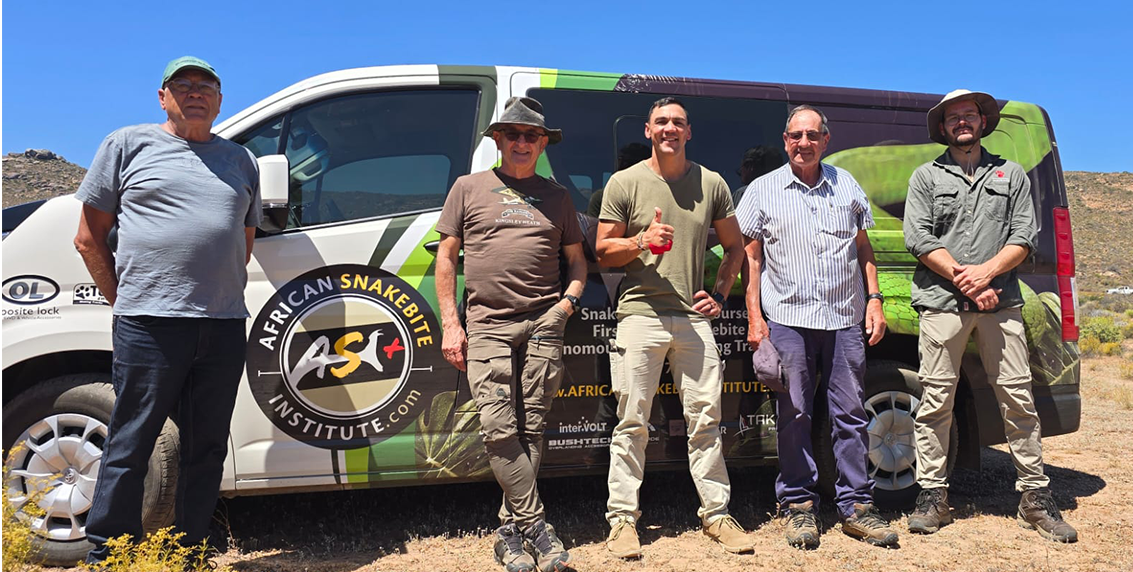
After the confiscation earlier this year, the lizards were taken to the Kokerboom Biological Research Station near Springbok, where they received care and were monitored to see whether release was possible. Because the original poaching area was known, conservation teams were able to identify suitable nearby sites for reintroduction.
Several organisations worked together to make the release happen, including Northern Cape Department of Agriculture, Environmental Affairs, Rural Development and Land Reform, the SA National Biodiversity Institute, African Snakebite Institute and EWT.
Six of the lizards unfortunately didn’t survive due to the poor condition they were found in, but the remaining 98 were healthy enough to be released.
They were fitted with small identification tags before release so that researchers can monitor how they settle and use their new habitat. They were let go in small groups across multiple sites.
Still, poaching is a problem.
If you spot a little armadillo lizard out in the wild, it’s important not to share exact locations of your sighting. If you ever suspect wildlife trafficking, you’d be helping the species by reporting it.
“Every confiscated lizard represents both a loss and an opportunity. With collaboration, vigilance, and continued research, South Africa can protect this species – ensuring that the iconic, tail-biting ‘ouroboros’ of South Africa remains safely coiled within its rocky landscape.” shares Basson.
 by
by 