


There are moments when a toy becomes more than a toy. When it quietly says, “I see you.” And this week, Barbie did exactly that.
South Africa (12 January 2026) – Barbie has been on a mission to have a more inclusive representation in doll form over the past few years. From Barbie in a wheelchair to Barbie with a Continuous Glucose Monitor (CGM) to honour children with Type-1 Diabetes. Let’s not forget Barbie, who represents children with Down syndrome and now, Barbie honours the Neurodiverse community.
Mattel has unveiled its first-ever autistic Barbie doll, created with direct guidance from the autistic community, and it feels like one of those rare, meaningful steps forward that deserves a proper pause and a little applause. Because for many children, this isn’t about plastic or pink accessories. It’s about finally recognising themselves in a world that hasn’t always made space for them.
Developed over more than 18 months in partnership with the Autistic Self Advocacy Network (ASAN), a non-profit organisation run by and for autistic people, the new doll joins the Barbie Fashionistas range. This is the same collection that has steadily expanded what representation looks like on toy shelves.
But what makes this release feel especially thoughtful is the care behind it. This wasn’t a box-ticking exercise. The design team worked closely with ASAN to reflect real, lived experiences that many autistic people may relate to, in ways that are gentle, respectful and affirming.
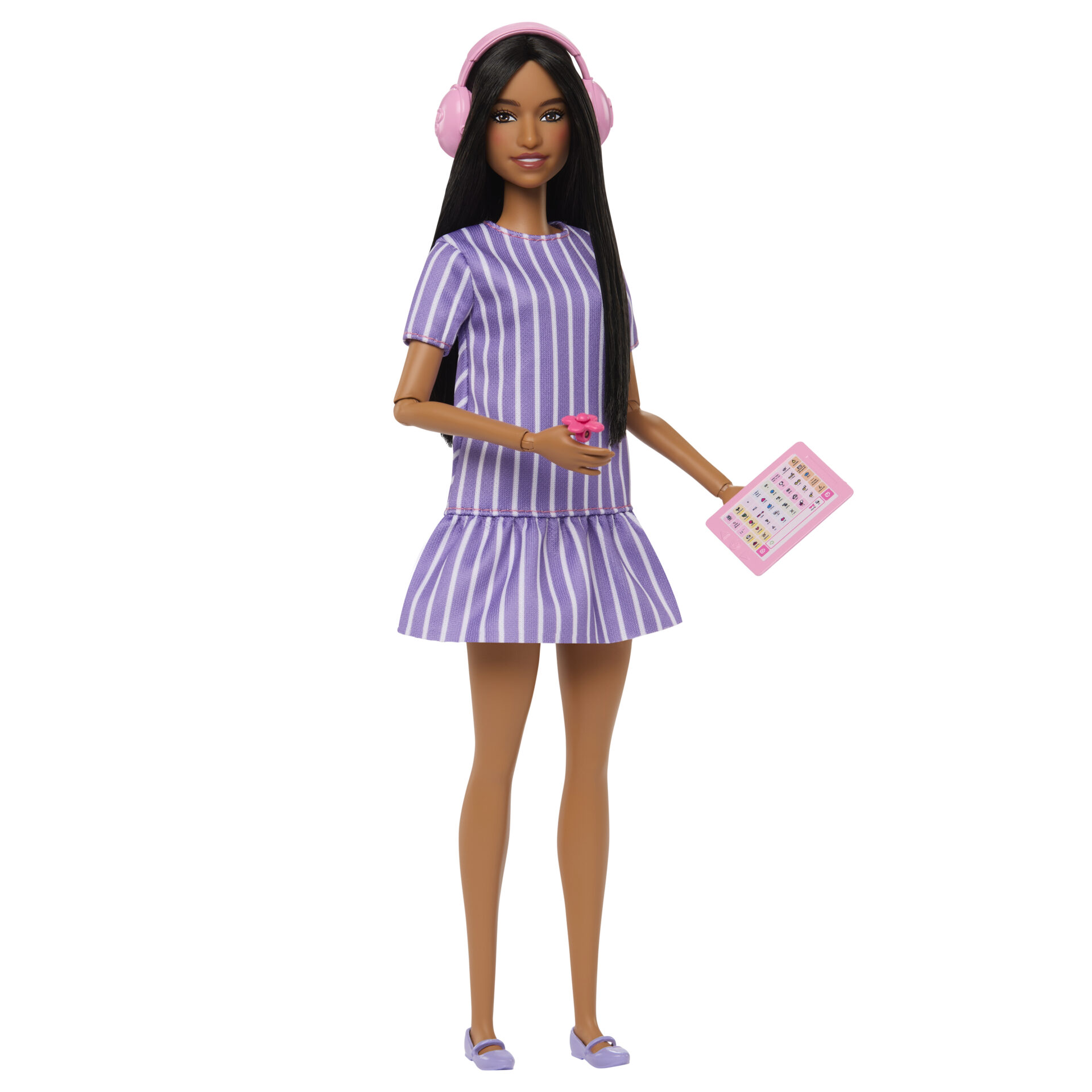
The autistic Barbie features a new face sculpt, with an eye gaze that is slightly averted, acknowledging that some autistic people avoid direct eye contact. Her elbows and wrists are articulated, allowing for stimming, hand flapping and expressive gestures that can help process sensory input or communicate excitement. It’s a small detail, but one that carries big meaning.
Then there are the accessories, each chosen with intention. A pink finger-clip fidget spinner that actually spins. Noise-cancelling headphones resting casually on her head. A tablet displaying symbol-based Augmentative and Alternative Communication apps to support everyday communication. None of it feels exaggerated or performative. It simply feels normal. And that, perhaps, is the point.
Her outfit follows the same thoughtful approach. A loose-fitting purple pinstripe A-line dress with short sleeves and a flowy skirt designed to reduce fabric-to-skin contact. Flat purple shoes that prioritise comfort and stability. Sensory-friendly fashion, without sacrificing style.
“Barbie has always strived to reflect the world kids see and the possibilities they imagine, and we’re proud to introduce our first autistic Barbie as part of that ongoing work,” said Jamie Cygielman, Global Head of Dolls at Mattel. “The doll, designed with guidance from the Autistic Self Advocacy Network, helps to expand what inclusion looks like in the toy aisle and beyond because every child deserves to see themselves in Barbie.”
For ASAN, the collaboration was deeply personal.
“As proud members of the autistic community, our ASAN team was thrilled to help create the first-ever autistic Barbie doll,” said Executive Director Colin Killick. “It is so important for young autistic people to see authentic, joyful representations of themselves, and that’s exactly what this doll is.”
The launch is also being celebrated alongside autistic community advocates, including Nandi Madida and her six-year-old daughter, Nefertiti. Nandi’s words capture why this moment lands so emotionally for so many families.
“Barbie has always represented comfort and imagination for me, and becoming a mother to an autistic child has transformed what representation truly means,” she said. “This autistic Barbie is deeply emotional because it reflects children who are so often left out.”
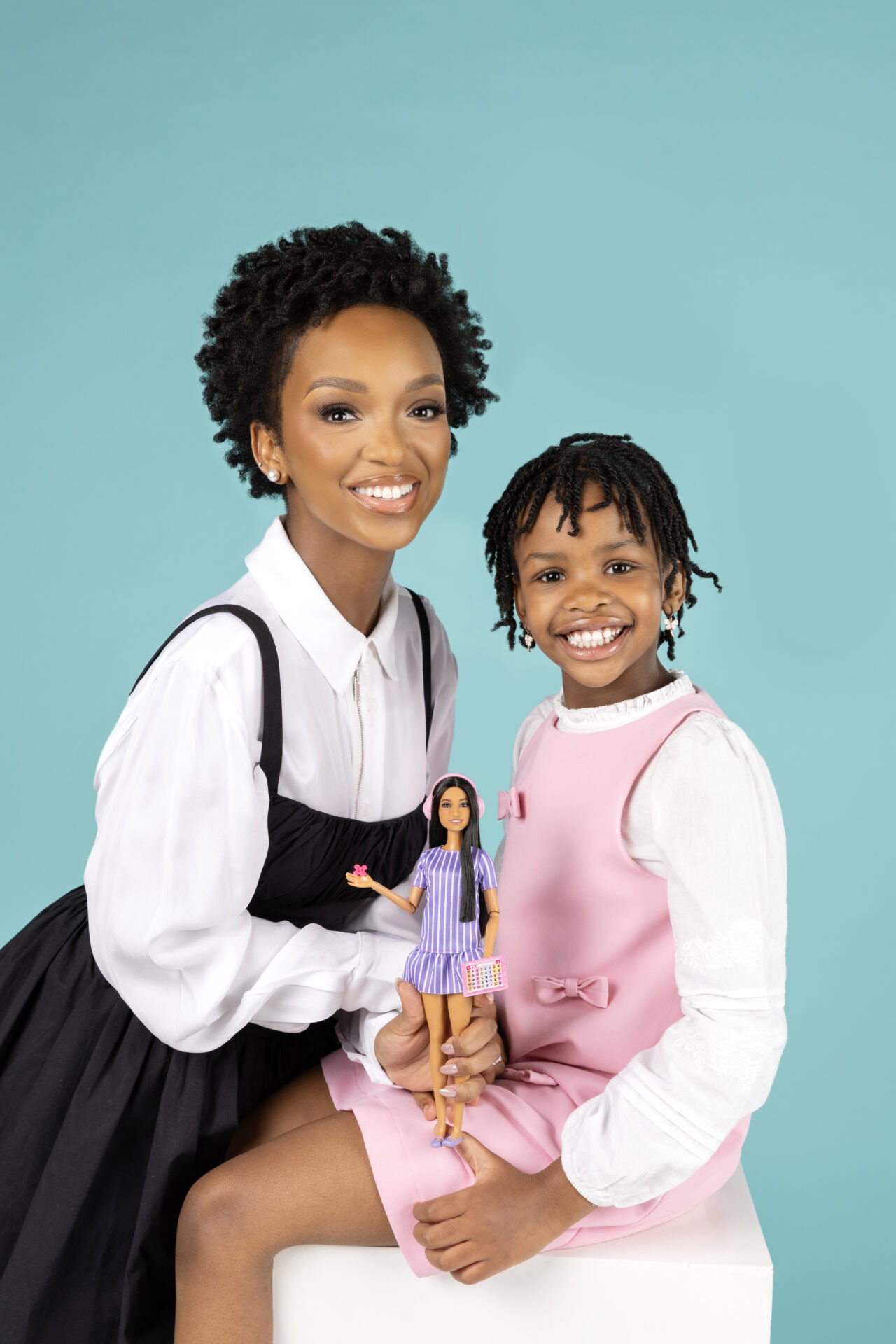
She added that for autistic children, seeing themselves in a doll like this affirms that they are seen, valued and understood exactly as they are. And for non-autistic children, it becomes a powerful early lesson in empathy, curiosity and respect. All through play.
That idea is backed by research too. Since 2020, Barbie has worked with researchers at Cardiff University to study the impact of doll play, finding that it activates areas of the brain linked to empathy and social processing. More recent findings suggest doll play may help develop social skills for all children, including those with neurodivergent traits commonly associated with autism.
Which makes this feel less like a single product launch, and more like a quiet shift in how childhood worlds are being built.
The autistic Barbie is now available at leading retailers nationwide. But its real value lies in what it represents. A reminder that inclusion doesn’t have to be loud to be powerful. Sometimes, it just needs to be honest.
And maybe, just maybe, it starts with a doll that finally looks back and says, “You belong.”
 by
by 