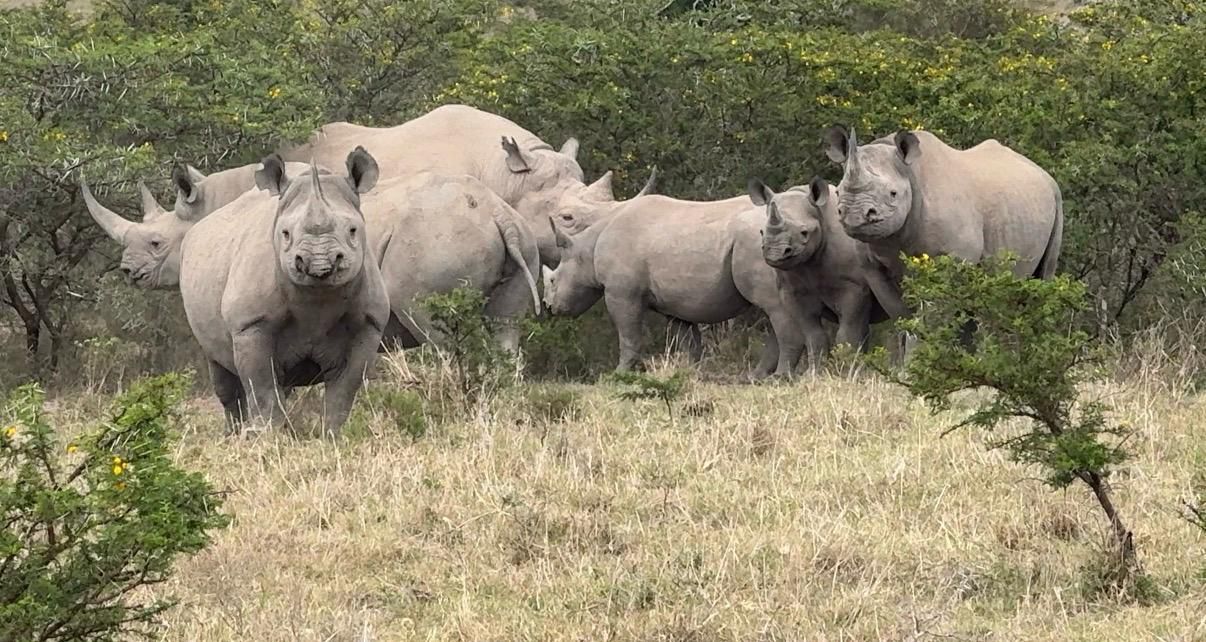
WWF’s 20-year black rhino project has become a scientific treasure trove, helping researchers understand behaviour and improve conservation.
South Africa (26 August 2026) – For more than two decades, scientists and conservationists have been watching South Africa’s black rhinos. They have tracked their movements, recorded sightings, followed populations and carefully documented the lives of hundreds of individual animals, all in the name of helping this critically endangered species survive.
At the time, much of that information was being collected for practical conservation and population management. But more than 20 years later, something rather wonderful is happening: that mountain of information has become a scientific treasure trove.
WWF South Africa‘s Black Rhino Range Expansion Project (BRREP) began in 2003 as a pilot project designed to help bolster black rhino numbers by establishing and managing new populations. Today, the project has monitoring data spanning more than two decades, with 420 rhinos on project sites closely monitored.
And now, scientists are going back through that history to ask new questions about how black rhinos behave, reproduce and interact with one another. The result is research that is not only helping us understand these remarkable animals a little better, but could also make a very real difference to how they are protected in the future.
Sometimes conservation starts with simply paying attention
One of the most valuable things about long-term conservation work is that it creates a picture that cannot be captured in a single season, or even a few years.
Rhinos live their lives over much longer timescales, and understanding their behaviour requires researchers to see patterns emerge over time.
That is exactly what the BRREP data is now allowing scientists to do.
Two recent studies have taken information collected during the project’s long-running monitoring work and used it to investigate two very different aspects of black rhino behaviour: when and where mothers give birth, and how social interactions between these usually solitary animals can influence their survival.
Both studies offer another piece of the puzzle. And when you are trying to protect a critically endangered species, every piece matters.
Related Stories
 These Surprising Leopards of South Africa Also Deserve Some Love!
 Dogs Found Safe But Hijacked Vehicle Still Missing – SPCA Still Needs Eyes and Ears!
 Finding a better way to know when a rhino gives birth
For black rhino researchers, knowing when a calf is born is surprisingly difficult.
Black rhinos are solitary, secretive and potentially dangerous animals, which means simply watching a female until she gives birth is neither practical nor particularly safe.
For years, population managers have therefore had to rely on sightings of young calves to estimate when a birth happened. The problem is that those sightings can happen months after the actual birth, leaving researchers with an approximate date rather than an accurate one.
A team from the University of Pretoria’s Department of Zoology and Entomology wanted to find a better way. Devon J Kerr, Rachel M Stein and Adrian M Shrader looked at movement-based GPS data collected through BRREP and discovered that female black rhinos display distinct movement patterns around the time they give birth.
The inspiration came from research on ungulates in North America, where scientists found that pregnant females such as moose tend to move around more frequently in the days before giving birth, before settling down soon afterwards.
The researchers found similar patterns in black rhinos.
By studying the movement of female rhinos before and after birth, scientists were able to develop a method for remotely estimating when a birth had taken place. It might sound like a small discovery, but it gives conservationists something incredibly useful: a much more accurate picture of when calves are born.
And that opens the door to understanding something else that is equally important: where mothers choose to give birth. Using those estimated birth dates, researchers were able to investigate birth site selection in relation to habitat types and predator densities.
In other words, the data is helping scientists understand not only when a new black rhino enters the world, but the kind of environment its mother chooses for that incredibly vulnerable beginning.
Then there is the surprising social life of a solitary animal
The second study looked at another fascinating question.
Black rhinos are generally considered solitary animals, but solitary does not mean completely disconnected. Over a 20-year period, researchers collected sightings and demographic information from 14 reserves. The dataset ultimately included almost 70,000 sightings of 542 black rhinos, categorised into calves, sub-adults and adults.
That gave scientists an extraordinary opportunity to look at how often rhinos encountered one another and what those encounters might mean for their survival.
The findings suggest that social behaviour can play an important role in mortality risk, particularly when it comes to aggression among sub-adults.
But there is an unexpected twist.
The researchers found that black rhinos that were more social during their sub-adult years tended to have a lower risk of aggression-related mortality later in adult life. That suggests that social experience may matter more to these usually solitary animals than we previously understood. This discovery could have practical implications for conservation.
The science could help decide which rhinos move where
Black rhino conservation does not simply involve protecting animals where they currently live. Projects like BRREP also involve carefully managed translocations, where individual rhinos are moved to suitable areas to establish or strengthen populations. Choosing which animals to move is therefore an incredibly important decision.
The new research suggests that conservation managers may need to look beyond population numbers and genetics when making those decisions.
Social dynamics could matter too.
If an individual’s social behaviour can influence its likelihood of experiencing aggression later in life, understanding those patterns could help managers make more informed choices about which rhinos are included in translocations.
The ultimate goal is simple: reduce the risk of potentially fatal aggression and give newly established populations the best possible chance of thriving.
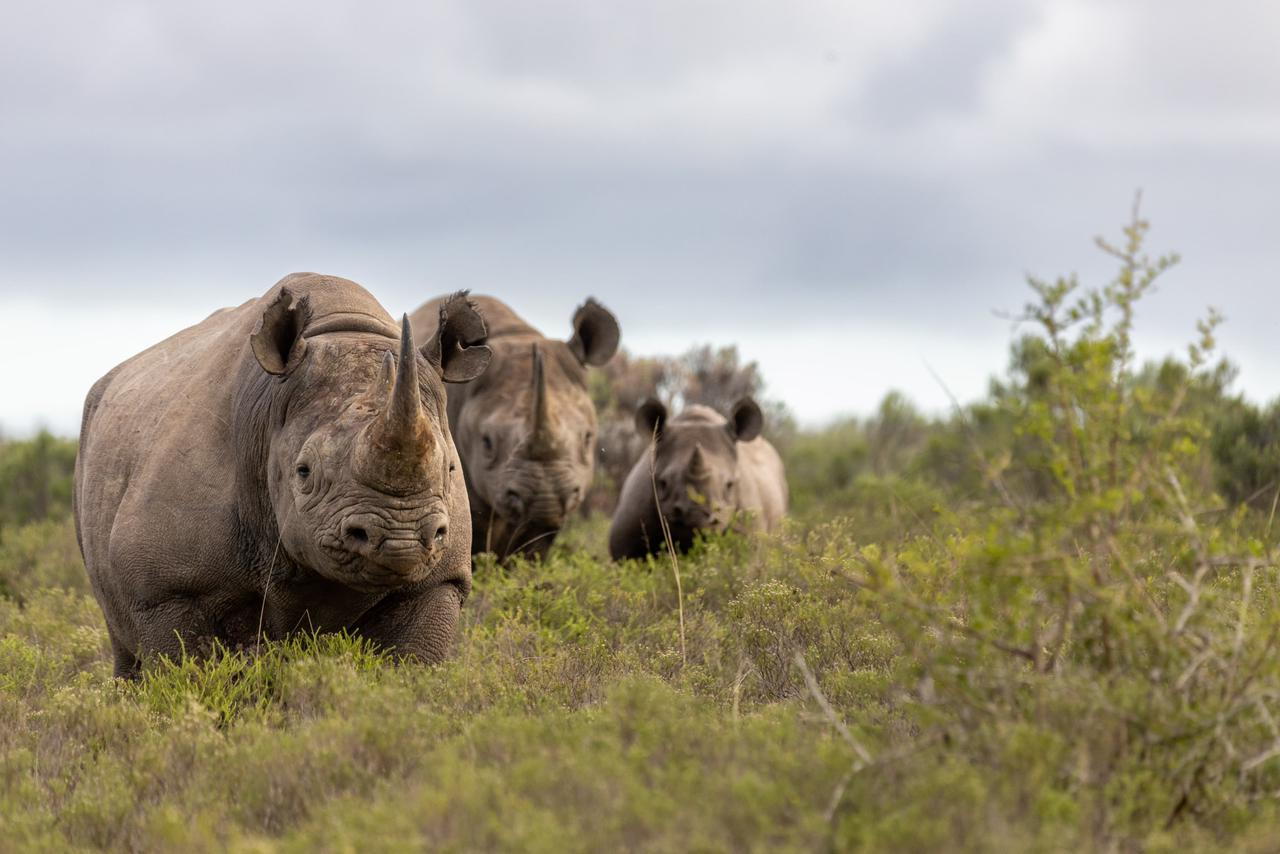
Twenty years of watching is becoming twenty years of learning
Perhaps the most hopeful part of this story is that none of this information appeared overnight.
It has been building slowly.
Every sighting. Every GPS movement. Every population record. Every carefully documented encounter has added another tiny piece to a much bigger picture.
When the Black Rhino Range Expansion Project began in 2003, the primary focus was on helping increase black rhino numbers and managing those populations effectively. More than 20 years later, that same work is helping scientists ask entirely new questions.
Ursina Rusch, population manager for BRREP, says this is exactly what makes the research so valuable.
“After more than 20 years of successfully establishing and managing black rhino populations, it is fantastic to see the information gathered on our BRREP sites being translated into scientific research that will further enhance our conservation and management efforts.”
Historically, population management decisions could sometimes rely on anecdotal evidence. Today, researchers have something far more powerful at their disposal: a vast body of real-world data gathered over decades.
That means conservationists can increasingly make decisions based on evidence rather than assumption. And for a species as critically endangered as the black rhino, better information can mean better decisions.
It can mean knowing when a calf was likely born. Understanding where mothers choose to raise their young. Recognising the importance of social experience. And potentially choosing translocation groups in ways that reduce aggression and improve the chances of populations flourishing.
A project that began more than 20 years ago to give black rhinos more space and a better chance of survival has now become something even bigger: a long-term record of their lives that is helping us understand how to protect them better.
 by
by