Rencia Gillespie feared debilitating back pain might take hiking away from her for good. A decison, a complex operation, two specialist surgeons and months of recovery have put her firmly back on the trail.
Western Cape, South Africa (06 September 2026) – Eight months ago, Rencia Gillespie could barely walk without debilitating pain. Today, the retired nurse is back hiking the mountains she loves, after complex spinal surgery at Netcare Kuils River Hospital gave her something she had started to fear she might lose for good.
The Bellville resident had first sought medical attention for back pain two or three years earlier, and for a while, it eased. But when it returned late last year, it was different. Within weeks, the pain was travelling down her leg and into her toes, eventually affecting the nerves and causing weakness.
“I was in significant pain for around two months. The pain travelled down my leg, to my toes. Eventually, the nerves were affected, and I began to experience weakness. At night, I was okay if I kept moving, but I couldn’t lie down. It was exhausting,” she recalls.
Physiotherapy, exercise and several pain medications brought little relief. Rencia explored other options, including a pain block, while keeping surgery firmly as a last resort. As a former nurse, she understood the complexity involved and wanted to know exactly what she was facing.
“Back operations are tricky. You can go through surgery and still be left with pain, weakness or other problems. I wanted to understand exactly what was going to happen.”
That understanding came through neurosurgeon Dr Deon Lamprecht and orthopaedic surgeon Dr Reggie King, who practise at Netcare Kuils River Hospital and work together on complex spinal cases requiring both nerve decompression and reconstruction. The specialists bring different expertise to the operating theatre. Dr Lamprecht focuses on the spinal canal, nerves and decompression, while Dr King addresses alignment, fusion and fixation. For cases such as Rencia’s, they assess and plan the procedure together.
“When a patient needs both decompression and fusion, combining our skills allows us to plan and perform the procedure as one team. We each have a clearly defined role, but we are working towards the same positive outcome for our patient,” says Dr Lamprecht.
Dr King, who in 2019 became the first orthopaedic surgeon to graduate with a clinical PhD from Stellenbosch University, says ensuring that the patient understands the plan is just as important.
“The person needs to understand the problem, what each of us will do, and what we are trying to achieve together.”
 WATCH: Australia’s Winning Netball Ball Gets a South African Makeover
For Rencia, their approach made an intimidating decision considerably easier.
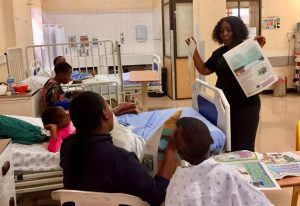
“They sat with me, discussed my case, and used pictures and diagrams to explain everything in a way I could relate to. I knew who would do what, why I needed the operation, and what to expect afterwards. Everything happened as they said it would.”
Rencia required an oblique lumbar interbody fusion, known as an OLIF, as part of her spinal reconstruction. Rather than approaching the spine only from the back, the technique allows surgeons to access the affected disc space obliquely through the side and front of the body.
“This gives us access to remove the damaged disc and insert an interbody cage to restore height, alignment and stability,” explains Dr King.
Rencia was then repositioned for the posterior stage of the operation, during which the affected nerves were decompressed and fixation was added from the back.
“Combining the two approaches gives us a very stable construct. That stability supports earlier mobilisation after surgery, which is important for recovery. In Rencia’s case, the procedure took about five to six hours,” says Dr King.
Helping the surgical team perform the procedure was a specialised piece of technology at Netcare Kuils River Hospital: the Mizuho OSI Jackson spinal table, designed to give surgeons greater control when positioning and repositioning patients during complex spinal procedures.
Rencia laughs when asked about it.
“I have to admit, I was fast asleep, I never even got to see it.”
For the surgeons, however, the technology played an important role.
“Positioning is critical when we operate from different directions. The table helps us turn and position the patient safely while protecting the airway, lines and pressure points,” explains Dr Lamprecht.
The table also improves access to the spine and facilitates imaging during surgery, providing the team with a clearer surgical field. According to Dr King, in cases such as Rencia’s, it can reduce operating time by around two hours.
“For us, it comes down to safety, control and efficiency. The advanced surgical table makes complex surgery easier to perform and, in cases such as Rencia’s, can reduce operating time by about two hours. Together with stable fixation, which helps patients move sooner, it can support a smoother early recovery and, potentially, a shorter hospital stay,” he says.
Physiotherapy began soon after surgery, progressing from walking along the hospital corridor to tackling stairs. Early mobilisation is an important part of recovery following spinal surgery, helping to reduce complications associated with prolonged immobility.
“The benefits of successful spinal surgery extend well beyond the operating theatre. Getting patients safely mobile again as early as possible is important because prolonged immobility carries its own risks, including blood clots and respiratory complications,” explains Dr Lamprecht.
“To come out of an operation with zero pain was quite something. Within a week, I was off all pain medication,” Rencia explains.
By December, she was back in the gym, focusing on rehabilitation and rebuilding her strength. Four months after surgery, she reached the milestone she had been working towards and returned to hiking. The fusion itself continues to heal over many months, with follow-up consultations monitoring bone growth and stability but Rencia has already regained an important part of the active life she enjoyed before her back problems took over.
“The care was exceptional from the word go. I felt supported and confident in the team throughout.”
There are plenty of ways to measure the success of complex surgery: scans, mobility, pain levels and follow-up appointments all tell part of the story. For Rencia, another measure matters just as much.
She can lace up her hiking shoes again, head out onto a trail and look towards the next climb.
 by