A two-month-old rhino calf was rescued just under a week ago. Her thorn-riddled feet have taken their first few steps into the sunshine.
Mpumalanga, South Africa (05 October 2026) – A rescued white rhino calf has gone from being too weak to lift her head to walking outside in the sunshine.
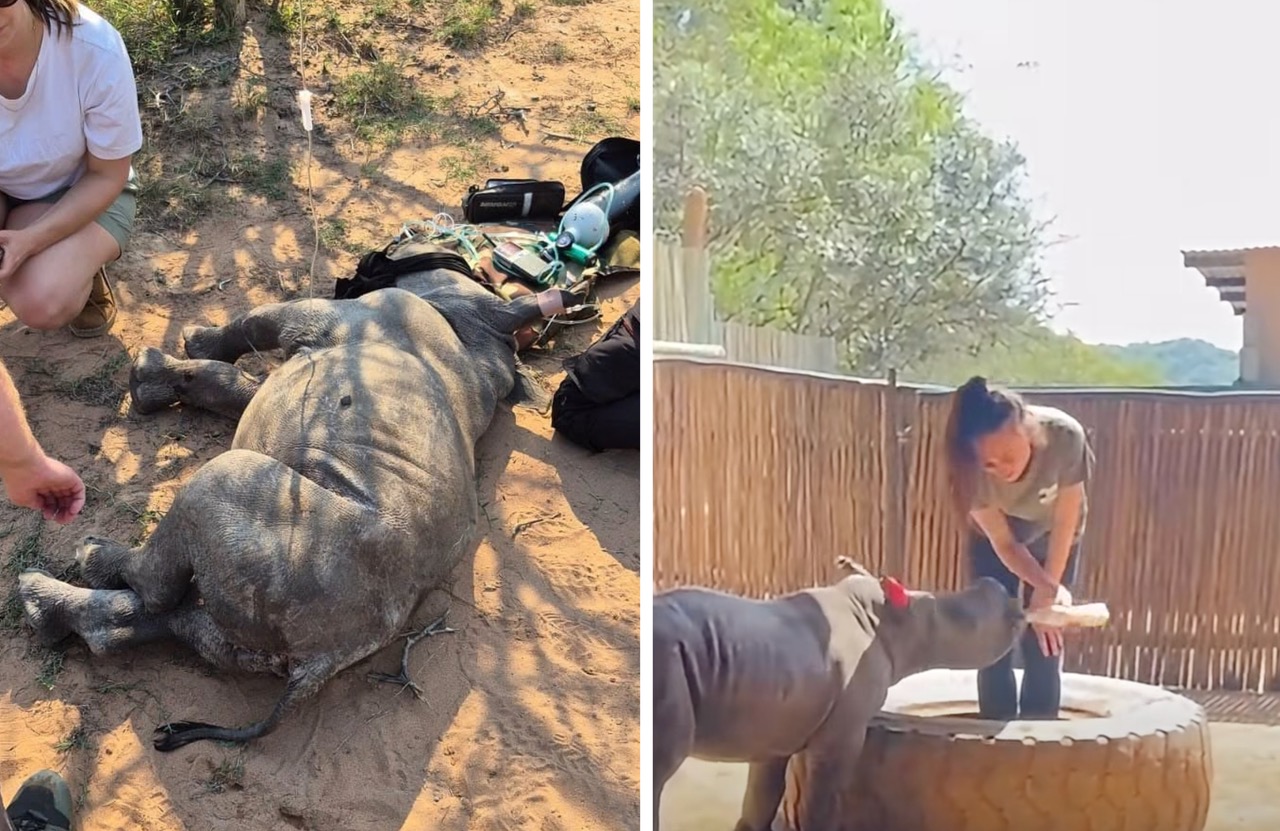
The two-month-old calf was rescued on a Monday evening in September. A helicopter carried her out, and she finished the trip to Care for Wild Rhino Sanctuary on the back seat of a vehicle, where she was monitored and given intravenous fluids along the way.
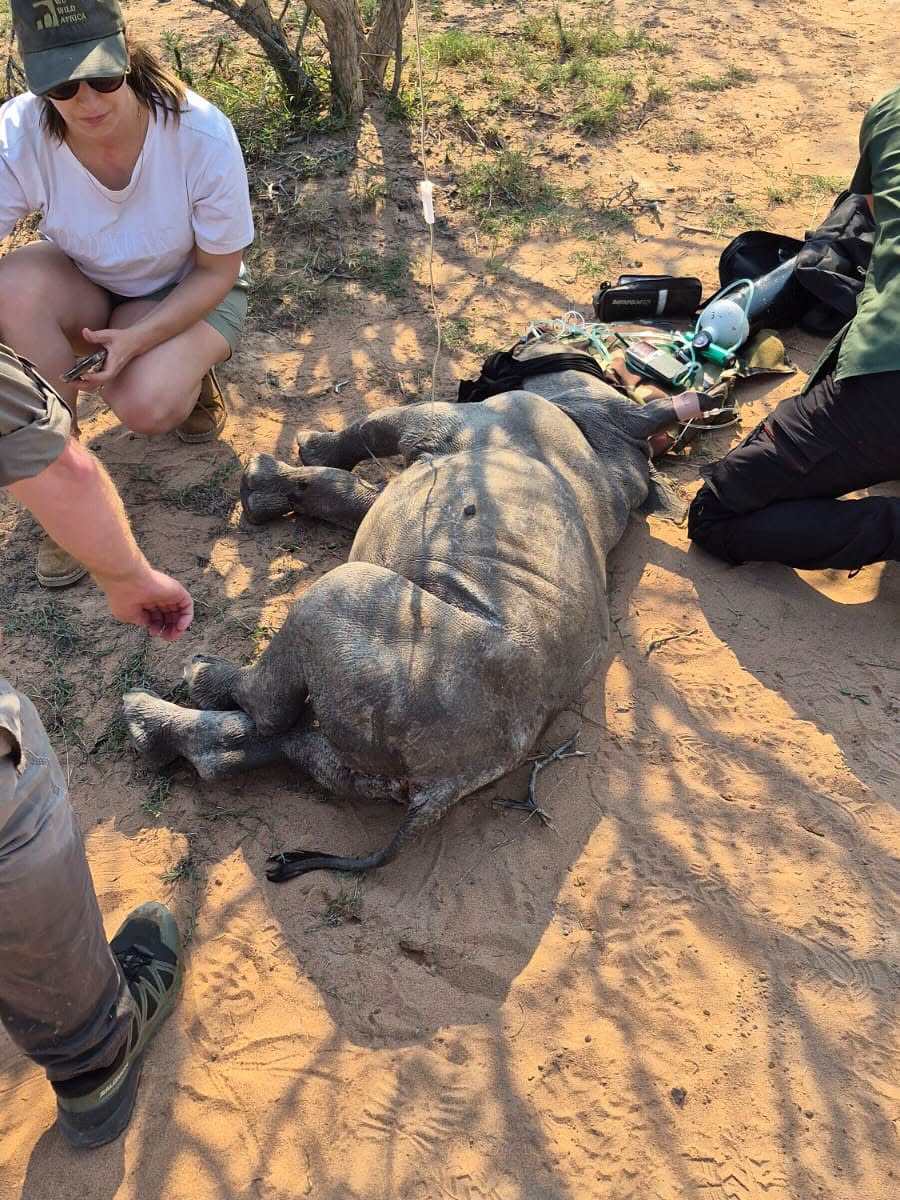
She arrived in a bad way. She was extremely thin and dangerously dehydrated, and she had wounds across all four feet. Several thorns were embedded in each foot, and some had developed into painful abscesses. The team rushed her into the sanctuary’s Rhino and Wildlife Clinic, removed the thorns, and cleaned and treated her feet. She received fluids and plasma, with the plasma donated by Rhino 911 and Rhino Connect NPO.
Her first days in the sanctuary’s care were about getting through each night. She was too weak to stand or suckle, so the team started by syringing milk into her mouth. Then they introduced a teat and gave her time to swallow small amounts. Caregivers stayed with her around the clock in the ICU, managing her fluids, treating her feet and offering milk whenever she could manage it.
Slowly things turned. After four days of being too weak to drink properly, she began sipping, and then suckling from a bottle when her head was supported. Her blood tests improved. Soon she was suckling well on her own, and she now gets milk every two hours, day and night.
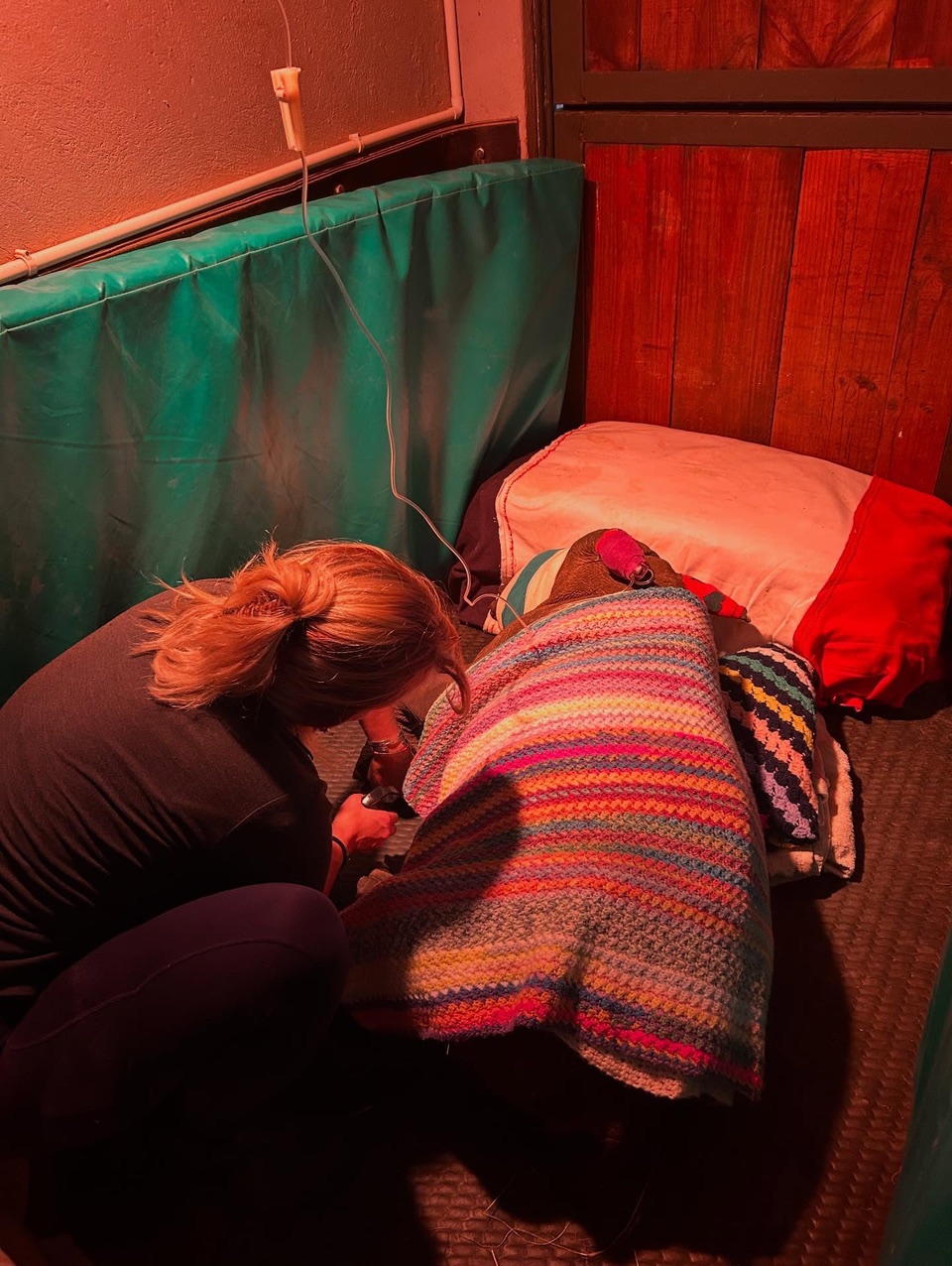
Then came more milestones. Her drip was removed once her regular feeds were enough to keep her hydrated, and her bloodwork showed her electrolyte levels were back in balance. Her blindfold also came off. Blindfolding is a standard technique for frightened or very compromised rhino calves, because cutting down what they see helps them rest and recover. Removing it is carefully timed. It’s usually done at night, while the calf is drinking milk, so the first thing she sees is her caregiver, linked to food and comfort.
Since then, the care team has been steadily building her trust, and that has paid off in the best way. She was recently strong enough to take her first steps outside and into the sunshine!
She still needs close monitoring and a lot more rehabilitation, but the team says they’re incredibly encouraged by these small but significant steps in the right direction.
Related Stories
 Bili’s Journey: How Africa Came Together for One Little Gorilla
 Anonymous Donor Gifts Beach Wheelchair to Help More People Enjoy Surf Therapy!
Many people have been following her progress on Care for Wild’s social media pages. If you’d like to help with her veterinary care, nutrition and medication, you can donate through the sanctuary’s website or its GlobalGiving page.
 by
by