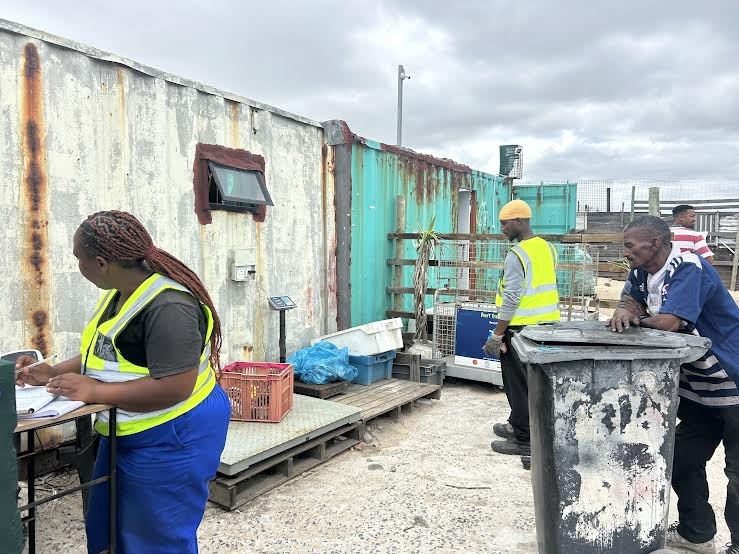
The ReCha initiative says it has collected more than 3,000 tonnes of waste and created hundreds of jobs.
Cape Flats, South Africa (23 November 2026) – Every morning, Salie Solomons spends two hours walking the sandy beaches along the False Bay coastline. He’s on the lookout for litter — cans, glass bottles or plastic containers. When he’s done, he takes the bags of waste to a recycling centre in Strandfontein.
Solomons lives in 7de Laan, an informal settlement, just down the road from the ReCha hub where he drops off the materials. It is one of a network of hubs run by residents across Cape Town.
When he leaves, he’ll have money to put food on the table and pay for electricity. “It helps,” Solomons said.
ReCha, short for Recycling Champions, is a green-economy initiative run by non-profit organisation RLabs. It encourages young people to become micro-entrepreneurs by running recycling hubs. The programme was designed both to create jobs and to encourage the development of a sustainable recycling system.
The young people who start these businesses are helping keep their environment clean, said Teri-Lee Dilgee, ReCha hub coordinator. “They’re actually contributing to the greater goal of diverting waste.”
Since ReCha was founded in 2023, the initiative has created over 500 jobs, including 125 micro-entrepreneurs who have started their own hubs, and diverted more than 3,000 tonnes of waste from landfills, according to RLabs.
The waste pickers are paid between R1 and R17 per kilogram depending on the commodity.
According to Mandy Booys, the ReCha monitoring and evaluation coordinator, most of the ReCha hubs are in Mitchells Plain, Strandfontein and Khayelitsha. The centres are often run out of people’s homes or garages, Booys said, so that they are embedded in the community and accessible to waste pickers.
Individuals who want to start a ReCha hub go through training organised by RLabs, Booys said. This includes courses on waste management and financial literacy, as well as a shadowing period at an operational ReCha hub.
Related Stories
 Funda Nenja Nurtures Both People and Pets in Mpophomeni
 On the Day the World Was Supposed to Go Wrong, Something Went Right for the Penguins at APSS
Once they complete their training, they are provided with the tools needed to run a buyback centre — including scales and a mobile app that can be used to record the amount and type of waste collected by each waste picker.
The waste that is collected at ReCha hubs is picked up by RLabs staff and transported to a large-scale buyback centre. The hub owner is paid by weight.
The ReCha hub where Solomons sells the waste he collects is run by Melanie Beukes de Wet and her husband, Riaan de Wet. The hub is open Monday to Friday from 8am to 4pm.
“I never ever thought I’d find myself in a green economy, but I really found a passion once I was given the opportunity to work,” Beukes de Wet said.
She employs three local people who sort through the recycling brought in by the waste pickers, input the totals into a mobile app, and pay the waste pickers. Each waste picker gets a receipt for the materials they have brought.
“They’re not always spoken to in a nice manner when going to other scrapyards,” Beukes de Wet said. “There’s no dignified experience. We create a safe and welcoming and respectful environment for the micro pickers, where they feel recognised and valued for their contribution.”
Beukes de Wet said that about 30 different waste pickers sell to her ReCha hub every day — all of whom she knows by name. She also collects recycling from local community centres and schools.
She said she can see how her ReCha hub benefits her community.
“We create hope through economic opportunities,” she said. “We provide waste pickers the opportunity to earn an income. It’s an honest livelihood.”
GroundUp provides independent news about events and people in South Africa. If you would like to support the work they are doing, you can donate here, visit the website here or follow them on Facebook or Instagram.
 by