A sobering moment for South Africa—the African Penguin is now officially critically endangered. The good news? There’s still time to do something about it:
South Africa (29 October 2024) — It happened. The African Penguin has officially been uplisted from its previous status as Endangered to Critically Endangered per the International Union for Conservation of Nature’s (IUCN). This means it is one strike away from extinction in the wild.
It’s a hard pill to swallow for those of us who can’t imagine places like Boulders Beach without its tuxedoed draw cards. Or for those who never thought they’d age close enough to the day when most of the seabird’s species had been wiped out. But it’s a day that’s sadly come.
The African Penguin is the first of the 18 global penguin species to meet the criteria to become ‘Critically Endangered’. This knowledge invites many to wonder where we went terribly wrong.
The Why
This fate has long been brewing for the seabird, who has faced numerous threats to its livelihood for decades. At the top of the list is a lack of food available for the penguin due to climate change-related factors, which has only worsened due to competition from commercial fishing around breeding colonies.
Alistair McInnes, the Seabird Conservation Programme Manager at BirdLife South Africa—a bird conservation non-profit—explains the key driver of the population.
“The availability of sardine and anchovy is the key driver of the African Penguin population.”
The Way Forward
The good news comes in that there is still time to act, especially because we know the cause of the decline. The way forward? Sustainable management of purse-seine fishing.
“The sustainable management of purse-seine fishing, such as the implementation of effective no-take zones around the last remaining large colonies, is a critical intervention to help conserve this species,” he adds.
Several organisations have the unfortunate position of saying ‘we told you so’ at the news. But, there is hope that perhaps with this new, more urgent status as critically endangered, people might realise that the stakes are higher than ever to inflict change and push for effective no-take zones.
Related Stories
 They Made It! Young Animal Welfare Volunteers Off to Cape Town
 This Dog Saw Humanity at Its Cruellest – Then Came a Little Girl With R15
You can read more about the no-take zones here and sign the petition aiming to get the South African government’s attention here.
In Just Over a Decade, African Penguins Might Not Be With Us
“Seeing a 97% loss in African Penguin populations is devastating and knowing they are now officially ‘Critically Endangered’ is a sobering thought,” says Nicky Stander, Head of Conservation at SANCCOB—the non-profit that’s long been fighting for awareness toward the African Penguin’s plight.
“In just over a decade, they could no longer exist, which not only has an impact on our marine ecosystem, but also on South Africa’s economy and ecotourism. These animals are a key indicator of the wider ecological health of our ocean and are beloved worldwide. We cannot wait any longer for change.”
A Problem Bigger than Just Penguins
Dr Richard Sherley, a Senior Lecturer of Ecology and Conservation at the University of Exeter, echoes these sentiments.
“The African Penguin’s uplisting to Critically Endangered highlights a much bigger problem with the health of our environment. Despite being well-known and studied, these penguins are still facing extinction, showing just how severe the damage to our ecosystem has become. If a species as iconic as the African Penguin is struggling to survive, it raises the question of how many other species are disappearing without us even noticing. We need to act now—not just for penguins, but to protect the broader biodiversity that is crucial for the planet’s future.”
Raising Awareness
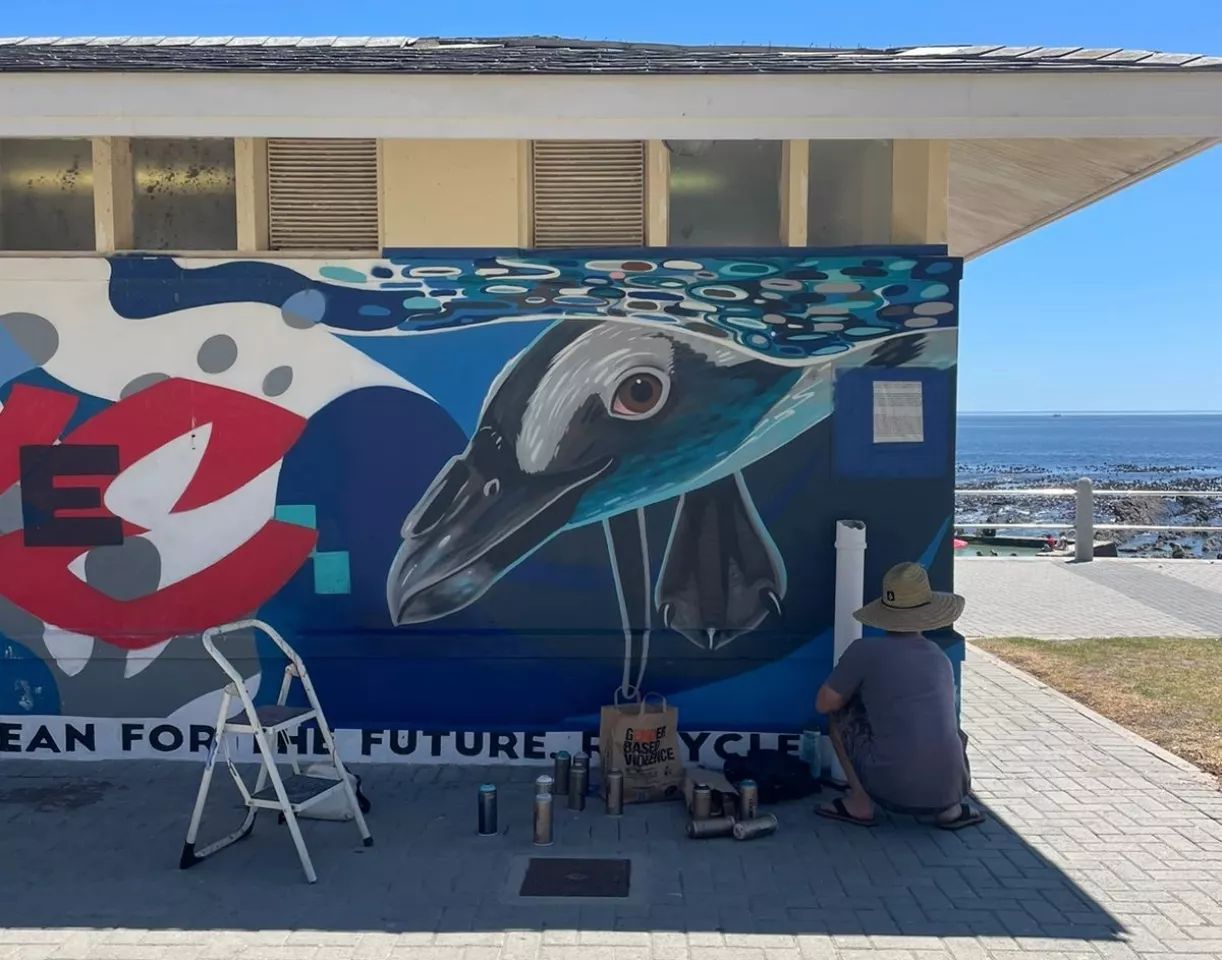
Many people have taken the news on the chin and bounced back to raise awareness. Artists like Giffy have dedicated murals to the species in popular spots like the Sea Point promenade in hopes that when people see it, they might be inspired to focus on a world where murals like his do not become relics representing species of the past.
“For some time, I have been keen to paint another penguin mural to create awareness for this special creature. I knew they were very endangered and have known this for some time. I have just seen that today, the IUCN has listed these beautiful birds as CRITICALLY endangered,” Giffy shared.
These precious birds are worthy of our fierce protection. Let us be their voice!!” the artist added.
Whether it’s through social media, a creative initiative or exercise for a cause, make space for the penguins in your charitable thoughts and activities—it counts more than ever.
 by
by