


And here’s how to spot hoaxes before they hijack your group chats.
Johannesburg, South Africa (11 December 2025) – Every few months, South Africa produces a viral story so wild that the nation collectively goes: “Yoh, imagine if this were true.”
Remember the wildly satirical article about robbers accidentally hijacking a snake transport truck that went viral in July? Well, this one is even wilder. And just as much… not true.
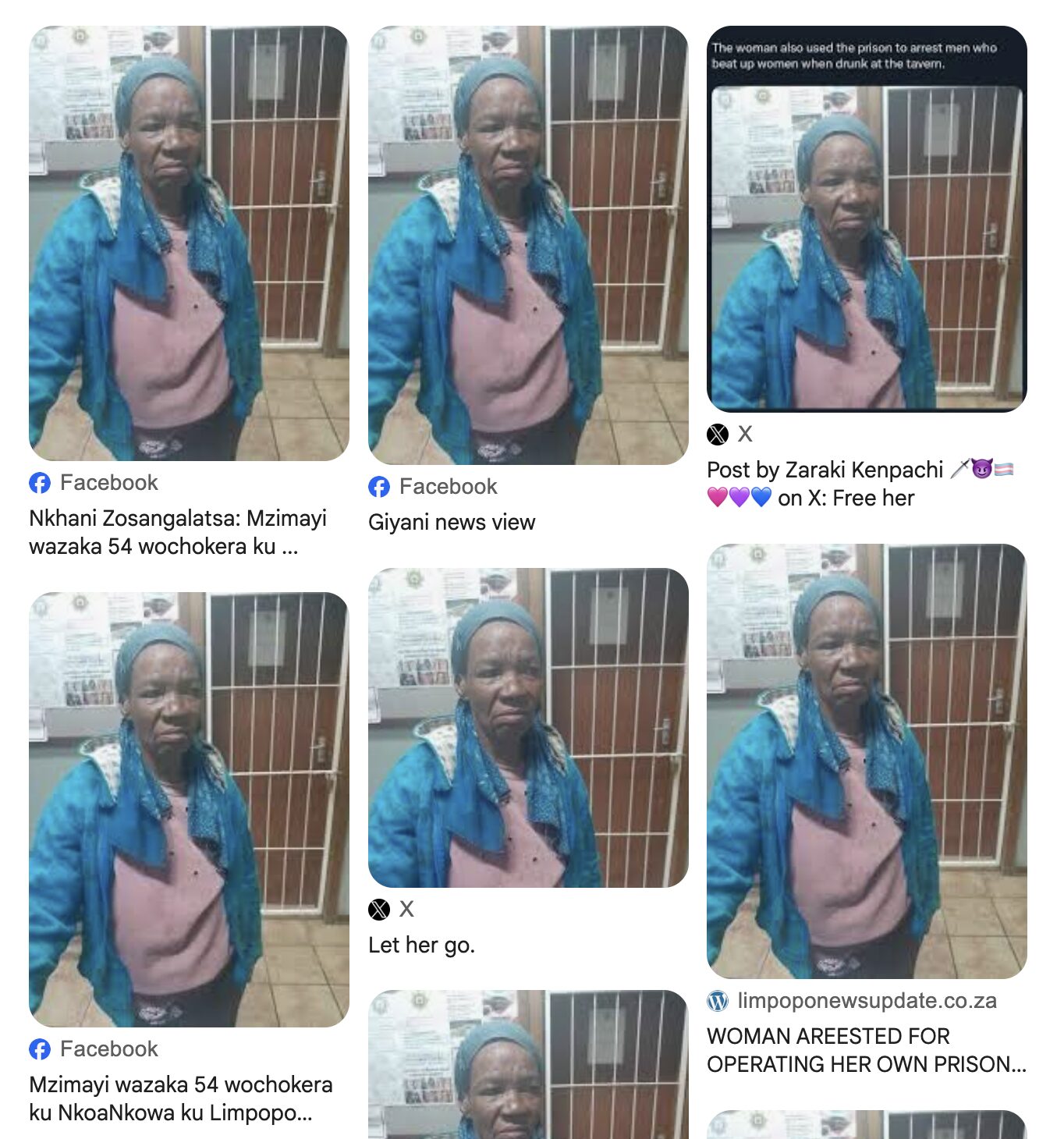
This week’s story was the absolutely bonkers “account” of a 54-year-old (or 44-year-old depending on the post) Limpopo woman who apparently “opened her own prison” in her backyard and calmly detained drunkards who didn’t pay their tavern bills. There were also versions of people being “arrested” for drunken driving, aggressiveness and some more crazy stuff in between. It had everything: drama, crime, vigilante justice, gender-based violence interventions, unpaid tabs and a granny-with-a-plan energy that made people cheer, “Free her… she’s doing the Lord’s work!”
Except… none of it happened.
Zero. Zilch. Not even a tiny sliver of truth.
It looks like the entire thing started as a Facebook Facebookery on the 8th of December and snowballed faster than a WhatsApp about Woolies selling Prosciutto for R9999.99. Except that one is true.
Police eventually had to step in two days later to say, “Guys. Please. This is fake.”
And that, friends, is how a fictional tavern-owner-slash-prison-warden took over the internet for 48 hours.
So, where did it come from? How did it spread? And how do we stop getting duped by these things? Let’s break it down… with a little humour, because laughing while learning is peak South African excellence.
Related Story
So… where did this nonsense even start?
The original post appeared on Facebook, not a news outlet, not a community newspaper, not a journalist’s page. Just a random social media account with a “Breaking News!!!” banner slapped on top. No byline. No source. No link. No nothing.
And the spelling was a dead giveaway. The viral version first used the word “areested”. That alone should have told us this wasn’t penned by someone with an editor. Or even spellcheck. The post claimed a woman in NkowaNkowa opened her own prison, jailed men who didn’t pay their bills, and locked up those who beat women “when drunk”. It also referred to her as “he” at one point. Again, not usually how a legitimate arrest report reads. But because the story was so outrageous (and honestly, sounded like something you’d watch in a soapie), people copied it, pasted it, reshared it and before long it was everywhere. X. Instagram. Threads. WhatsApp. Probably even your auntie’s church group.
One big X account even got millions of views by calling her a “legend”. Everyone jumped on the bandwagon… except the journalists. Because there was nothing to report.
By the 10th of December, the virality reached the point where the cops themselves had to step forward.
“There is no such case. There was no such arrest. This is fiction.”
That’s how far the story spread. SAPS literally had to log on and explain that nobody in Limpopo was running a backyard correctional services branch.
And look, if someone actually built a private prison and stuffed people in it, every news outlet in the country would’ve run it instantly. There’d be photos, court records, interviews and statements. The whole shebang. But instead, not one reputable news source has reported on it. Because the entire thing was stitched together from imagination, memes and the nation’s love of a vigilante story.
There are a few clues that a story is fake. This one had all of them. Like a hoax bingo card.
1. No real source.
If a story doesn’t appear on reputable platforms but is somehow all over Facebook groups with blurry graphics. It’s suspect.
2. Dodgy grammar.
Real outlets don’t write headlines like “WOMAN AREESTED!!!” If they did, their editors would also be arrested.
3. A completely absurd premise.
A tavern owner running a full-on correctional facility with 36 inmates? Come on. Even Netflix would say it’s too far-fetched.
4. No official confirmation.
If police, courts, or government don’t mention it, but your uncle’s WhatsApp group does, be cautious.
5. No matching photos.
The viral picture didn’t match any real arrest. Reverse-image searches would’ve shown it was unrelated.
6. Emotion before evidence.
The jokes flew faster than the facts. When people are reacting, not verifying, that’s when fake news thrives.
So, in order to help us distinguish the real from the not, we’ve put together a short guide to avoid being bamboozled next time.
1. Check who posted it.
“ADMIN OF SKEEF NEWS PAGE” does not count as a source.
2. Look for real reporting.
If The Citizen, News24, eNCA, TimesLive, Sowetan, BBC, SABC, etc. are all silent. That’s telling.
3. Search for an official statement.
Police love a press release. If they haven’t said anything, the story probably isn’t real.
4. Verify the image.
Reverse-image tools are your friend.
5. Slow down before sharing.
If it triggers an instant reaction, stop and breathe. That’s how hoaxes trick us.
6. Use fact-checking sites.
Africa Check, AFP Fact Check, Real411.. they exist for moments like this.
This story was hilarious. The memes were gold. South Africans know how to take a tall story and turn it into social media poetry. But it was fake. And even funny fake news still spreads confusion, wastes officials’ time, and teaches people to believe anything with a sensational headline.
So no, there was no tavern warden running a correctional centre from her backyard but there was a nation ready to believe it. South Africa, we really are a movie.
 by
by 