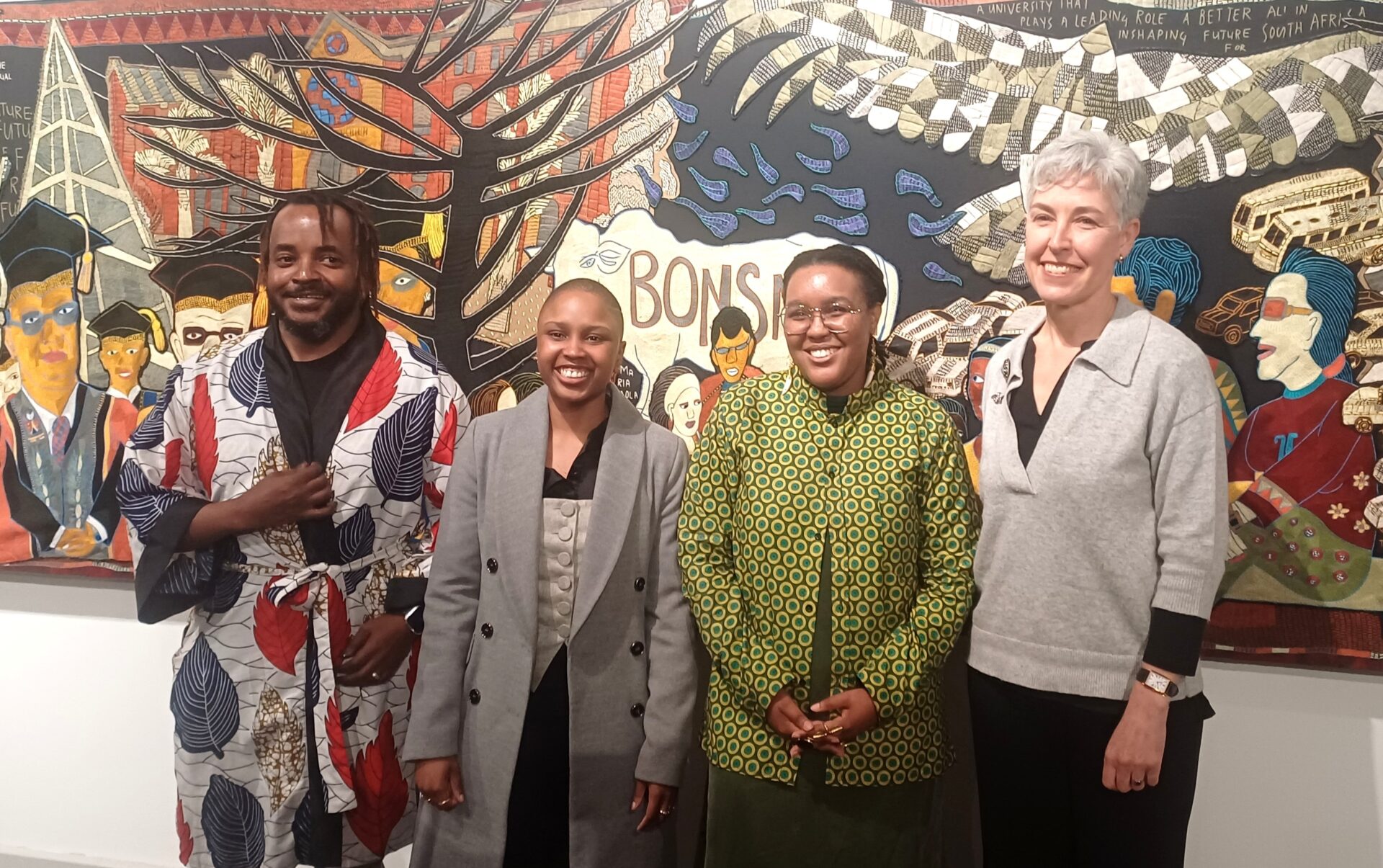
A powerful doccie by UP student Motlatjo Mogoboya has beautifully captured how women in rural Limpopo use needle and thread to confront the social and economic challenges they face.
Pretoria, South Africa (02 October 2025) – Embroidery might seem like a simple craft, but for the women of Mogalakwena in rural Limpopo, it is much more – it is a form of storytelling, resistance and livelihood.
This has been remarkably captured in a documentary by University of Pretoria (UP) master’s student Motlatjo Mogoboya, who explores how the women use needle and thread to confront the social and economic challenges they face in post-apartheid South Africa.
The documentary focuses on the women of Mogalakwena whose work at the Mogalakwena Craft Art Centre has not only been a source of income, but also a means of engaging with gendered, racialised and economic inequalities in South Africa since 1994.
Amplifying the Voices of Mogalakwena Women
Mogoboya says she made the documentary to centre black women’s experiences within their relevant social contexts.
By focusing on the marginalised voices of the Mogalakwena women, she aims to reflect broader patterns of gender inequality – an approach that is deeply personal for Mogoboya.
“Coming from a black, female-led household, it became apparent to me that [black women’s] experiences in many social and historical contexts are ignored,” she says.
“The film responds to this silence, seeking to restore visibility and agency to these women’s realities.”
The documentary captures quiet moments of embroidery and conversation, revealing how this traditionally domestic craft functions as both cultural preservation and self-expression. The women’s stitching tells stories of resilience and survival, reflecting their experiences of absence, hardship and hope.
Mogoboya frames these narratives within the concept of “triple oppression” that she says continues to shape black women’s lives in South Africa.
Related Stories
 How Do We Keep Matric Dances Special Without Making Them So Expensive?
 The Vlamo Video Was Horrifying. The Response Gives Us Hope!
“Black women have suffered from a triple oppression – race, economic exploitation and gender,” she explains.
“This oppression has evolved and taken different forms, including persistent gender pay gaps, unpaid care work and limited economic opportunities, especially in rural areas.”
Examining Power Dynamics
The film also offers a critical examination of power dynamics within empowerment projects, exploring the dynamics that inform the relationship between the women and the Craft Art Centre.
It highlights how these dynamics are shaped by South Africa’s colonial and apartheid history, which entrenched black women’s social, racial and economic marginalisation.
A Deeper Exploration into Embroidery and Textile Arts
Mogoboya’s research also explores how embroidery and textile arts serve as alternative archives; the significance of using a feminised, domestic craft to challenge dominant historical narratives; and whether these crafts provide meaningful income and empowerment in rural contexts.
The documentary illustrates that embroidery is a form of historical testimony rooted in the hands and memories of women who have been excluded from formal archives.
A Powerful Portrayal of Women
The documentary portrays the women not as passive recipients of development but as active agents shaping meaning through their craft. It avoids romanticising their labour, instead presenting it as a complex mix of creativity and constraint, empowerment and exploitation. Ultimately, the film challenges traditional views of history and heritage, expanding them to include experiences as encoded in textile work.
“If we are truly committed to transforming historical scholarship and cultural heritage practice, we must begin by listening to the voices that have been silenced for too long and by recognising the many forms that history can take,” Mogoboya says.
Sources: Supplied
Don’t ever miss the Good Things. Download the Good Things Guy App now on Apple or Google.
Do you have something to add to this story? Please share it in the comments or follow GoodThingsGuy on Facebook & Twitter to keep up to date with good news as it happens, or share your good news with us by clicking here or click the link below to listen to the Good Things Guy Podcast with Brent Lindeque – South Africa’s very own Good Things Guy. He’s on a mission to change what the world pays attention to, and he truly believes there’s good news around us. In the Good Things Guy podcast, you’ll meet these everyday heroes & hear their incredible stories:
Or watch an episode of Good Things TV below, a show created to offer South Africans balance in a world with what feels like constant bad news. We’re here to remind you that there are still so many good things happening in South Africa & we’ll leave you feeling a little more proudly South African.
 by
by