She was South Africa’s voice to the world, and when she came home, she gave that voice to those who needed it most.
South Africa (2025) – A legend has left us. Mimi Coertse, one of South Africa’s greatest treasures and one of the world’s most celebrated soprano voices, passed away peacefully in her sleep. She was 93 years old.
The news was shared by her close friend Lizet Du Plessis, who asked that thoughts be held for her children, Mia and Werner, and the grandchildren she loved so deeply.
But grief, while raw and real, tells us only half the story. Because the life Mimi Coertse lived was absolutely extraordinary. It was full, purposeful, and brave in ways she will always be remembered for.
Mimi was born in Durban in the early ‘30s. She made her debut at the Johannesburg City Hall in December 1951, singing Handel’s Messiah. It was the beginning of a career that would carry her name to the most prestigious opera houses on earth.
Three years later, she left for Vienna to study, and soon after signed a contract with the Vienna State Opera Company. Her spectacular debut at the Vienna State Opera on 17 March 1956 in the role of the Queen of the Night from Mozart’s The Magic Flute. She would go on to sing that single role more than 500 times, on stages across Austria, Italy, Greece, Switzerland, Germany, Belgium, Spain, England, France, Hungary, and the United States.
She did all of this during an era when South Africa was being culturally boycotted by much of the world. And yet, Mimi carried her country’s name with grace and dignity through 29 different operas, earning the title that would follow her forever.
‘The Voice for South Africa.’
The Austrian government recognised her greatness too. She received the honorary title of ‘Kammersängerin’ from Austria in 1966, one of the highest honours in the opera world, and in 1996, she was awarded the Österreichisches Ehrenkreuz für Wissenschaft und Kunst, the highest accolade the Austrian government bestows.
Related Stories
 Healers, Helpers And Heroes: South Africa's Good News Wrap Up!
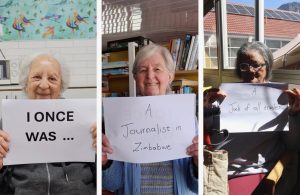
 Elderly Share Their 'I Once Was…' Stories in Heartwarming Video!
In the early ‘70s, at the very height of her European career, Mimi made the decision to return permanently to South Africa. Back home, she channelled everything she’d learned and every connection she’d made into uplifting others. She knew Nelson Mandela personally and was honoured by the ANC.
Even after her Waterkloof music room in Pretoria was burned down by white racists, a cowardly act of destruction that could have broken a lesser spirit, she fought on.
In 1999, alongside Neels Hansen, she co-founded the Black Tie Ensemble, an organisation created specifically to preserve opera traditions in South Africa and open pathways for gifted young black singers to pursue careers on the opera stage. That ensemble later evolved into what became the Gauteng Opera.
In 2012, she co-founded the Bel Canto Ensemble with Jonathan Watkins, continuing her commitment to nurturing the next generation of voices.
She also established the Mimi Coertse Bursary and her beloved ‘Debut with Mimi’ series, which gave lifelines for young South African musicians who might otherwise never had their chance.
Perhaps less known is that Mimi was also a passionate art collector, and her collection spoke volumes about who she was, too. Her taste ran toward women artists like Cecil Higgs, Irma Stern, Maud Sumner, Marjorie Wallace. Artists who, like Mimi herself, had fought for their place in a world that didn’t always make room for them.
Just last year in July, a small but significant collection of eight works from her personal collection went under the hammer at a live-virtual auction by Strauss & Co. The sale was titled ‘High Note’.
Mimi Coertse received an honorary D.Phil from the University of Pretoria in 1998. She received the State President’s Decoration for Meritorious Service in 1985. She was awarded a Medal of Honour and Honorary Membership from the South African Academy of Arts and Sciences. She appeared in opera on television, performed The Sound of Music in Pretoria in 1995, and contributed immeasurably to the popularising of the Afrikaans art song.
What really defined Mimi was the decision she made, again and again, to use her gifts in service of others.
She sang when the world wanted her silenced. She came home when she could have stayed celebrated abroad. She built ensembles, bursaries, and debut stages for young artists who needed someone to believe in them. That is the voice that will always echo on.
Rest in peace, Mimi. South Africa is better for every note you ever sang.
 by
by