When 85-year-old Priscilla Stevenson received her macular degeneration diagnosis, she didn’t panic about what she would no longer be able to do as her sight deteriorated. She thought about the art she could still create, refusing to let her circumstances define the boundaries of her life.
Port Shepstone, South Africa (28 August 2026) – What would you stop doing if you could no longer see?
Every day, older people hear the same diagnosis: macular degeneration. Most people think first about what they will lose. For millions of people living with macular degeneration, the question isn’t theoretical.
As central vision slowly disappears, so too do many of life’s greatest pleasures. Reading becomes exhausting. Driving comes to an end. Faces blur. Needlework, photography, painting, even pouring a cup of tea become daily challenges. Add hands that tremor with their own agenda, and this combo would make most of us pack away the things we love.
But 85-year-old Priscilla Stevenson had a different response!
She thought about what she could still create. With eyesight that has deteriorated dramatically because of macular degeneration, she opened an exhibition of her paintings in the coffee shop at Mbango Valley Retirement Village on KwaZulu-Natal’s South Coast.
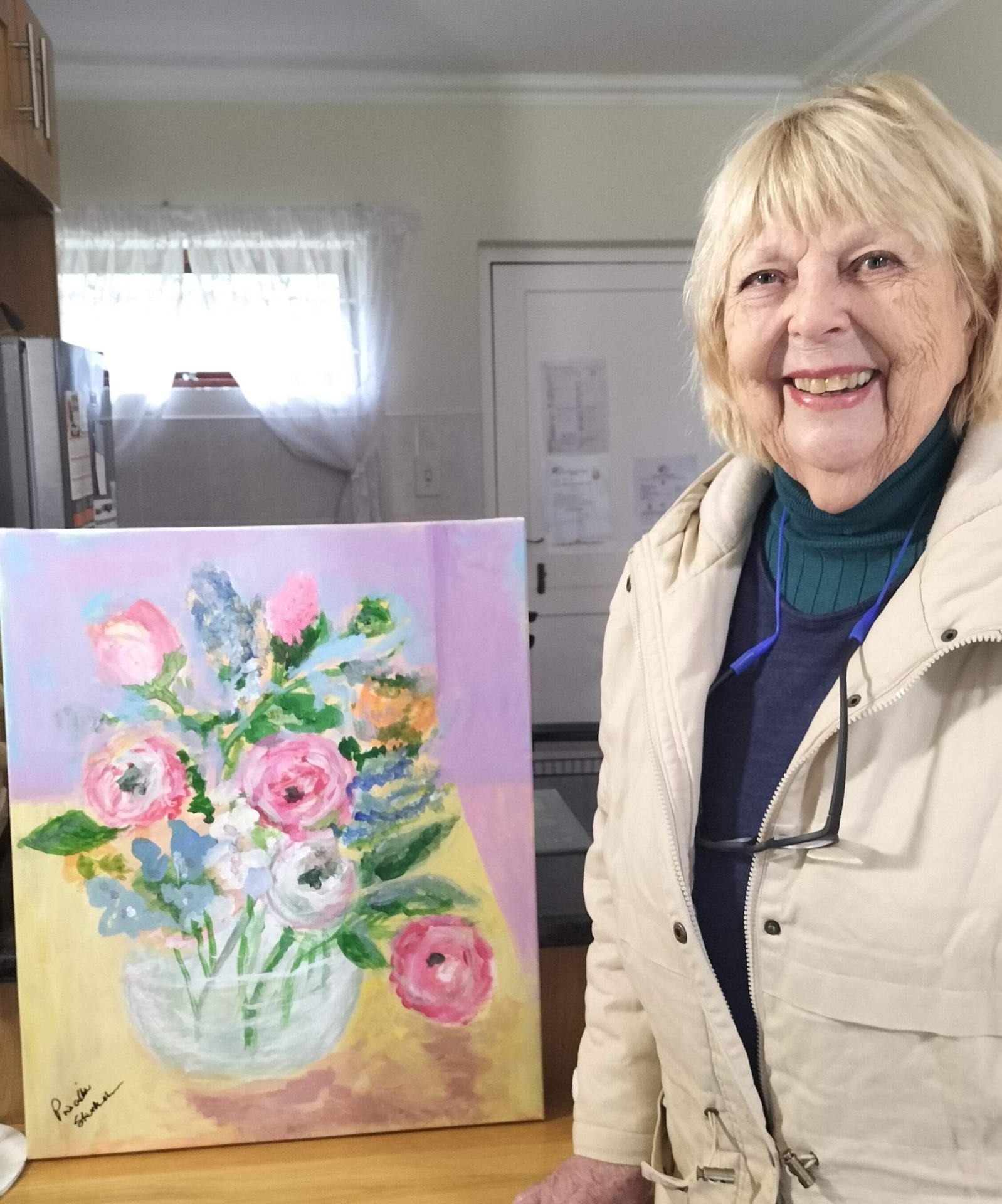
An artist whose vision is failing has invited the public to look closely at her work. That takes extraordinary courage. Every brushstroke now demands patience, concentration and determination.
Yet she refuses to let her circumstance define the boundaries of her life. Through a long career as an occupational therapist, she spent her professional life helping people with disabilities rediscover purpose through varied activities.
During the 1990s, she founded Access College in Johannesburg, where people with disabilities were trained and placed into meaningful jobs.
She knows that healing is not only physical. It is emotional, spiritual, psychological and deeply personal. Her life’s work has been about encouraging people to find another way of being after losing their ability to function as they once had. Her own response to life reflects that belief.
Related Stories
 Graham Howes’ Legacy Lives On Through New NSRI Rescue Vessel
 A Community’s Mission to Restore Dignity and Keep Hope Alive for Bhekani
Although her artistic talent was recognised as a child, and she studied art at school, it was only after retirement that she devoted herself to painting. Under the guidance of respected South African artists Karin Daymond and Allana Deall, she developed a body of work inspired by the landscapes and flora of Dullstroom and Nelspruit.
Whilst she paints primarily in oils and acrylics, one of her pastel portraits sold for R8,000 at a charity auction. But today, her greatest achievement is not the sale of a painting. It is the decision to keep painting at all.
Macular degeneration has taken much from her, but it has not taken away her identity. Although she never thought of herself as an artist, it is becoming her new identity. She knows these paintings are different from those she produced years ago. But instead of packing away her brushes, she is finding another way to do what she loves.
More slowly. More intuitively. More courageously. Many people say they have lost confidence as they get older.
“Learning to paint in a different way has given me a new level of confidence,” Priscilla says.
“For me, it is more than producing beautiful art. It shapes my days, connects me with others, and keeps me active.”
Her paintings reveal not only what she now sees, but who she is becoming.
Her exhibition is not really about art. It’s about resilience. It’s about refusing to surrender the activities that make us feel alive. Continuing to pursue what feeds our soul, irrespective of our age.
And it is a reminder that growing older, living with illness or disability isn’t the end of creativity. Sometimes it simply asks us to discover another way of expressing it.
Sources: Supplied
Don’t ever miss the Good Things. Download the Good Things Guy App now on Apple or Google.
Do you have something to add to this story? Please share it in the comments or follow GoodThingsGuy on Facebook and Twitter to keep up to date with good news as it happens, or share your good news with us by clicking here or click the link below to listen to the Good Things Guy Podcast with Brent Lindeque – South Africa’s very own Good Things Guy. He’s on a mission to change what the world pays attention to, and he truly believes there’s good news around us. In the Good Things Guy podcast, you’ll meet these everyday heroes and hear their incredible stories:
Or catch an episode of Good Things with Brent Lindeque or our Weekly Top 5 below. The videos here are always changing, updated with the latest episodes from these two shows. Both are part of Good Things TV, created to bring South Africans balance at a time when the news can feel overwhelmingly negative. Our goal is simple: to remind you that there are still so many good things happening in our country – and to leave you feeling a little more proudly South African.
 by
by