This Saturday is World Migratory Bird Day. It isn’t just a niche celebration for birders, it’s really a day for all of us!
South Africa (09 May 2026) – Right now, just as you’re reading this, millions of birds have taken to the air in a great journey. Species that spent the southern summer on African wetlands, coastlines and rangelands are making their way north to breed in the Arctic.
They’re crossing deserts, oceans and many dozens of borders along ancient routes called flyways. It’s one of nature’s greatest shows, and most of us don’t know about it, let alone look up to catch it.
Did you know that migratory birds do so much for the planet and ultimately for us? They carry nutrients across oceans, pollinate plants, spread seeds, keep crop pests in check and even hold disease at bay.
Sadly, more than 40% of bird species worldwide are now in decline. When birds disappear from a flyway, it’s a sign that something in that ecosystem is under serious strain.
Martin Harper, CEO of BirdLife International, says that the signals coming from the great migratory routes are difficult to ignore.
“Migratory birds connect us across countries, continents and ocean currents,” Harper says. “Protecting the major migratory highways of the world is how we reverse those declines. And when we do, people gain too: cleaner water, food security, flood protection, and more resilience to a changing climate.”

Africa sits at the heart of the migration journey. The African–Eurasian Flyway is one of four major land flyways on the planet. It links southern Africa all the way to the Arctic and back. White storks, flamingos, curlew sandpipers, and grey plovers all depend on a chain of healthy wetlands, estuaries and coastlines that stretch from our shores northward through the continent and into Europe and Asia. Break one link in that chain and a whole species can collapse. The Slender-billed Curlew, now extinct, is a reminder of what happens when we don’t act in time.
Africa has a critical role to play in said chain.
“Africa is at the heart of some of the world’s great flyways,” says Dr Paul Matiku, Executive Director of Nature Kenya, the BirdLife Partner in Kenya. “The health of our wetlands, rangelands and coastlines matters far beyond our borders. When we protect these habitats, we protect birds, biodiversity and the communities that live alongside them.”
 The Hope Dealers: James Delaney Turned The Wilds Into a Wonderland
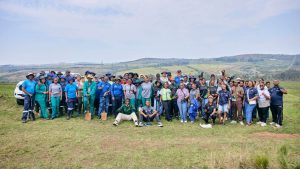
 200 New Indigenous Trees Take Root to Restore Bisley Nature Reserve’s Degraded Grasslands
“It is especially meaningful that the Global Flyways Summit will take place in Nairobi this September – the first time the summit is being held on the African continent.”
Co-hosted by BirdLife International and Nature Kenya, the Global Flyways Summit will bring together leaders from science, policy, finance, business and civil society. Together, they will agree on the action needed to protect migratory birds and the ecosystems they depend on. BirdLife scientists will also launch the new edition of the State of the World’s Birds report, with a focus on flyways. It offers the latest picture of bird populations and what they reveal about the wider health of nature.
So what can you or I actually play in all of this good news? Well, actually, it’s pretty straight forward. BirdLife International is inviting everyone, no birding expertise required, to head outside this weekend, watch the birds, and record what you see on World Migratory Bird Day.
Every observation contributes to important global data that conservationists depend on to understand how populations are shifting and where urgent action is needed. This is how citizen science can help move the needle!
If you followed our piece last month on BirdLife South Africa’s groundbreaking shorebird tracking project at the Berg River estuary, you’ll know that we in SA are connected to this bigger story. Birds tagged right here on our coast have already been tracked through Angola, Botswana and all the way to South Sudan.
The flyway is beautiful, very much alive, and it runs right through us.
So go outside this weekend. Find a park, a garden, a patch of coastline. Bring your camera. Look up. See what’s passing through. The birds have been signalling something for a long time and World Migratory Bird Day is as good a reason to listen up!
 by
by