Venetia Reynolds has had a love for South Africa all her life, despite growing up in the United Kingdom; her South African holiday turned into a wonderful story.
South Africa (15 July 2025) – To begin and understand this story, I, Venetia Reynolds, must first share some context about myself and why I was taking this trip in the first place.
I am British. I grew up here in the UK and although both my parents are as English as could be, my father grew up in the 1970s and 80s in Johannesburg. He has a deep love, not just for South Africa, but for Africa as a whole. Although words like ‘braai’ and ‘lekker’ may seem alien to most Brits, growing up in our household, they were as common as any other word in the English language. Our home has been filled with photographs of road trips and camping excursions through all of Africa, and carved wooden animals are in every room. Therefore, it is safe to say Africa, specifically South Africa, was always a major presence in our household and, therefore, in our daily lives.
When I turned 18, in the peak of the COVID pandemic and having spent two years sitting on my parents’ sofa in lockdown, I decided I needed to get away and have some freedom. Africa, of course, was the centre of my curiosity. I landed myself a job working in a small primary school down in the Eastern Cape. With the pandemic still rife in Europe and stories of crime coming from Jo’burg, it seemed like the most sensible and safest option for a young (and very naïve) British high school graduate.
A year’s contract was agreed, and I packed my bags and headed to what felt like the other side of the world for 12 months. What followed was something far greater than my imagination, a life-changing experience where I made friends for life and developed a deep passion for a continent that opened my eyes in ways I never thought possible. The school itself was a boarding school and all boys, so within weeks, I found myself living in my own version of Spud. The dorms buzzed with the same energy and mischief found in the pages of the novel, and I had my very own group of “The Crazy Eight” to keep me on my toes.
There are far too many stories to tell, but this isn’t the one for them. When my year came to an end, I was reluctantly pulled back to the UK, feet dragging, to resume my studies and chase that all-important degree. The years that have followed have been anything but easy. Many nights I lay awake, questioning if I’d made a mistake by leaving behind a place that had brought me real, unfiltered joy. But we live in a world where paper proof, qualifications, titles, letters after your name, often speak louder than experience, so I returned home.
But the truth I want to share is this: no matter how tough life becomes as a student or as a young person navigating their 20s, Africa has always been, and always will be, a haven to me. People used to say, “Once it’s in your blood, it never leaves.” I never understood that fully until I left. It’s because of that truth, that deep pull, that I scraped and saved every summer during university just to go back. Again and again. It is exactly for this reason that a few weeks ago I found myself flying into the Lowveld for two and a half weeks of driving solo around the Kruger Park and surrounding area.
Now, to the heart of my story. Just before I set off on my journey, South African President Cyril Ramaphosa made an unforgettable visit to the White House. For anyone who watched the interaction between him and Donald Trump, the encounter left a lasting and uncomfortable impression. It’s difficult to view Trump’s accusations as anything other than racially charged. Instead of discussing diplomacy, development, or mutual interests, the conversation was hijacked by inflammatory conversation, words like “white genocide” and “murder” dominated the room.
This moment speaks volumes about how Africa is portrayed in the Western world and the media. In the days that followed, headlines in the UK splashed across front pages with misleading phrases like—”American refugees fleeing violence”, “white persecution in South Africa”, “genocide against farmers.” While many articles ultimately supported Ramaphosa, acknowledging that he was blindsided in what felt like an ambush, the damage was done. For the casual reader, the headline alone was enough to cement an image of South Africa as a lawless, dangerous place where violence lurks at every corner.
It’s no wonder that a distorted, fearful perception of Africa continues to thrive. These narratives, framed with racism and fear, too often ignore the complexities, beauty, and resilience of the continent. And so, it becomes all the more important to push back against these one-dimensional portrayals, to tell the stories that go beyond the headlines. And that is exactly what I hope to do with my story.
Related Stories
 Always Online, Always Exhausted? Experts Share 5 Ways to Take Back Your Life!
 One Last Bowl? We're Not Ready to Say Goodbye to ProNutro!
The problem though is this: there’s a thin line between being cautious and being clouded by bias. One keeps you safe; the other keeps you afraid. The challenge is knowing which voice you’re listening to, your instincts, or the echo of Western headlines. Is it naïve to walk alone in an unfamiliar place? Or is it unfair to assume danger just because you’ve been told to? After the events of my trip, this is what I now question.
It was a long-awaited holiday, one I had planned for months. South Africa, the land of sweeping savannas, wild coastlines, and a cultural heartbeat unlike anywhere else I’ve ever been. From the moment my plane touched down in Johannesburg, I felt a sense of both awe and of coming home.
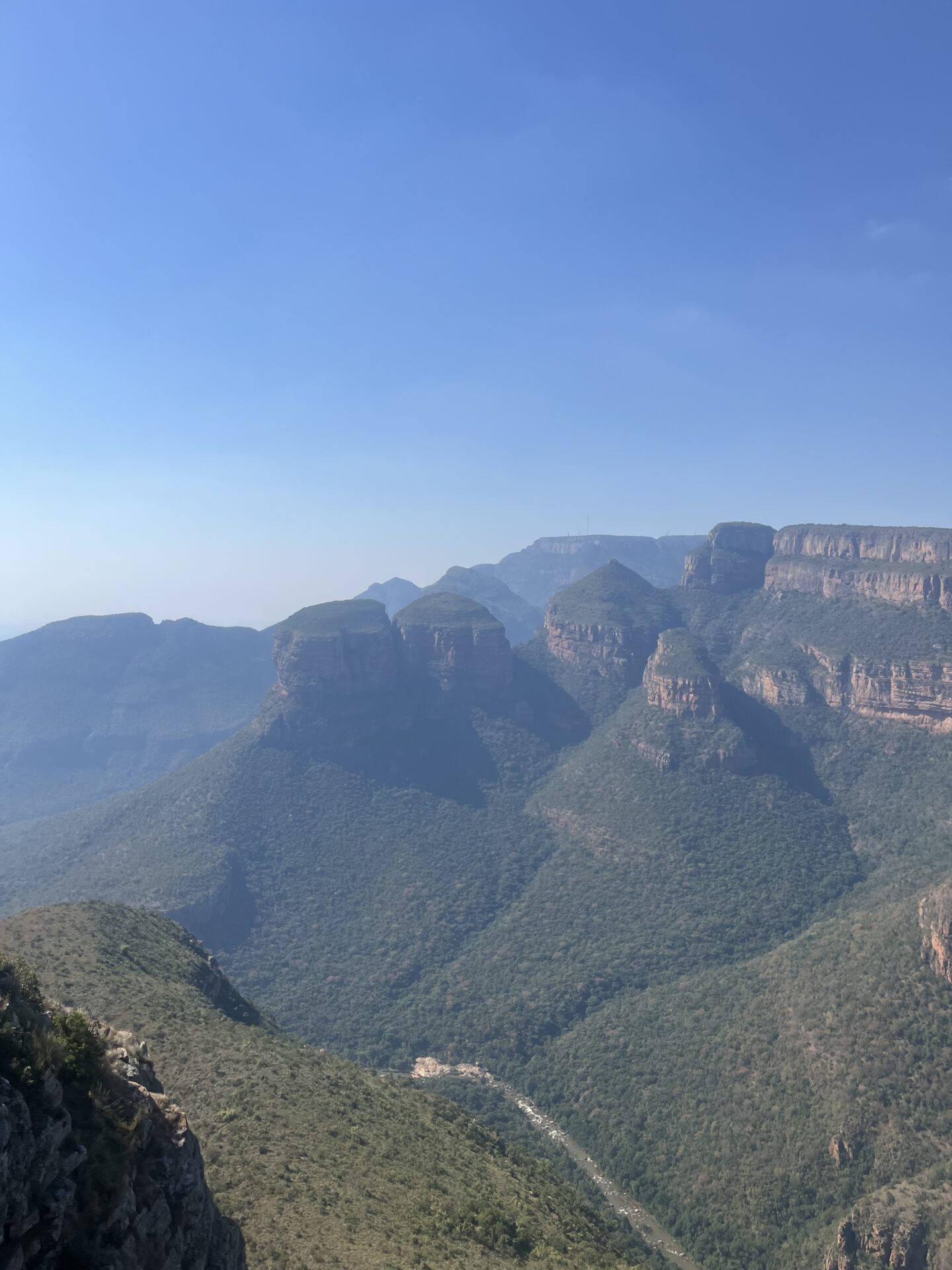
The plan had been to spend a few days outside Kruger Park in a small hotel near Nelspruit before heading into the park for 10 nights. On one of my first days, I decided to make a day trip north, which was very easy to do, considering I had hired a small Volkswagen Golf to drive around in. When I was a child, on my first trip to South Africa with my parents, we visited a place called the Three Rondavels, a natural wonder in the Blyde River Canyon. Three mountain peaks shaped like traditional African huts standing in proud formation over one of the largest green canyons in the world. I decided that I was going to go back and see the sights, this time completely on my own.
The road there was mostly empty, winding through vast stretches of wilderness. Birds of prey circled above, and now and then, I passed small townships, rusted corrugated roofs and children chasing farm animals barefoot across dusty fields. I felt both deeply foreign and strangely at home. There’s something grounding about a land that holds so much history in its soil. The reminder of the extreme poverty around me made me even more grateful for the privilege of the trip that I was making.
About halfway to the canyon, on a narrow, poorly maintained stretch of road, I hit trouble. It was completely unexplainable, but I lost control of the car. Looking back now, I know for a lot of different reasons that I had a tyre blowout. I won’t go into the details, but it shook me hard. One minute I was on the road, the next I was not. When I emerged from the car, the car was wrecked. I was shaken but, miraculously, uninjured. The road was desolate and I had very little signal. I stood stunned in the stillness, surrounded by distant mountains and the sense that I was very, very alone. However, it was at this moment that I became aware of my surroundings. I had crashed very near to the entrance of a Township. Thoughts entered my head of all things that are often associated with Townships: crime, violence, danger. I’d been told many times, never go there, especially alone. Not only was I trying to process what had just happened to me, but I was fearful now for my own safety, completely aware that I was unable to protect myself, and very quickly, people started to appear from the hillside, curious to see what all the commotion was about.
Just as my mind spiralled through the fog of Western biases, the stereotypes, the fear, the what-ifs, and that fear began coursing hot and sharp through my veins, a man emerged quietly from the growing crowd. He stepped forward with gentle eyes and asked if I was alright. In truth, I was so shaken I could barely string together a sentence, but even in my disoriented state, I could tell he spoke the clearest English of those around me. The others, chatting in what I assumed was siSwati or another local dialect, circled the car, peering at the damage with the calm curiosity of people familiar with the road and its stories.
The man very calmly pulled out a mobile phone and told me softly that he would call the police. I nodded, though I barely registered his words. Emotionally frayed and far from everything familiar, I reached for the one connection I needed most in that moment, my mother, thousands of miles away. Her voice steadied me. We agreed that I would call the rental company next, arrange roadside assistance and do something practical.
However, before I could even dial the police arrived, faster than I ever expected. A dusty blue vehicle pulled up, two officers stepping out: one middle-aged, stern yet not unfriendly; the other younger, his eyes sharp but not unkind. They moved with quiet efficiency, taking my statement and asking the necessary questions. Through it all, I could see the kindness behind their professional eyes. They saw I was shaken. They didn’t rush me.
By the time I looked around again, the crowd had melted away. The man with the phone, the quiet onlookers, the hum of unfamiliar language, they had vanished as suddenly as they had come. Like ghosts in this ancient landscape. I didn’t even get the chance to ask his name or thank him for his help.
The next decision, after speaking to people in an office a few hours away at the Hire car company was that a tow truck would be sent out to pick the vehicle and I up before returning us to civilisation. The only problem with this is that I was in such a rural place that it would be a 2-hour wait. The policemen, both calm but clearly alert, one with a rifle slung across his chest, the other with a pistol at his hip, decided it was not safe for me to remain where I was, even with them both by my side. Before I knew what was happening, a call was made, and very shortly afterwards and much to my surprise, an ambulance pulled around the corner. The policeman wanted me checked out because they could see the serious emotional distress I was in, and it was thought that it was the best way to get me away quickly and to somewhere safe before prying eyes returned.
Now, those who know Africa well will know that the likelihood of a Police van and an Ambulance turning up at all, let alone in such a short period of time, is incredibly unlikely. The next thing I knew, though, I was in the front of the Ambulance. I expected a hospital ride, but the paramedics had other plans. “You’re not injured. You’re lucky,” one said. Then, to my surprise, he continued, “You’ve come all this way to see the sights, you have to make your trip worth it. Let us take you.”
And just like that, I found myself being driven through the wilderness by two chatty paramedics, laughing at how surreal it all was. We passed through hamlets where children waved, past a viewpoint where locals sold carved giraffes and beaded bracelets, and then we arrived.
We pulled through the entrance to the viewpoint. I would love to have seen the sight of an ambulance turning up at a tourist hotspot, and a young girl climbing out with two paramedics. The Three Rondavels rose before me like ancient guards, shaped by wind, time, and ancestral stories. I stood there admiring the view and taking in the vast scenery, and for a moment, nothing else existed. No crash. No fear. Just the silence of stone and the endless expanse of the canyon.
When I finally left, it was in the cab of a tow truck, parting ways with my new friends in the ambulance and the police van who’d stayed to watch my car. The driver, a young man with very little conversation, said to me in broken English: “You were lucky, this place is dangerous. These people, they will search you.” His use of the word ‘search’ needed no explanation; I knew exactly what he meant. My body tingled as I thought about all the things that could have gone wrong.
That night, back in my hotel room, bruised and exhausted, I looked at the photos I’d taken, some blurry from shaking hands, others perfectly framed. The rondavels looked like something from another planet. But they were real. I had been there.
My holiday to South Africa was meant to be about adventure, wildlife, and culture. I didn’t expect a car crash. I didn’t expect strangers to help me. I didn’t expect to feel safer in an ambulance driven by laughing paramedics than on a road alone. But that’s the heart of this country, it confronts you, challenges you, and in doing so, reveals something special.
South Africa is a country of striking contradictions, a place where breathtaking beauty and raw danger often walk hand in hand. Yes, crime exists here, sometimes harsh, sometimes born of desperation and chance. Alongside it though lives something far more powerful: profound kindness. In towns and villages where material wealth is scarce, you’ll find people overflowing with warmth, generosity, and joy. They have little, yet they give freely.
They’ve endured much, yet they smile easily.
And that, perhaps, is the true essence of this place.
So if there’s a lesson in my story, it’s this: don’t let the headlines shape your understanding. Don’t allow fear or foreign rumours to convince you that South Africa is a place to be avoided. Because if you’re bold enough to look past the surface, to embrace the uncertainty, you’ll discover something unforgettable. It may not always be easy, but it’s always, always worth it. Was I extremely lucky, and could things have gone wrong? Yes. However, I had been guilty of assuming the very worst in a situation where people had only the best intentions, and that is something I am ashamed to admit.
Thank you to the man who called the police and stepped forward to help when I was at my most vulnerable. Thank you to the Policemen who turned up so quickly and put my safety first. Thank you to my new friends Thabo and Bongani, the paramedics who took me away safely and made me laugh in our visit to see the sights. Thank you to the tow-truck man who took me home to safety. Thank you to the staff at the hire-car company who continuously checked in on me and helped me out of a tricky situation. Thank you to the staff at my hotel who made sure that I was getting the help I needed, and finally, thank you to my friends across the country who, when hearing the news, checked in to see that I was safe.
Each of you has reminded me of something powerful: that yes, caution is wise, but fear shaped by bias is dangerous. You’ve given me faith in not only South Africa but humanity, too. Finally, to all journalists out there and those who speak negatively of Africa, please think before you write your next stories on Africa because the stories of violence may catch the eye, but it’s the stories of kindness that win the heart, and in the end, they are the ones that last.
Sources: Email Submission
Don’t ever miss the Good Things. Download the Good Things Guy App now on Apple or Google.
Do you have something to add to this story? Please share it in the comments or follow GoodThingsGuy on Facebook & Twitter to keep up to date with good news as it happens, or share your good news with us by clicking here or click the link below to listen to the Good Things Guy Podcast with Brent Lindeque – South Africa’s very own Good Things Guy. He’s on a mission to change what the world pays attention to, and he truly believes there’s good news around us. In the Good Things Guy podcast, you’ll meet these everyday heroes & hear their incredible stories:
Or watch an episode of Good Things TV below, a show created to offer South Africans balance in a world with what feels like constant bad news. We’re here to remind you that there are still so many good things happening in South Africa & we’ll leave you feeling a little more proudly South African.
 by
by