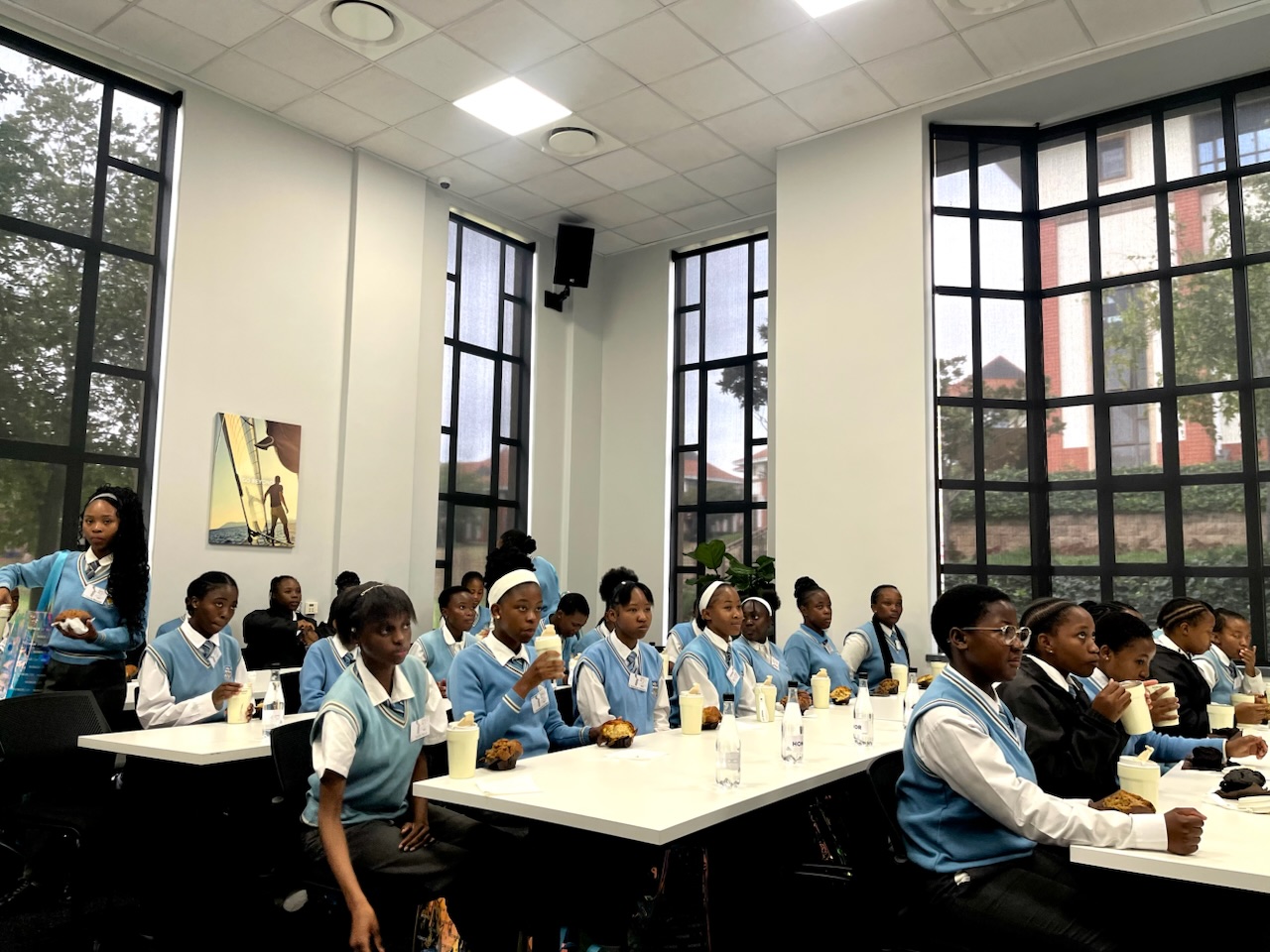
Girls in ICT Day brings together 40 learners, offering practical exposure to technology and new possibilities.
Johannesburg, South Africa (28 April 2026) – For many young girls in underserved communities, access to technology is often out of reach. But for a group of Johannesburg learners, that gap is slowly being narrowed through a model that focuses less on one-day exposure and more on sustained support.
Through Honor, at the centre of this approach is the Siyafunda Education Foundation, a non-profit working to extend digital skills training into communities where resources are scarce but curiosity is not.
“What we’re trying to build is a full experience,” explains Slindokuhle Mbuyisa. “Today is just the introduction. The real work continues when the girls go back into their communities.”
That continuation happens through Siyafunda’s training centres, where learners are given ongoing access to digital tools and structured learning. What makes this great is that it’s often within walking distance of their homes.
In communities where schools may not have fully equipped computer labs, this kind of access becomes critical. It also addresses a deeper issue: the gap between inspiration and opportunity.
“Exposure on its own isn’t enough. There has to be a place where that interest can grow.”
That growth is already visible in how the girls are engaging. Rather than passively absorbing information, many are arriving with ideas and questions about how technology can be used to solve problems in their own communities.
“One of the girls was already talking about putting together a proposal. At 15, she’s thinking about how to create something that can help others. That level of awareness is powerful.”
The programme also introduces concepts like artificial intelligence early on. Not as something intimidating, but as a tool that can be shaped responsibly.
Related Stories
 Table Mountain Venue Snags Another World-Class Win for South Africa!
 Vusa Launches Upgraded DigiBus to Boost Digital Learning for Langa Schoolchildren
“If young people are part of the conversation from the beginning, they’re more likely to use it in ways that are thoughtful and relevant to their realities.”
Beyond the technical skills, there is also a longer-term intention: to address the visibility gap for women in technology.
“We’re used to trying to bring women into these spaces when they’re already adults. By then, we’re playing catch-up. The idea is to start earlier.”
The hope is that over time, this early investment will translate into real outcomes. From certificates and further studies to employment opportunities. In the longer term, it’s about creating a pipeline that supports them all the way through it.
 by
by