Today is World Environment Day. The message isn’t doom, it’s a call to act.
South Africa (05 June 2026) – Every year on the 5th of June, the world marks World Environment Day, the biggest global platform for bringing people together around one shared purpose to protect the planet we all call home.
Our planet has been communicating with us in ways that have become impossible to ignore. It’s true – The seas are rising. We’re going through record-breaking heatwaves and wildfire seasons. Glaciers are disappearing before our eyes.
Yet, beneath all of those urgent signals, there’s something else stirring that doesn’t make as many headlines. Hope.
One of the most damaging things we can tell ourselves about the environment is that the situation is ‘hopeless.’
Humanity has made amazing strides in protecting the planet in the last few decades. Conservation is a great space to find some of that hope in.
A new study co-authored by University of Pretoria conservation scientist Professor Stuart Pimm found that conservation is working. Not perfectly, not everywhere, not evenly across the board, and not at the speed we need, but it is working.
“One of the most common misconceptions about the current state of biodiversity conservation is that somehow it’s too late,” Professor Pimm said. “Yes, there are conservation problems, but we are solving some and could solve more if we had the resources.”
Professor Pimm makes the important point that alarmist messaging can backfire. When people feel there is no hope, they are less likely to act, not more.
“If the public feels there is no hope, it will distract from the challenges we face,” he said.
 Give Hudson a Chance! SA Maker Turns Recycled Plastic Into Furniture
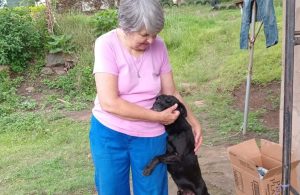
 The Scottburgh Animal Hero Who Feeds Township Dogs and Cares For 70 Rescues Needs Your Help
When ordinary people are inspired enough to act and make a change – even if just in their own small way, in their own small corner of the planet – it makes a difference.
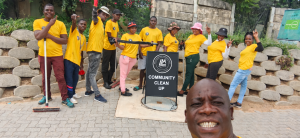
As we speak, across South Africa this week, ordinary people are rolling up their sleeves and acting to better the environment. Groups like Save-a-Fishie, Armour, Hennops Revival, Soulbent, CityZen, the Helderberg Ocean Awareness Movement, Clean Projects, and many, many more are organising and running community clean-ups.
Change doesn’t always come from the top down, it can start with a pair of gloves and a rubbish bag. Or even at home. The transition to a cleaner, healthier world is already underway. Start where you are, with what you have.
Simple Things You Can Do At Home
You don’t have to – and can’t – save the world in the day. You can, however, make small changes. The more people who take action in their own capable ways, the greater the ripple effects are.
Reduce food waste.
Food that ends up in landfill produces methane, a potent greenhouse gas. Plan your meals, use up leftovers, and compost what you can’t eat.
Switch to energy-saving habits.
Turn off lights when you leave a room. Wash laundry on a cold cycle. Line-dry your clothes instead of using a tumble dryer.
Cut down on single-use plastic.
Bring a reusable bag, bottle, and coffee cup wherever you go. What we choose not to use is just as important as what we recycle.
Support local and sustainable businesses.
Buying locally grown food or from businesses committed to responsible sourcing reduces emissions from long supply chains and strengthens your community.
Get involved in a clean-up.
Join one of the many community organisations across South Africa cleaning up rivers, beaches, and green spaces. You’ll make a direct impact and inspire others to do the same.
Talk about it.
Climate action happens in conversations at the dinner table, with friends, at work, online. Share what you know, what you care about, and what you’re doing. Normalising these conversations is one of the most powerful things any of us can do.
World Environment Day is our annual reminder that it’s not too late to listen and to respond.
 by