The volunteers have now cleared 48,523 invasive pines across 7284 hectares of the wilderness area in six HeliHack operations!
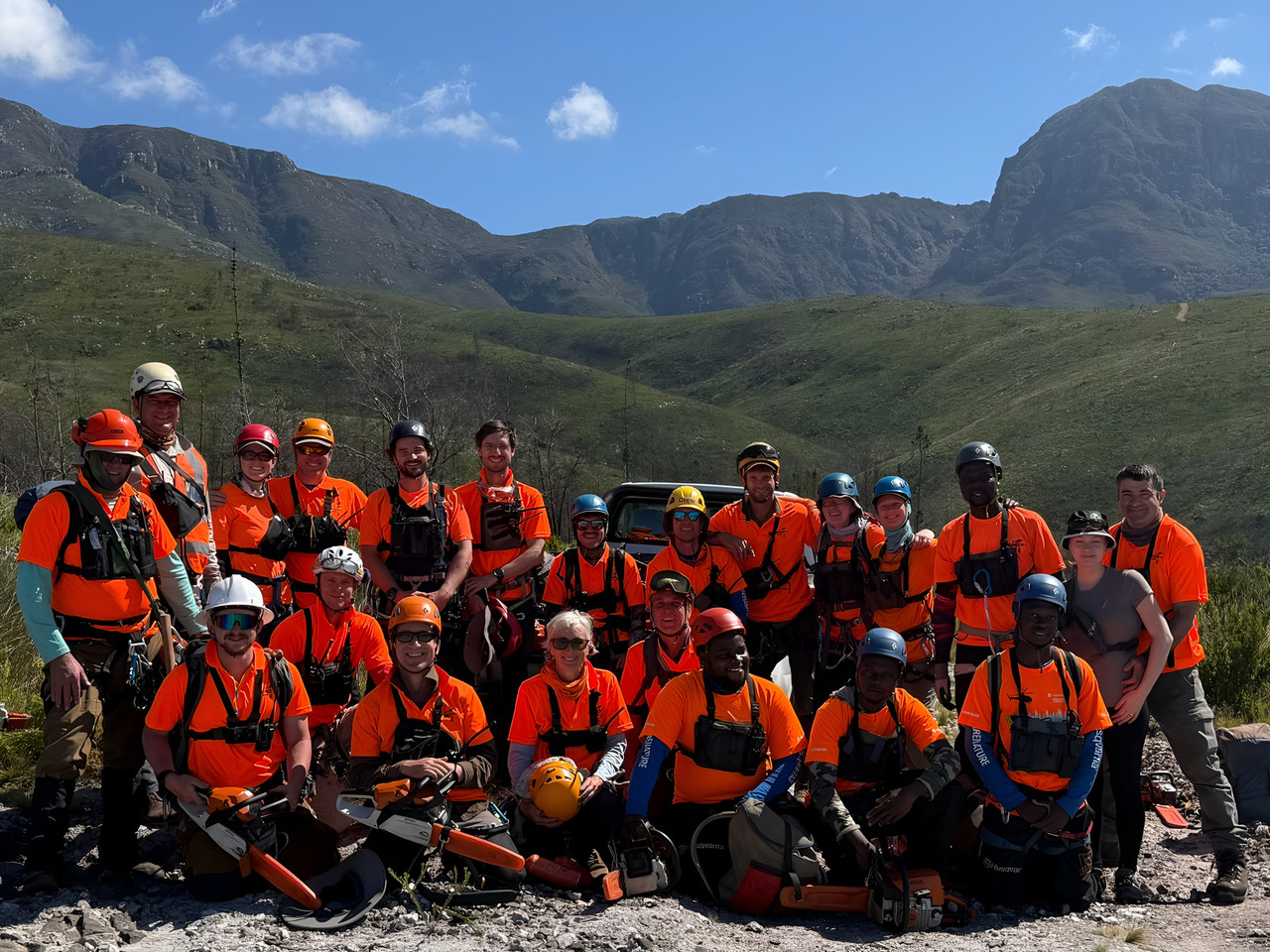
Western Cape, South Africa (30 October 2026) – Between 23 and 25 October, 23 volunteers were flown by helicopter into the upper slopes of the Boosmansbos Wilderness Area. In three days, they cut down 5334 invasive alien pine trees across 904 hectares.
The work was led by the HeliHack Initiative together with CapeNature.
Boosmansbos is in the Langeberg, north of Heidelberg, between Swellendam and Riversdale. It’s part of the Cape Floral Region Protected Areas World Heritage Site. Its kloofs hold some of the last intact Afromontane forest in the region. The area is home to species found nowhere else on earth, including the Boosmansbos long-tailed forest shrew.
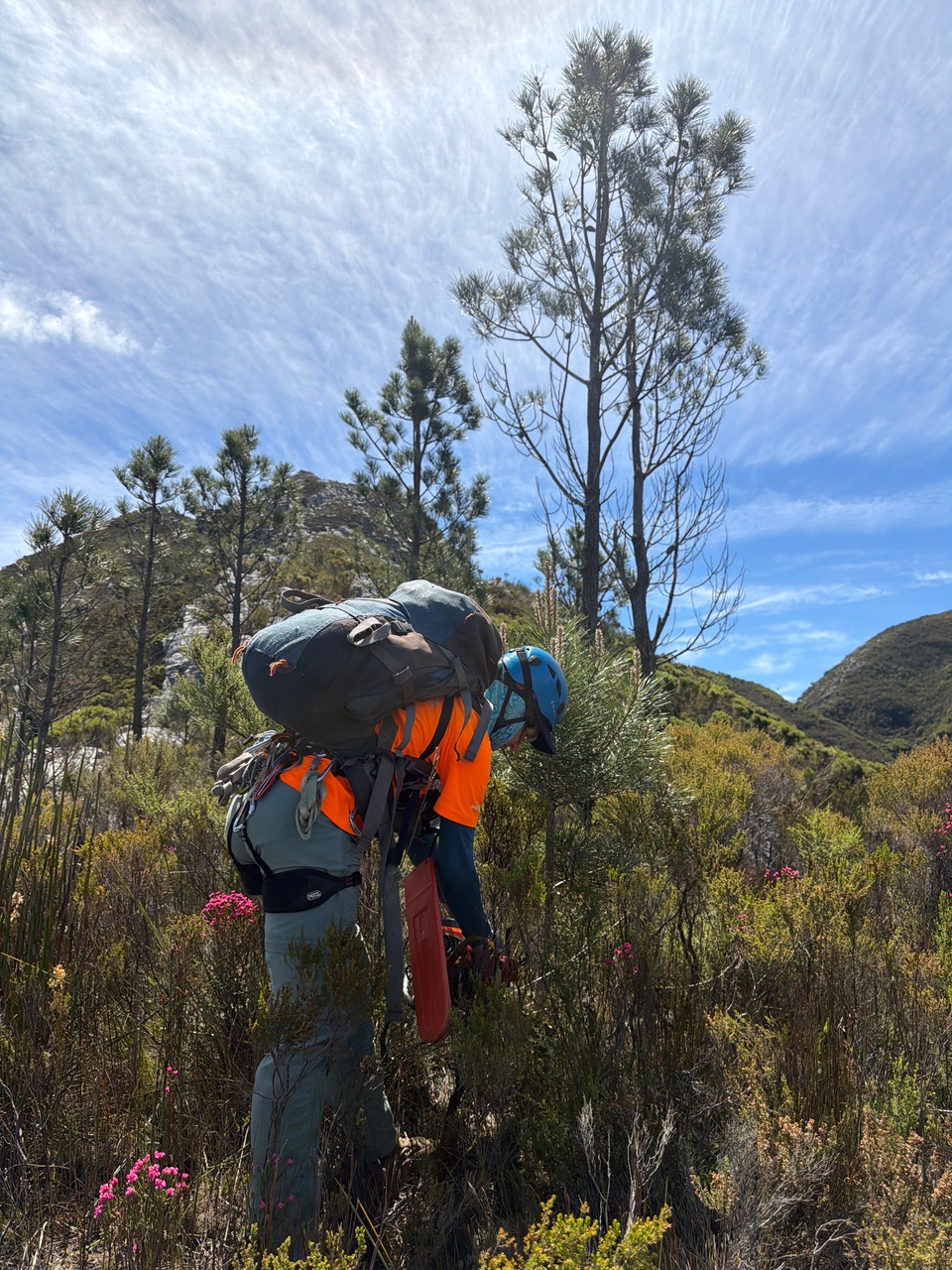
It is also a Strategic Water Source Area, one of the small parts of South Africa that supply a disproportionately large share of its water. The mountain feeds the Duiwenhoks River and Dam, which supply around 15,000 people in the towns downstream, plus the farmers who depend on a steady flow for their crops and livestock.
As it stands, the wilderness area is still recovering from the wildfires of 2025. Now, the South African Weather Service is forecasting a strong El Niño, bringing a higher risk of fire in the months ahead.
Fynbos has adapted to fire over a very long time, but not the kind of fire a dense stand of pines produces.
Pines carry far more fuel than fynbos does. A fire in an invaded area burns hotter and spreads much faster. It is also more of a challenge to put out.
Fire also helps the invasive pines spread. Pinecones release huge amounts of seed after a burn. A cleared slope helps prevent the area becoming more heavily invaded.
To add, these invasive trees use a lot more water than fynbos, so every cleared slope means more water reaching the rivers and dam, which helps in dry years.
Related Stories
 Give Hudson a Chance! SA Maker Turns Recycled Plastic Into Furniture
 The Scottburgh Animal Hero Who Feeds Township Dogs and Cares For 70 Rescues Needs Your Help
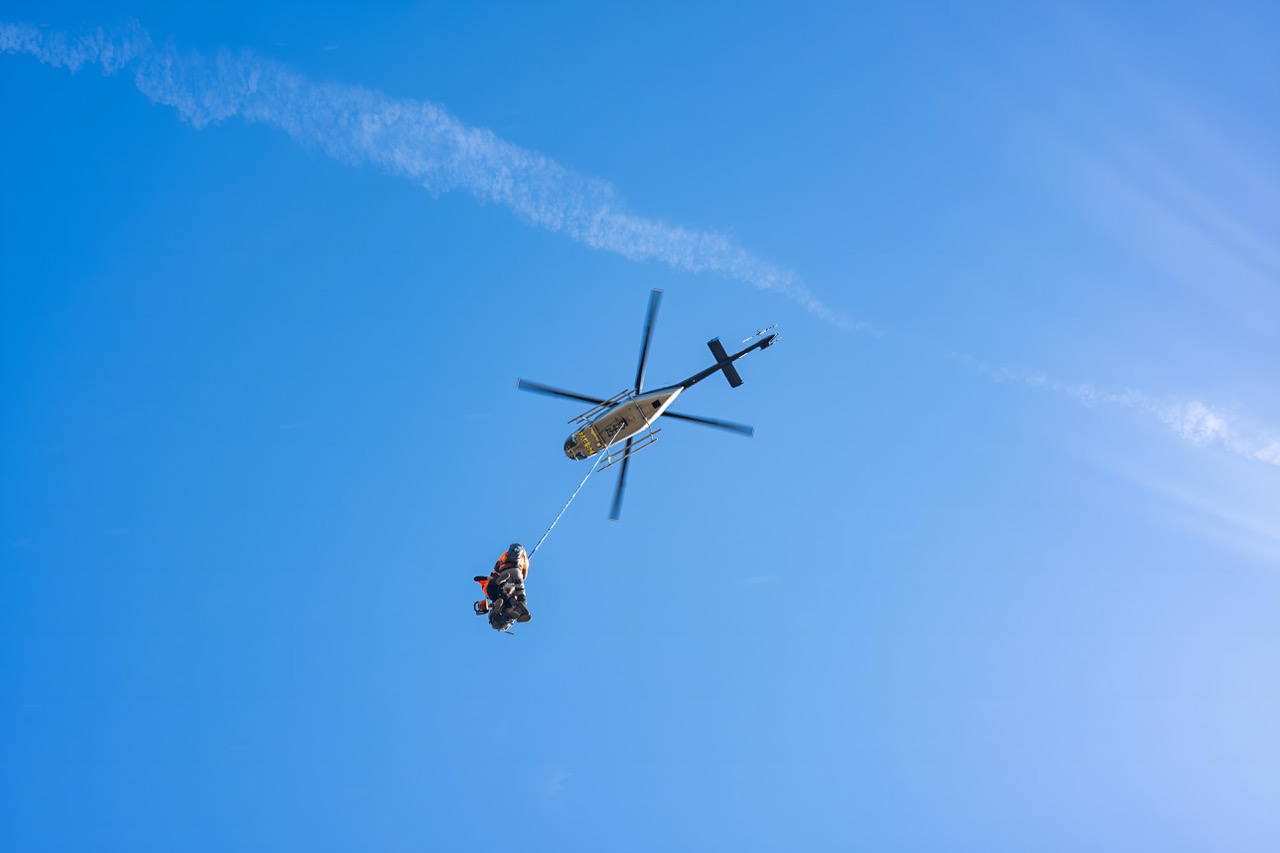
The most recent HeliHack operation in the area focused on the big, mature pines, some more than 40 years old, that produce the most seed and grow on the slopes around the main indigenous forest. Taking out each one removes a seed source and a lot of fuel from right beside the forest.
“Clearing these pines now is fire prevention in the most practical sense,” said CapeNature Acting CEO Mbulelo Jacobs. “Every tree our partners and volunteers remove is fuel that will not be there when the next fire comes through, and that protects both the mountain and the communities below it.”
The terrain there is steep and has no roads. Ground teams aren’t able to reach it on foot in any practical time. The helicopter dropped volunteers straight onto the invaded slopes, so they spent their time hacking instead of hiking.
This was the sixth HeliHack operation at Boosmansbos since the first pilot in April 2023. Altogether, volunteers have now cleared 48,523 pines across 7284 hectares of the wilderness area.
CapeNature formalised the partnership in 2024 with a three-year agreement. It keeps the Boosmansbos work going and extends the helicopter-supported approach to four other CapeNature reserves.
 by