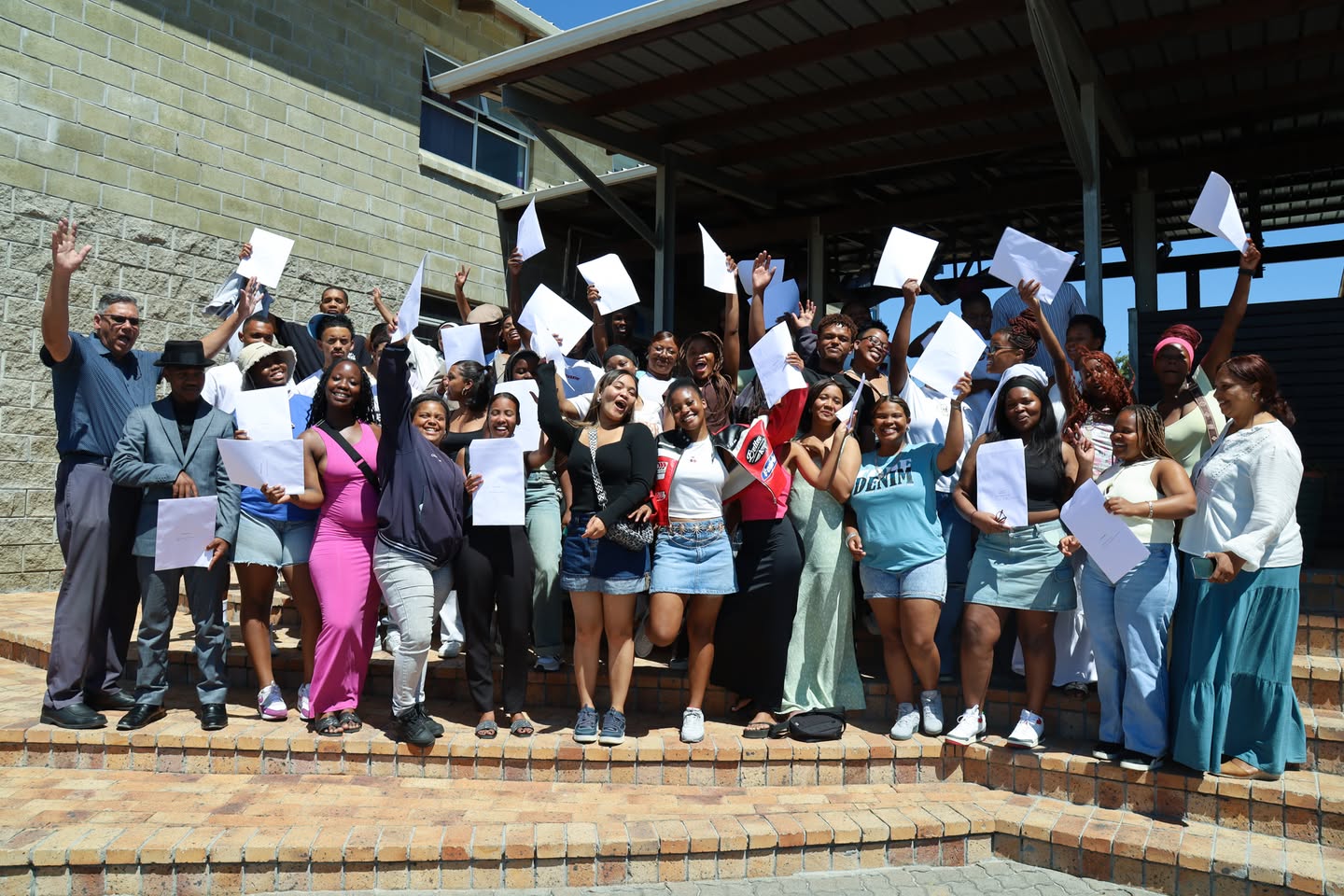
It’s easy to cheer for big numbers… but Christel House’s matric results come with something even bigger: meaning. At this school, every distinction represents a child who was lifted, supported, fed, counselled and believed in… until they believed in themselves too.
Western Cape, South Africa (19 January 2026) – While the Western Cape celebrated its highest-ever matric pass rate of 88% in 2025 (with 49% Bachelor passes), a no-fee independent school in Ottery once again pushed beyond the provincial averages… not for headlines but for children who were never meant to have options if you believe the odds.
Christel House South Africa, which has spent the past 25 years serving learners from 29 under-resourced Cape Town communities, has achieved a 96% matric pass rate for the Class of 2025, with 70% of candidates earning Bachelor passes. And while those numbers are impressive, what they truly represent is something far bigger than academic success… they represent lives being changed in real time.
“Poverty doesn’t only limit resources, it limits expectations. What these results show is that, with the right support, those expectations can be transformed,” the Christel House team told us.
They explained that while they’re proud of the 96%, and confident it will become 100% as they continue supporting two learners who are rewriting, the 70% Bachelor pass rate is the figure that is the most important here.
“That figure means access to university, to professional careers and to opportunities that can break generational cycles of poverty,” they added.
And it’s not a once-off success story either. Christel House says their goal is upward economic mobility, which is why they focus on character and career readiness from as young as four. Today, 97% of their alumni are either studying, employed, or doing both, proving that this model doesn’t just help learners pass… it helps them build futures.
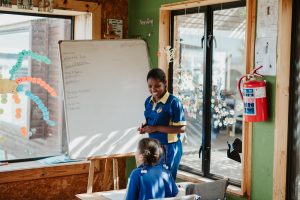
Christel House isn’t built like a traditional school. It’s built like a safety net. The school provides transport, nutritious meals, healthcare, counselling, family support and career guidance. They understand something many people forget: a child can’t learn properly if they’re hungry, traumatised, unsafe or constantly in survival mode.
When asked what makes the biggest difference, the team pointed to two key parts of the model: their trauma-informed approach and their long-term career development support.
“Learning cannot happen until a child feels safe, seen, and supported,” they explained.
 “Thank You, Durban” Delfi Family Shares Emotional Update 2 Weeks After Fire!
 It’s Will’s Month: Grant Fietze Talks Life, Legacy and Getting Your Affairs in Order!
That’s why nurses, counsellors and social workers are part of everyday life on campus. It’s not extra… it’s essential.
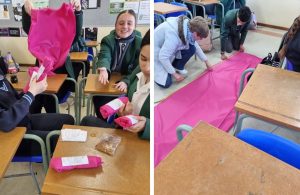
One of the most powerful parts of the Christel House story is the Matric Intensive Programme, where the school hall is transformed into a dorm and study hub during exams, creating a safe, distraction-free environment for learners.
Each day begins with focused teaching from morning until 6pm, followed by supervised study from 8pm until midnight. It’s disciplined, intense and filled with support that changes everything.
In 2025, the programme became even more meaningful, where teachers stepped in as more than educators. One moment was watching Alique, the school’s top learner, an orphan, being supported by teachers who took on a parental role, offering guidance, reassurance and belief. Another was seeing learners like Muneebah, who lost her father just before exams, being carried through grief with real care.
“During the most difficult period of her life, she was not alone. Her teachers stood in as parents, ensuring she felt supported, protected, and capable of continuing,” the team shared.
This year’s matric cohort achieved 26 subject distinctions, and Christel House South Africa’s Chief Academic Officer, Dr Ronald Fortune, says we must never forget that behind every statistic is a human story.
“While we are immensely proud of our 2025 matric learners and the many commendable results they achieved, it’s important to remember that beyond these statistics are powerful student stories of ambition and purpose.”
Top-performing learner and valedictorian Alique J. from Hanover Park achieved four distinctions and has provisional acceptance to study Occupational Therapy at Stellenbosch University. Alique, who joined Christel House in Grade R, faced immense hardship along the way, including losing his mother two years ago, yet still rose with strength and excellence.
“I wouldn’t be standing here today if it weren’t for Christel House and the incredible staff,” he says.
Then there’s Kuhle J. from Philippi, who is passionate about women in STEM. With three distinctions, she has provisional acceptance to study Biomedical Engineering at Stellenbosch University.
“This field excites me because it allows me to combine my passion for technology, biology, and robotics with my deep desire to help others,” she says.
“I want to use innovative technologies to address healthcare challenges in South Africa.”
And then there is Muneebah Davids, whose story captures the spirit of Christel House in full. Muneebah grew up surrounded by gangsterism, unemployment and limited resources. After losing her father shortly before matric, she still achieved a Bachelor’s pass, including a distinction in English, and has been accepted to study at WITS, UCT, Stellenbosch, and UWC.
“I do believe that my results reflect my commitment and perseverance, especially under harsh personal circumstances,” she says.
“Genuinely, without Christel House, I would not be where I am today or have the confidence to pursue higher education… I am committed to using my education to make a positive difference in the world.”
When Christel House first opened its doors in 2002, staff went into communities to explain what they were offering… a world-class education and wraparound support at no cost. Many parents didn’t believe it. They were too afraid to hope.
25 years later, the proof is everywhere. In results, in alumni outcomes and in the lives transformed.
Now, Christel House is looking forward. A second cohort of 60 Grade 8 learners has joined the school, and plans are in place for another Grade RR–12 school in the Western Cape, pending land availability. They’re calling on partners who believe in the power of holistic education and long-term support to help scale a model that works.
If we want to change South Africa, we don’t start with anger or politics. We start with children. We start with a school that refuses to let poverty decide what a child can become.
And we back the work that turns “impossible” into “watch this space… we’re already doing it”.
 by
by