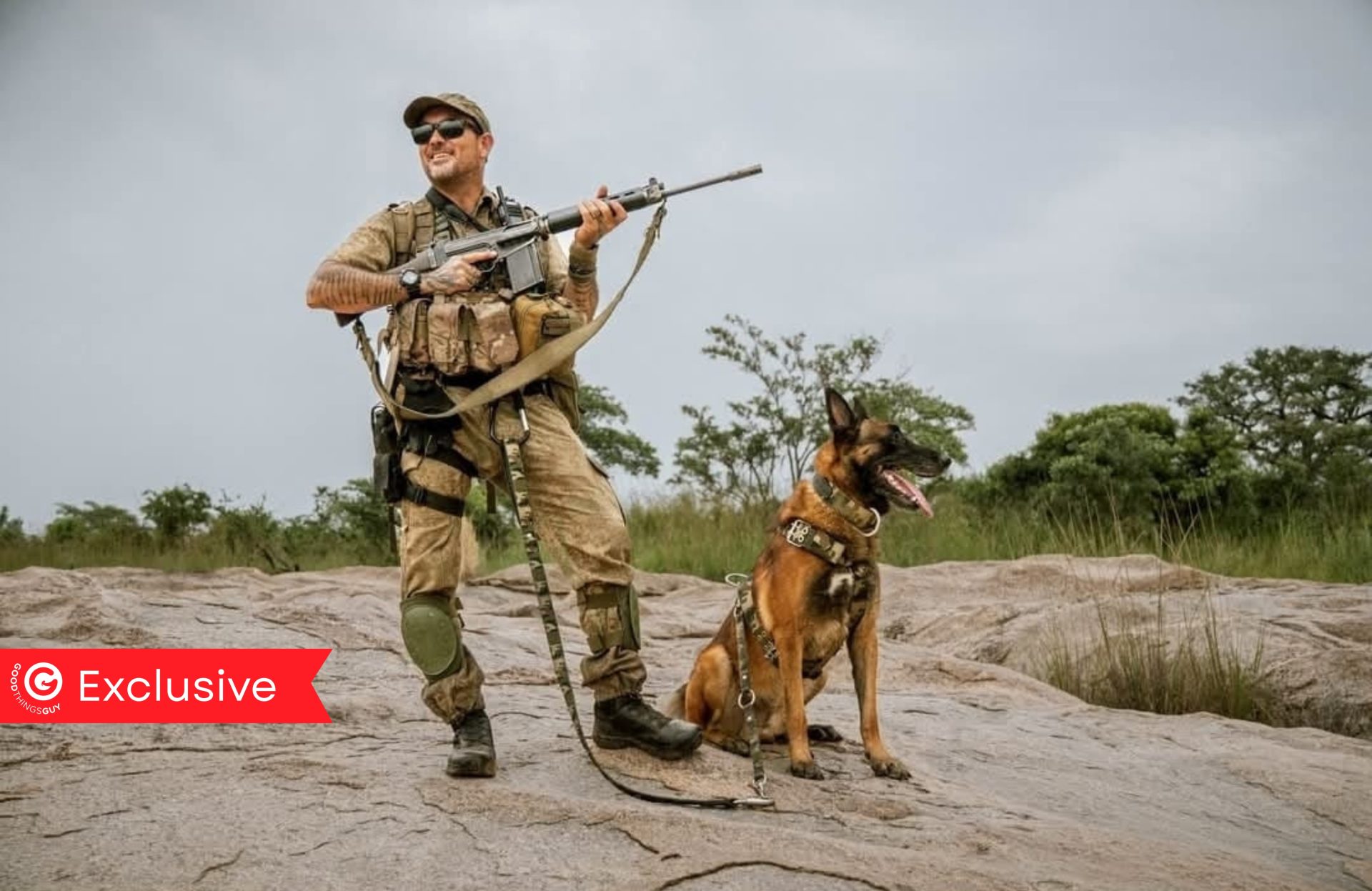
Some wars are fought in the dark and won by a nose. Inspired by the film Heart of the Beast, we end our series shining a light on non-profit anti-poaching organisation Pit Track. Captain Carl Thornton and his dogs stand between poachers and Africa’s wildlife.
South Africa (07 October 2026) – Heart of the Beast has had us celebrating South Africa’s working dogs, and we’ve met a lot of them. There were the specialist detection teams keeping our airports safe, the volunteer search and rescue handlers who answer the call when disaster strikes, the gentle therapy dogs who bring comfort to hospital gardens, and the guide and assistance dogs who bring independence to their human companions.
For the final story in this series, we’re heading somewhere wild…
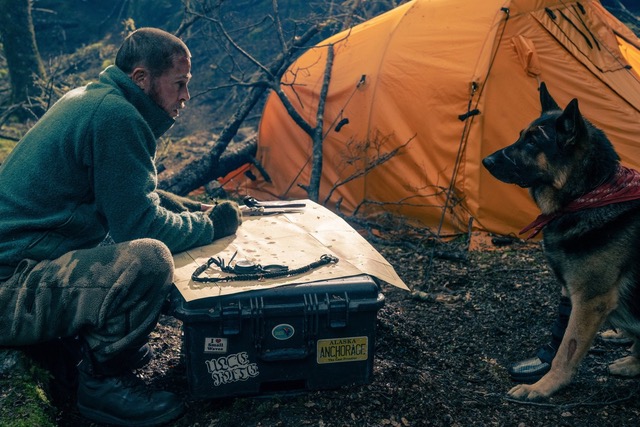
On screen, special forces officer James Belmont and his military dog, Odin, share a bond like no other. Stranded in the Alaskan wilderness, each depends on the other to survive. In South Africa, Captain Carl Thornton has experienced that same sense of deep partnership in action.
“Irreplaceable by man or machine.”
That is how he describes the working dog. Those words came out of the US military’s use of dogs in Iraq and Afghanistan, where they were sent ahead of troops to sniff out IEDs and uncover hidden weapons stashes. Carl has spent 26 years proving those words in the world of conservation, with dogs that work at night, in Big 5 country, against poaching syndicates.
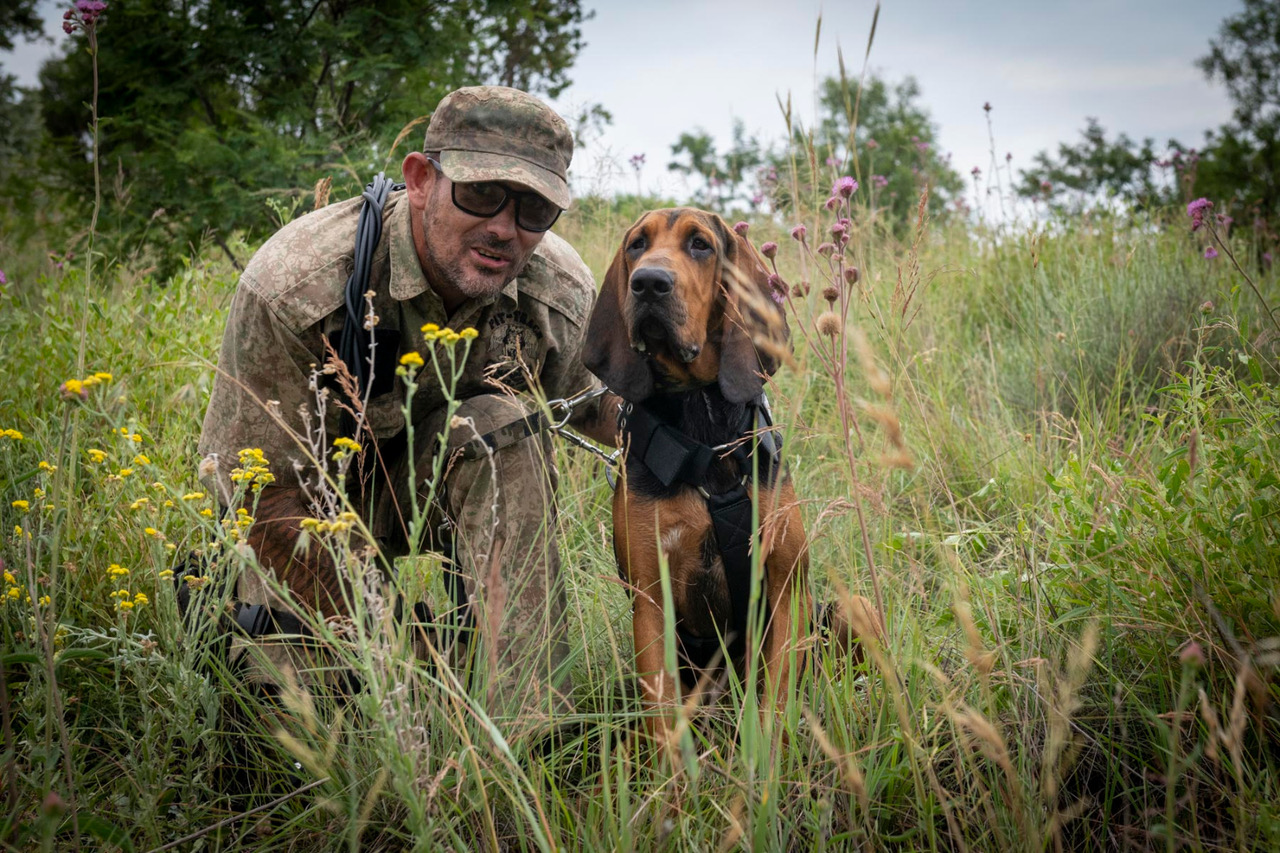
In January 2000, Carl deployed with pit bull terriers on his first-ever conservation operation. Now, twenty-six years later, as founder of the non-profit Pit Track, the wild is still where he finds purpose, alongside his working dogs – the best weapon conservation has.
When Pit Track first started, dogs had certainly been used in anti-poaching before, but Carl saw why they were often failing. In Big 5 country, a dog descended from wolves carries a predatory scent. Buffalo, rhino, hippo and elephant read that scent as a threat, especially breeding herds with young. Predators like lions and hyenas react offensively too. Dogs trained in standard facilities were never taught how to behave around dangerous game, and in some cases they put rangers at more risk than they removed.
Carl, with his highly specialised skillset in working with dogs, developed K9 training to track, detect and apprehend at night, in dangerous game country, against organised and often well-trained poaching syndicates. Few others had ventured into those realms. Pit Track began offering it on an ad-hoc basis. In Kenya and Zimbabwe to the Kruger and further afield, at wildlife rehabilitation facilities, conservation areas and private reserves where K9 expertise was needed.
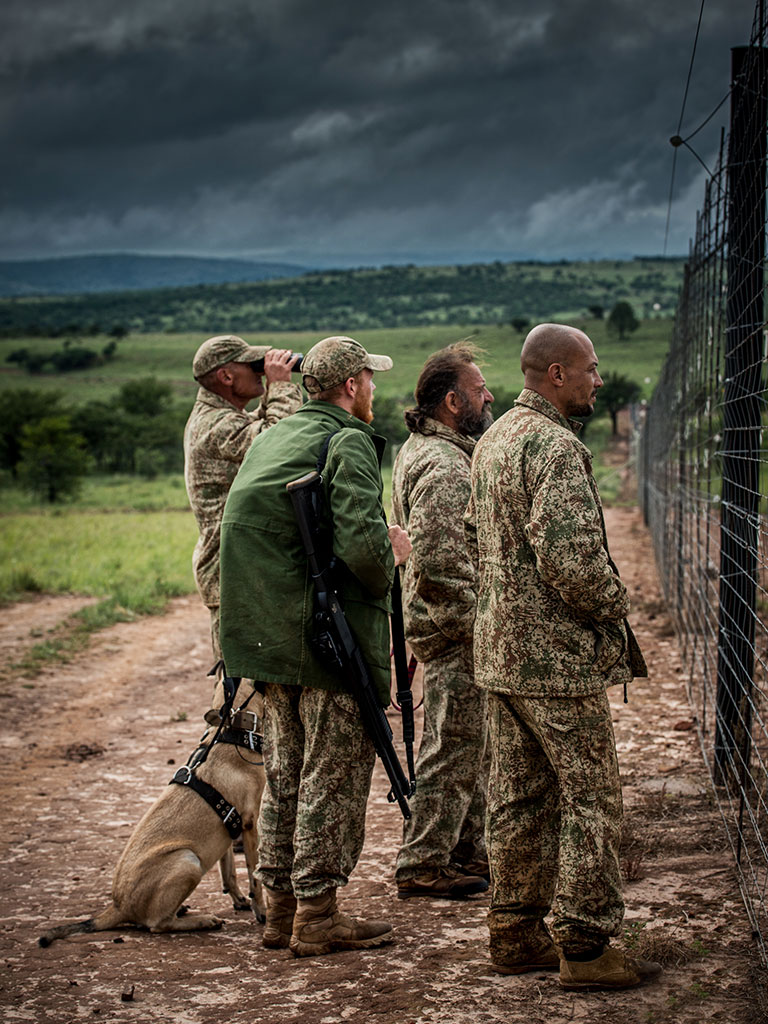
Carl knew that specialised services were expensive, and that parks and reserves were unlikely to budget for them. Yet the crimes against wildlife would only get worse without them, and the methods already in use were not stopping endangered species from slipping toward extinction. If the work was going to happen, it would have to be self-funded, so Pit Track was started as a non-profit.
Related Stories
 Northern Cape Film Chosen as SA's Official Oscar Entry!
 One Step Behind Mandela: Rory Steyn, Former Chief of Security to Nelson Mandela Joins Us For the Poddie
Within the Greater Kruger in 2018 and 2019, Carl tells us that Klaserie lost 59 rhinos in a single year, a spree linked to one group. Pit Track joined a major operation. Only weeks after deploying, the syndicate believed responsible was arrested.
The investigation exposed a weak point where vehicles were driving in, poaching, and leaving through the front gate with horn on board. Working with the APNR, Pit Track introduced detection dogs at entry and exit control points, trained on elephant ivory, rhino horn, pangolin scales and lion bone.
The dog worked the outside of a stopped vehicle with its occupants inside, and if there was no indication, the vehicle was free to go. If the dog indicated, the vehicle moved to a search area and was opened and searched in full view of its owner. During that deployment, more than 800 positive indications were recorded.
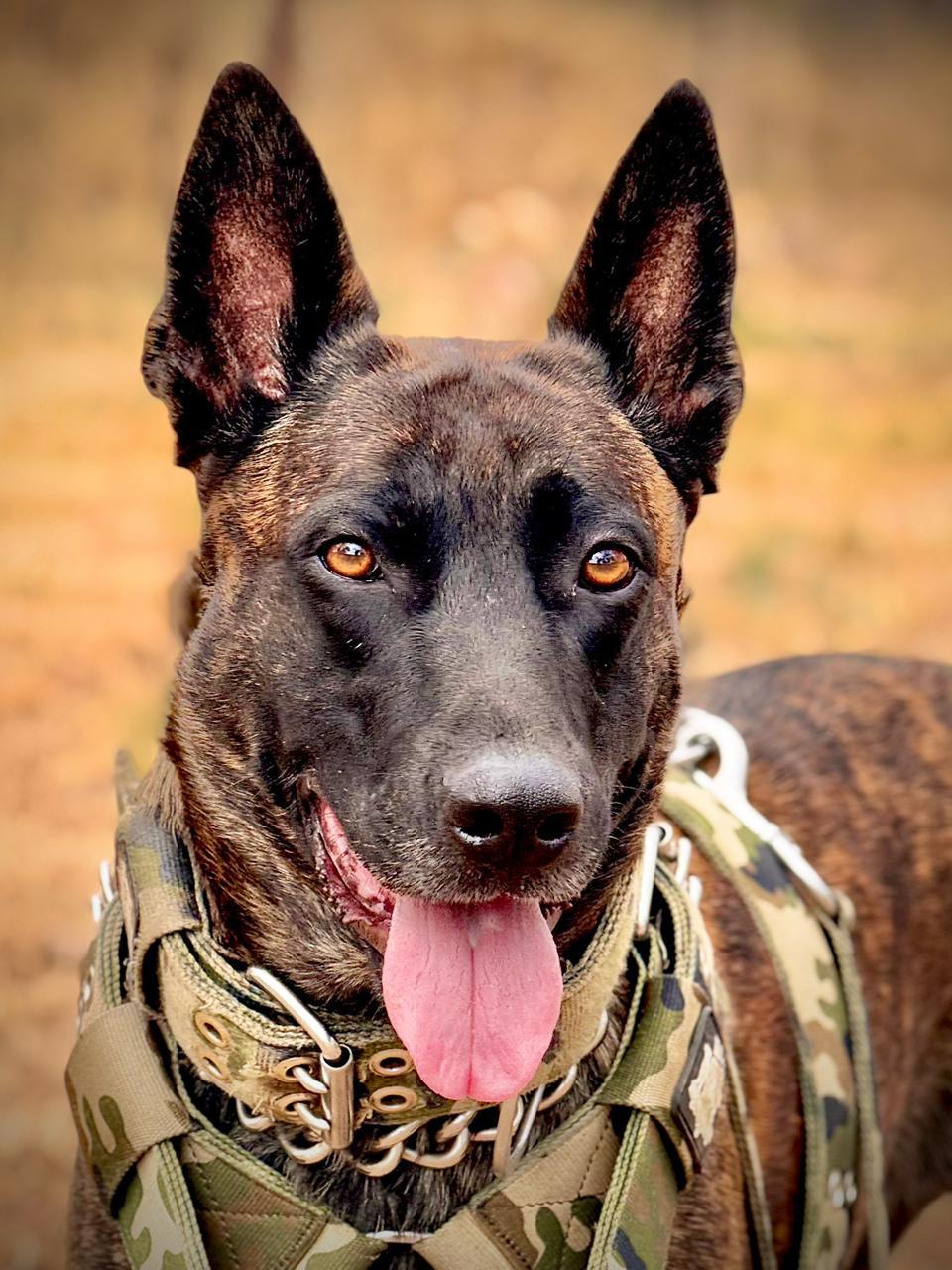
A working dog’s unique skill set is unlike anything else. In telling us about what a K9 dog brings to anti-poaching operations that we as people can’t, Carl speaks first about scale and speed.
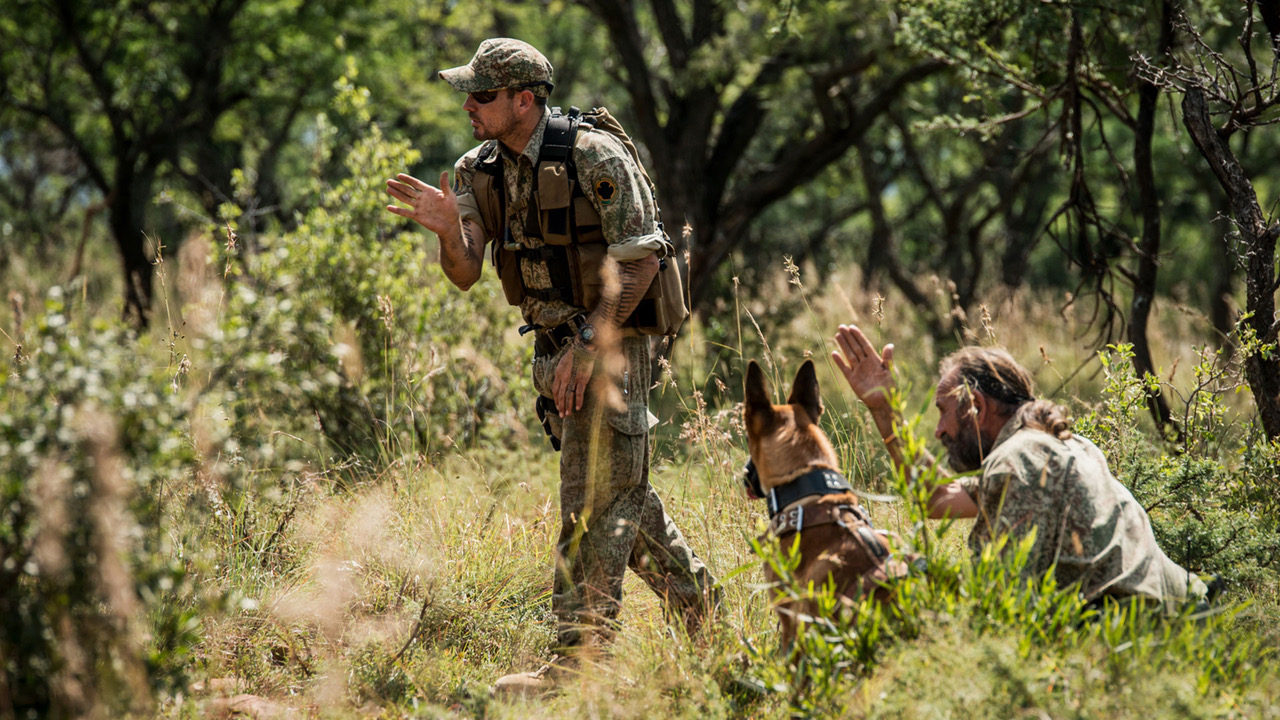
The Kruger alone covers around two million hectares. Traditional human tracking is highly skilled, but it is slow, and only a handful of people known as ‘master trackers’ can do it well. Still, it is rarely fast enough to catch perpetrators in the act. Tracking at night with torches isn’t a solution either, because the light tells the poachers exactly where you are.
A trained tracking dog, however, can move faster than its handler can run, and it works in darkness and over hard ground where footprints are almost impossible to follow. In one programme, GPS-collared hounds were released off-lead onto poacher trails while a helicopter followed them in. Carl credits it with 186 poachers and 57 weapons recovered.
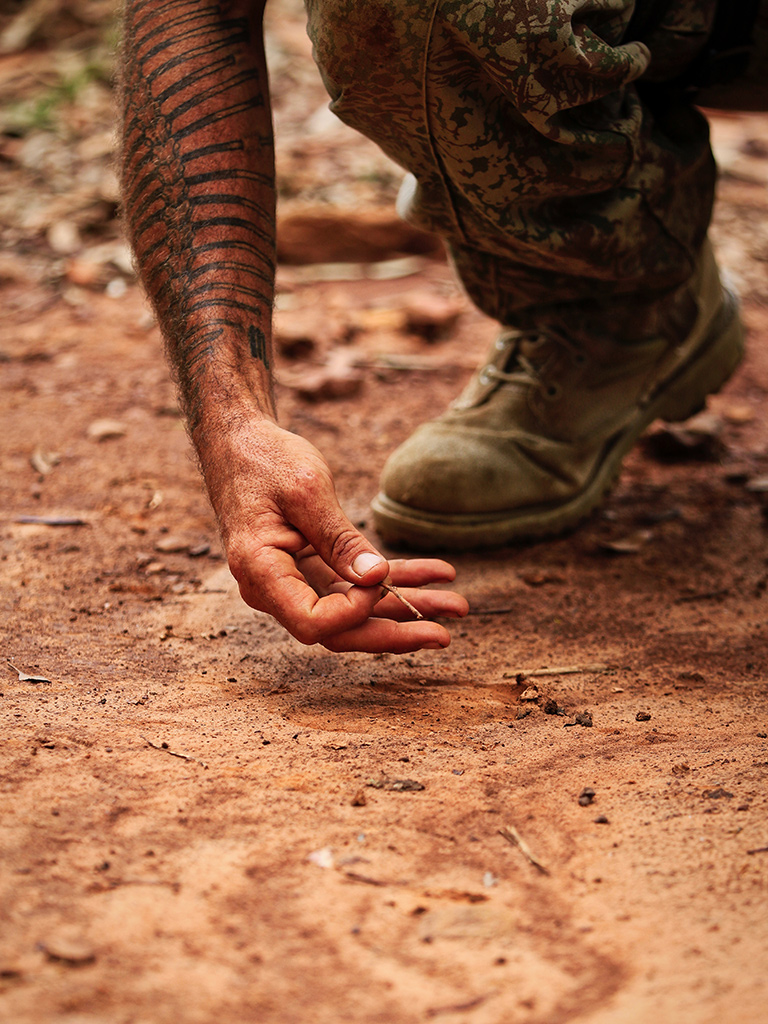
The same is true of the dog’s nose, the remarkable sense our airport detection teams rely on.
Poachers go to great lengths to hide contraband like rhino horn in spare wheels, seat foam, zip tied to the bottom of vehicles and in air filter boxes. A team can’t strip down every vehicle that passes through a gate, but a dog can tell them not just whether something is hidden, but exactly where. It is why, in Carl’s view, no machine can take the dog’s place.
The dogs have proven themselves in the field in other ways too, especially in protecting the rangers they work with.
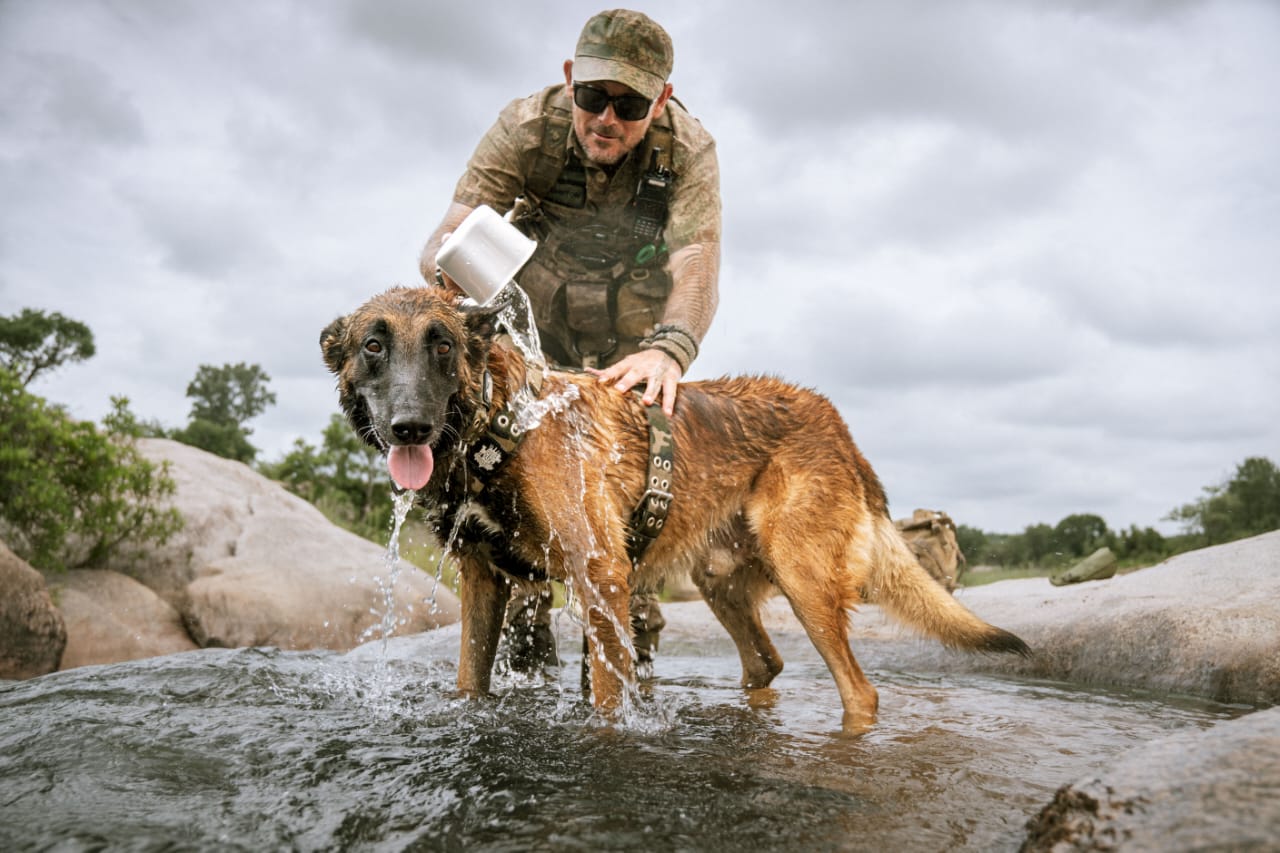
Rottweilers are rarely used as tracking dogs, but Yanka was the exception. On an overcast day, when cool weather draws hippos out of the water, she and her handler, Kyle Irving, were following poacher tracks along the Olifants River when a bull hippo with three cows charged from a rocky outcrop. Irving released Yanka so he could counter the charge with his firearm, and she took the hippo head-on, driving it back into the river. Then, in the excitement, she followed it in. The hippo turned and bit her through the back leg before swimming to the bank.
“We ended up with a badly injured dog on one side, an angry hippo in the middle, and operators on the other side. So, it was quite a dilemma to resolve.” says Carl.
Irving took on the hippo and crossed the river to reach her. With no signal or radio coverage, an operator ran some 20 kilometres to a vehicle with a base radio to raise the alarm. By the time help arrived, it was last light. Dr Jana Meyer from Hope for Wildlife Helicopter Services flew and carried out a CASEVAC to a vet waiting on standby. The bite had narrowly missed the Yanka’s femoral artery. She made a full recovery and is back in the field!
“It’s a heartwarming story of a dog saving a handler’s life, and what the handlers and dogs go out through out there, not only relevant to the poaching threat that we face, but the threat from the very animals that we protect.”
Carl has his own stories. Waiting in a night waylay, his pit bull, Diego, began to growl and then lunged on his lead.
“We were lying in a waylay on intelligence that poachers were coming in from a specific area, along a specific route. And in pitch darkness – we had only about half a moon, but it was clouded, so it was quite dark. My pitbull kept growling in the waylay. I didn’t want to turn my torch on or create commotion that could possibly destroy the operation.” Carl tells us. “I tried to get the situation underhand, but Diego kept growling and eventually he stood up and took a full frontal charge. He was on lead and under my control, so I had no option but to react.”
Carl had no choice but to turn on his torch and found a lioness less than three metres away, stalking their position.
“I chambered my rifle, stood up and put my tactical torch on to see what we were dealing with. There was a lioness, nothing over 3 metres from my position, that had been stalking us.” he recalls. “The lion gave the dog a big, fat growl and I fired a warning shot off to the side. That managed to deter her and she ran away. If it wasn’t for the dog, I would have had no idea that a lion was stalking us.”
Diego, Carl says, is the only pit bull terrier ever to work in a national park.
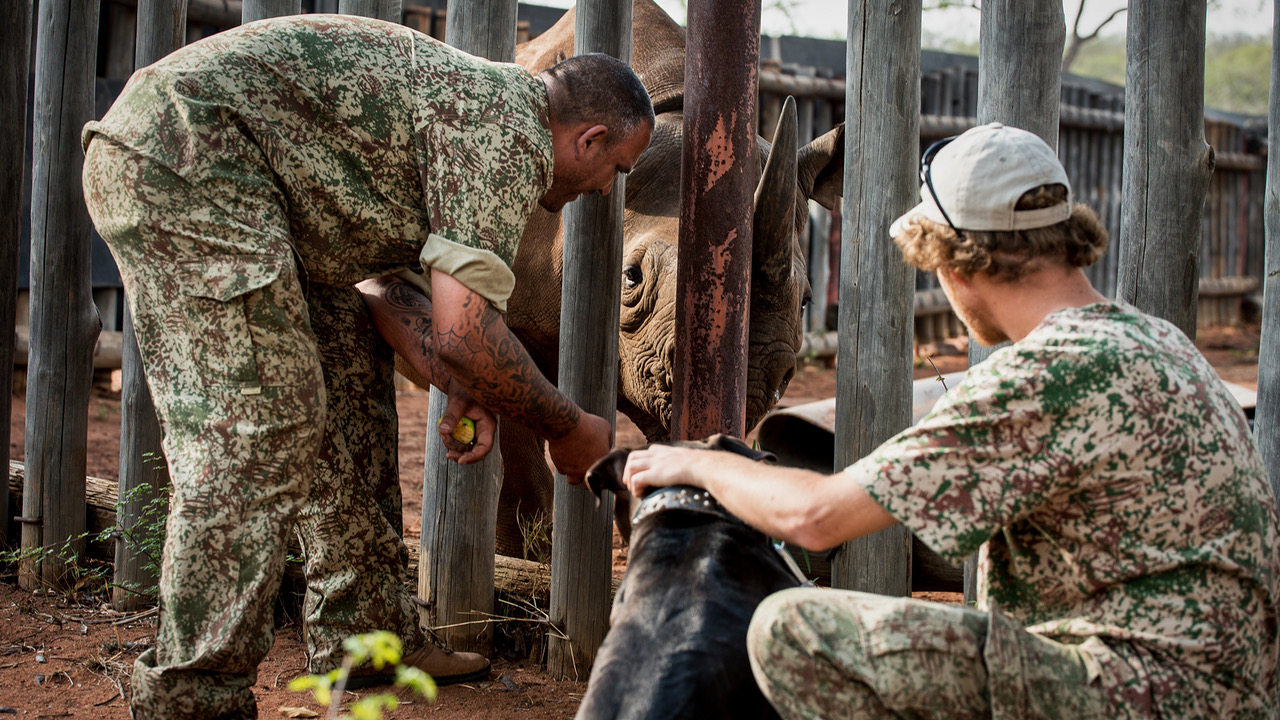
Then there is Koa, a Belgian Malinois on a protection deployment for pregnant black rhino cows held in bomas. When a warthog charged her operator and badly injured his leg, Koa flipped the pig and held it down, buying time for him to be safely evacuated and brought to medical attention. The operator, Deon Kombrink, survived.
“The rhino feed we brought into the boma attracted all sorts of unwanted animals, in particular the wartogs, who dug their way in to eat the rhino’s feed. One evening, we had a warthog come out. Operator Deon Kombrink had found himself in the way of the exit together with his dog Koa.” Carl recalls. “The warthog charged him, caught him between the legs, and severed his femoral artery, which caused a catastrophic bleed. Then, the pig turned and came back again.”
The whole incident was under the view of a watchtower. As help was on its way, Koa jumped into action.
“The dog grabbed the pig, flipped it upside down, pinned it to the floor, and kept it under control, until the operator was CASEVAC.” says Carl.
Deon had to go undergo vascular surgery to fix the artery, but he survived.
“It could have ended worse, but Koa saved his life. This is just one of the endless stories of how these dogs have saved operators’ lives.”
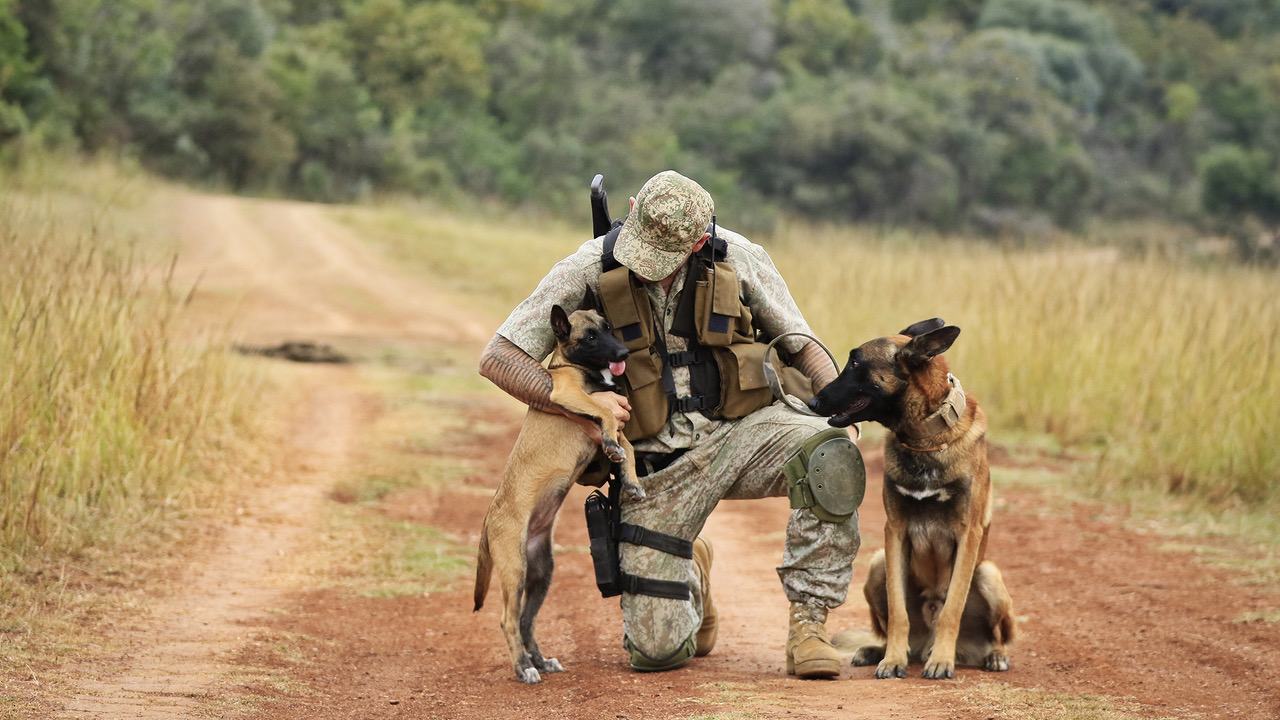
And they’re an extraordinary example of the incredible bond formed between handler and dog. From the airport handlers who trust their dog’s nose completely to the search and rescue volunteers whose dogs live and train at home with them.
Carl uses the word ‘dogman’ for a person whose connection with a dog can’t be trained into someone, and says he can count the true dogmen and dogwomen he has met on two hands. In his unit, dogs outrank every human.
“It’s a living soul,” he says, one that “bleeds, sweats and cries with us.” Asked to choose between his firearm and his dog, he says he would take the dog every time. His motto: “In dogs we trust, the rest we test.”
Beyond the deployment of K9 units, Pit Track also runs education programmes in local schools and communities, including a SANParks Junior Honorary Rangers programme. He believes the future of wildlife lies with the next generation.
“The work we do needs to continue long after we are gone, and what we leave behind is our children. I believe that the future of wildlife is now in their hands. So I started an awareness and education campaign and I’ve done endless work with kids.”
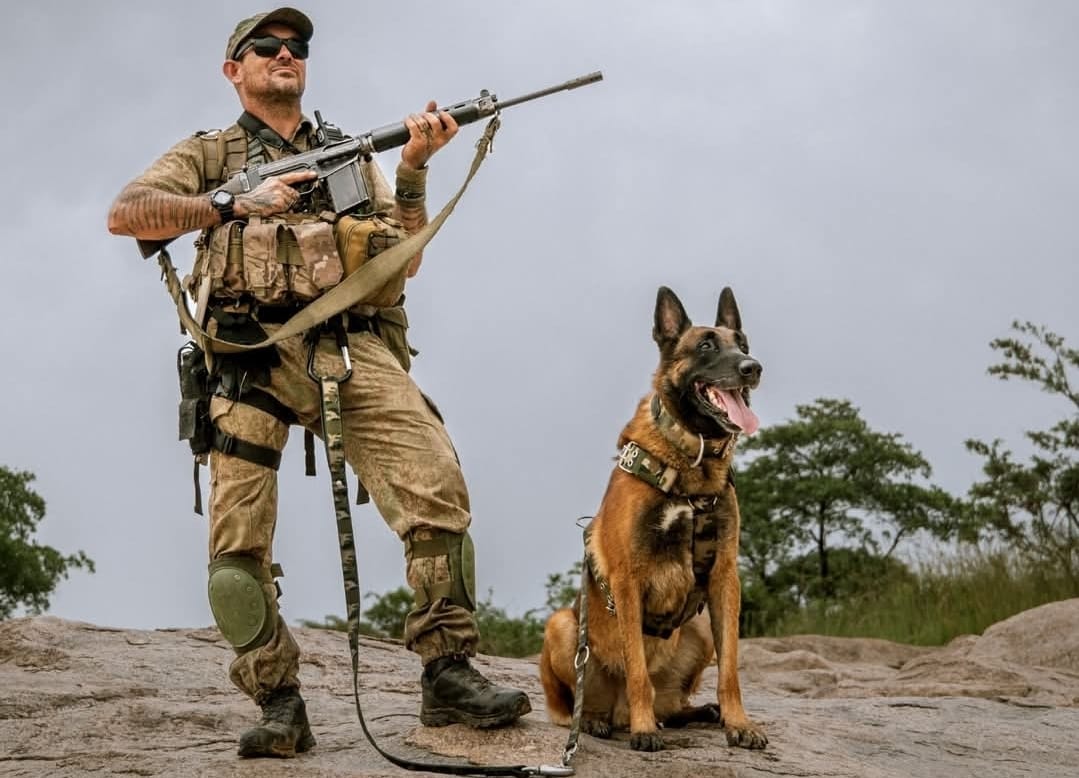
At the same time, Pit Track is moving up the trafficking chain, towards the ports and shipping routes that wildlife contraband travels through.
Working with the University of Washington’s Center for Environmental Forensic Science, led by Professor Samuel Wasser, and with the Great Plains Foundation under Dereck and Beverly Joubert, it is helping develop RASK9, a method that pairs remote air sampling with detection dogs. A device draws air from a shipping container and captures any odour on a sample, which dogs then screen. Instead of opening every container, teams can check hundreds in a day and open only those a dog indicates on.
Pit Track has set up a forward base to train the dogs, which are now being imprinted on pangolin scat and scales, since pangolins are among the most heavily trafficked animals in the world. Laboratory work with the Braveheart Bio Dog Academy is helping isolate the compounds that make up these odours, so the dogs can detect them more accurately. It is fascinating work.
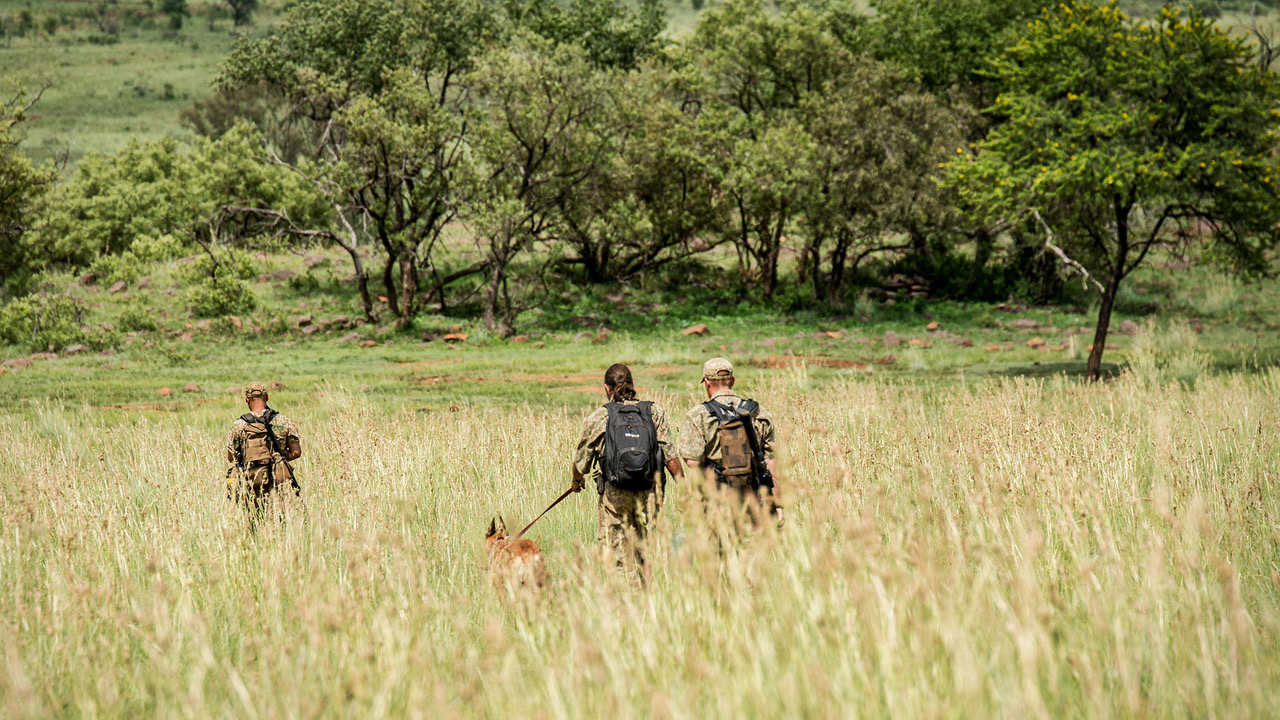
None of this has come easily. Like the volunteer teams we’ve met along the way, Pit Track has had to fight for the resources to keep going. Carl is honest about funding, which has been a fight every month for 26 years. At its COVID-era peak Pit Track had around 180 rangers, and it now has 36.
With more support, the organisation could do even more in the work of anti-poaching, a line of work that leaves scars no one sees, but without which there would be no wildlife left to save.
Carl has seen more carnage than most people ever will.
“I got into this work because of my love for animals, and my love for conservation. I don’t think I could have chosen a worse industry. I didn’t anticipate the amount of carnage that I would have experienced in a lifetime. Personally, I have seen about 3000 necropsies (an autopsy on poached animals). I’ve seen day-old calves still drinking from their deceased mother carcasses with their faces cut off. The most horrific things. It is tormenting to be an animal lover and have to witness the carnage out there.”
What keeps him going is the conviction that when a dog is trained well, trusted fully and loved, it is the best partner and hero that an anti-poaching ranger can have.
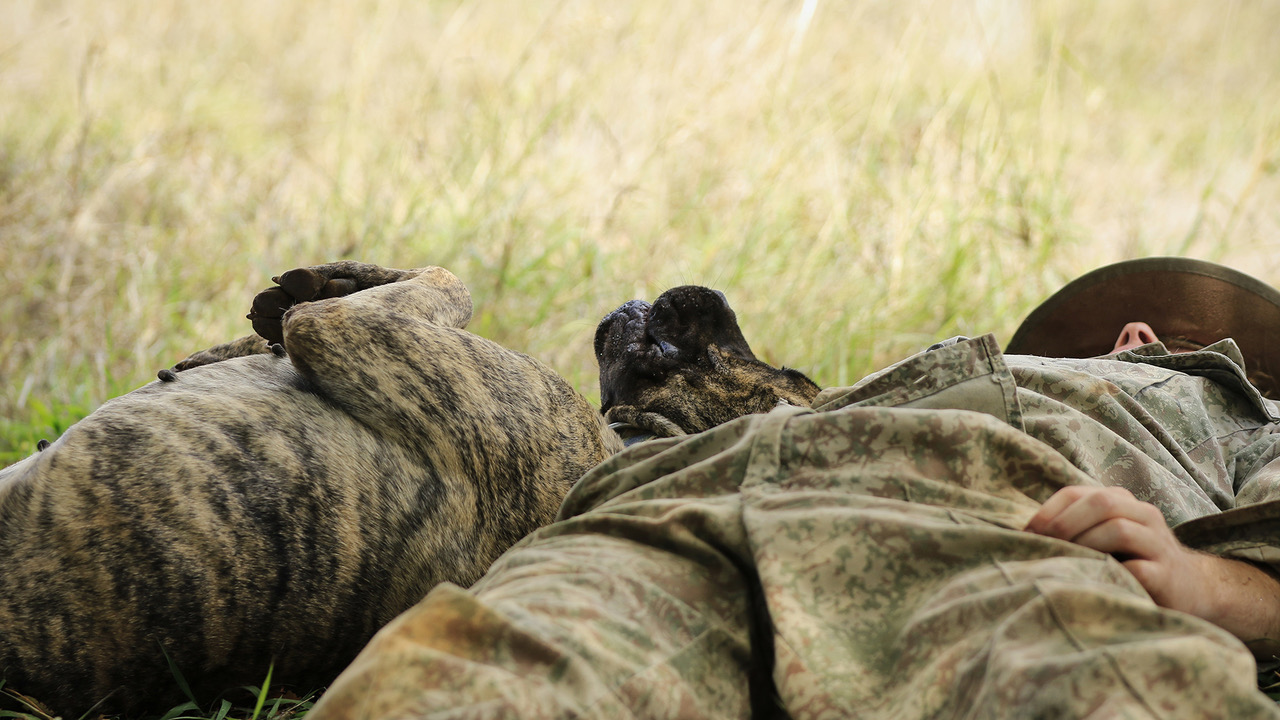
“Operators who are dogmen inherently have a love for wildlife. You can’t be passionate about a dog and not be passionate about other animals. I don’t think that exists.” says Carl. “What the working dog brings to conservation highlights what you can achieve when you put the energy and attention into being able to read your dog. Your dogs give you an unmatched ability to perform conservation efforts at the highest level. A ranger and K9 make a formidable team. There’s just no replacement for dogs in conservation. They are the ultimate weapon that we have.”
Heart of the Beast puts one extraordinary partnership between a man and his dog on the big screen. Across South Africa, that partnership looks different from team to team. Every one of them depends on the person at the other end of the lead, and on the public support that keeps these teams working.
If you’d like to help Pit Track keep its dogs and rangers in the field, you can find out more here.
Catch Heart of the Beast in cinemas now!
 by
by