The science behind Africa’s fossils carry a hidden message – we as human beings are far more connected than we often remember.
Johannesburg, South Africa (17 September 2026) – Here’s some Heritage Month food for thought! Every single person on this Earth shares a common ancient heritage that connects us.
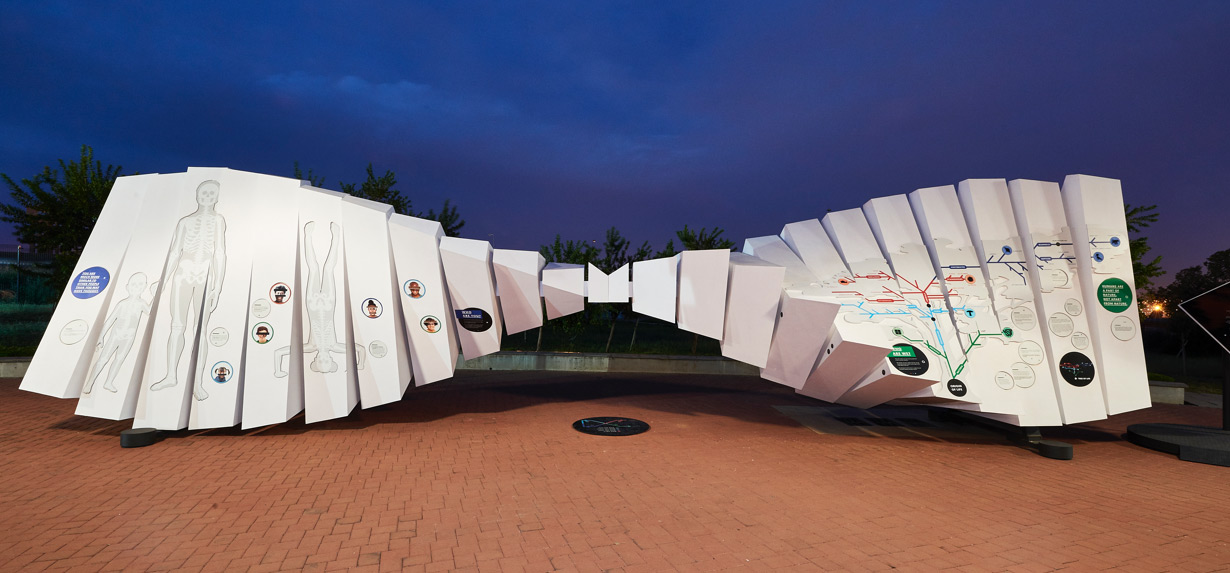
The Palaeontological Scientific Trust (PAST), through its All From One campaign, is using palaeontology and palaeoanthropology to help people understand where we come from and just how closely connected humanity really is. We need to remember that we are one, now more than ever.
Palaeontology looks at life from the distant past, from extinct animals and plants all the way back to some of the earliest forms of life. Palaeoanthropology focuses more closely on humans and our ancestors. Together these fields form part of what PAST calls the ‘origin sciences.’
Fossils may appear to be ancient pieces of history that are removed from everyday life, but the organisation reminds us that they actually have plenty to teach us about ourselves.
Scientific evidence shows that modern humans evolved in Africa around 300,000 years ago before spreading across the world. Because of that, humans share around 99.9% of their genetic makeup with one another. That leaves no room for the idea that we are fundamentally different from the people around us.
Division, xenophobia and the ‘othering’ of people remain very real problems in South Africa and across the world, PAST believes the origin sciences can give us something solid to come back to. When we strip away nationality, race, culture and all the labels we collect along the way, science still brings us back to the same place.
“Over three billion years before recorded human history, a single common ancestor laid the foundation for all living things. Humanity evolved in Africa 300,000 years ago and spread out across the world. This means that universal human rights are embedded in our biological reality; our shared origins in Africa demonstrate that diversity is our strength, not a dividing line. By celebrating the science of where we come from, we give ourselves a tangible reason to respect one another and embrace our shared humanity,” says Dianne van der Tuin, CEO of PAST.
Palaeoscience is so much more than old bones and fossils. The discoveries being made across Africa add to our understanding of human history and they remind us that our continent holds an extraordinary record of where life, and later humanity, first came from.
PAST works to support that research by funding palaeoscience across Africa, providing grants, bursaries and technical support while helping grow the next generation of African scientists working in the field. The organisation also runs educational programmes and public workshops and takes science into schools, communities and workplaces, where conversations about our shared origins can become conversations about how we treat one another today.
Related Stories
 Snare Aware Is Watching You! Volunteers Track Poacher Through Tongaat River Valley
 Young Hatchling Hero Receives Praise From SA Wildlife Rehab
A fossil unearthed from the ground may be millions of years old, but what it tells us about humanity is relevant still today. We come from the same place. We share far more than separates us. The differences we see between one another are a tiny part of a bigger story. Looking very, very far back is a good way to remember just how much we are all the same.
 by
by