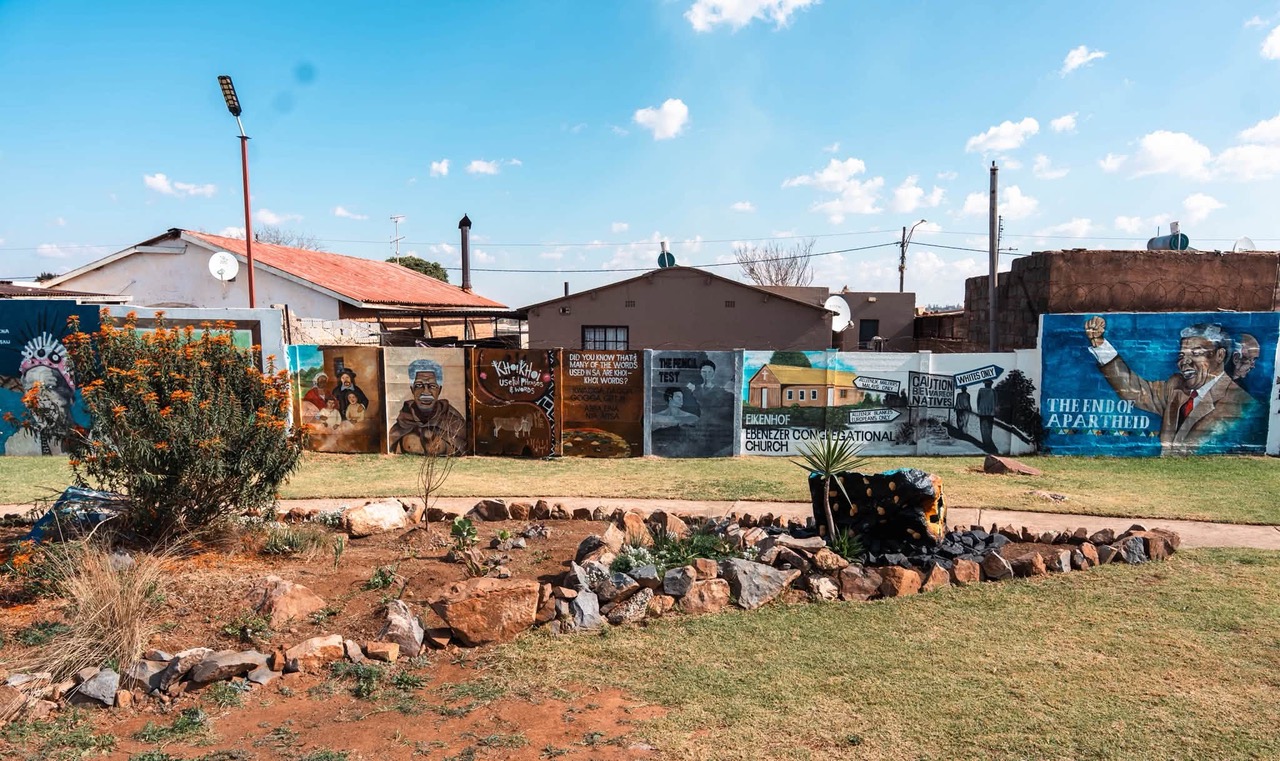
Eldorado Park has adds more colour to a former dumping ground, with new murals putting Khoi-San history, heroes and even some very familiar South African words on the walls.
Johannesburg, South Africa (03 September 2026) – Some walls are there to divide spaces. Others, if you give an artist enough paint, can reconnect them.
In Eldorado Park, a stretch of public space that was once a dumping ground has over time become a thriving public space rich with South Africa’s deep heritage stories.
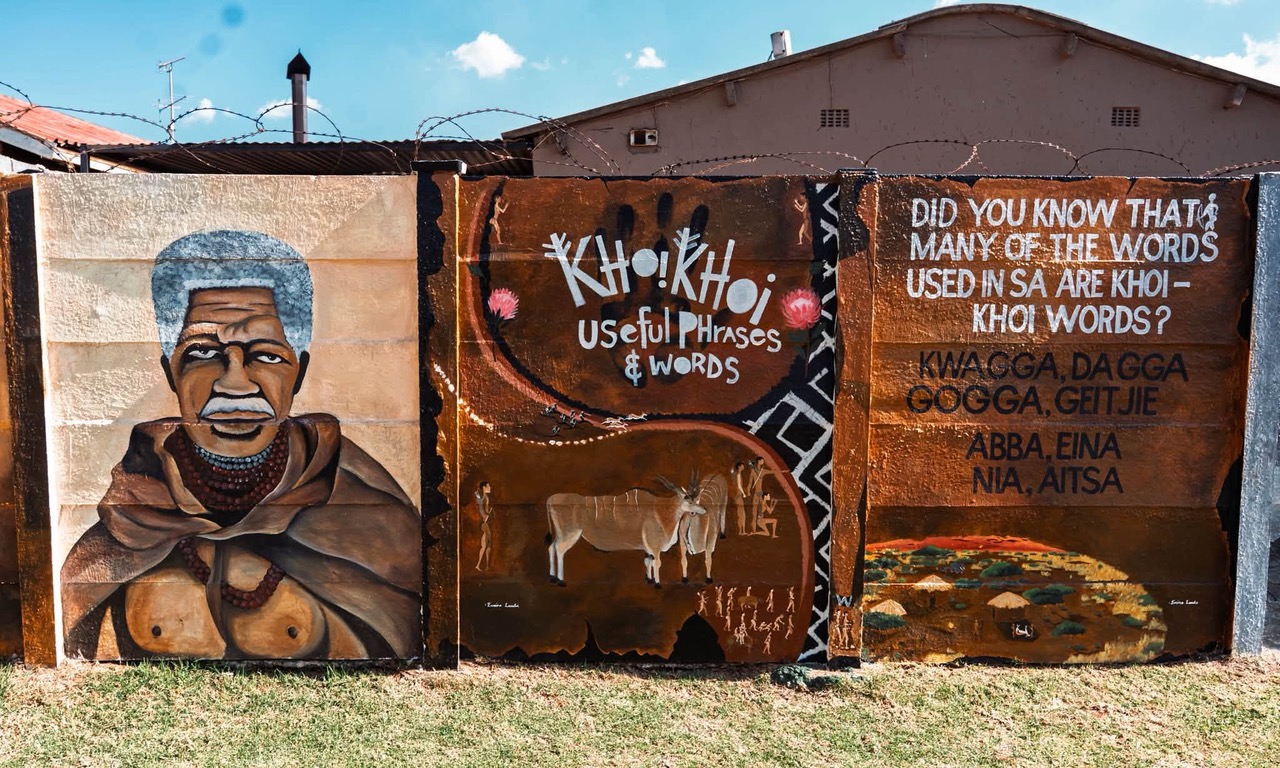
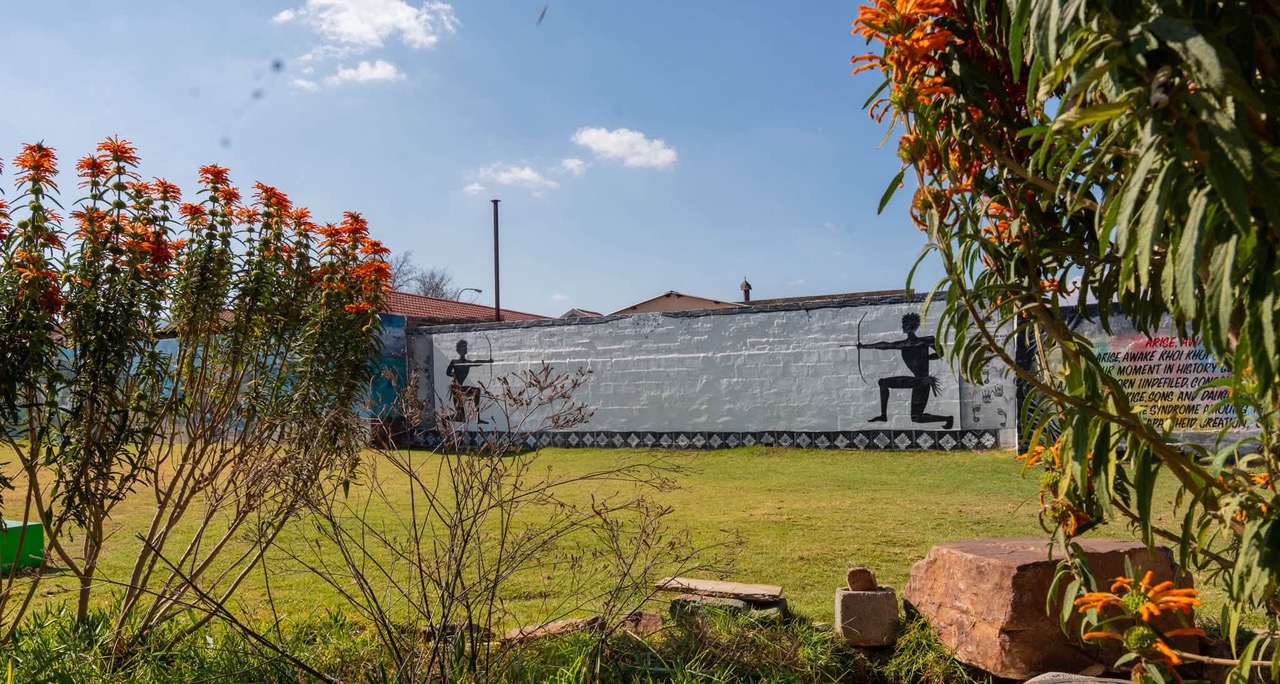
The Go Clean Go Green Public Art Walkway on Epsom Street is lined with colour, greenery and art. As part of Arts Alive Joburg 2026, another layer has been added to its walls through a new Khoi-San-themed installation.
The murals bring pieces of heritage into Eldos, shining a light on historical figures, language, painful chapters of the past, and the people who keep indigenous culture alive still.
Even a few words you probably didn’t realise had such old South African roots have made the wall. Kwagga. Dagga. Gogga. Geitjie. Abba. Eina. Aitsa.
They are among the words that first entered Afrikaans through Khoi languages and became so South African that most of us probably use an ‘eina!’ without giving its linguistic family tree deeper thought.
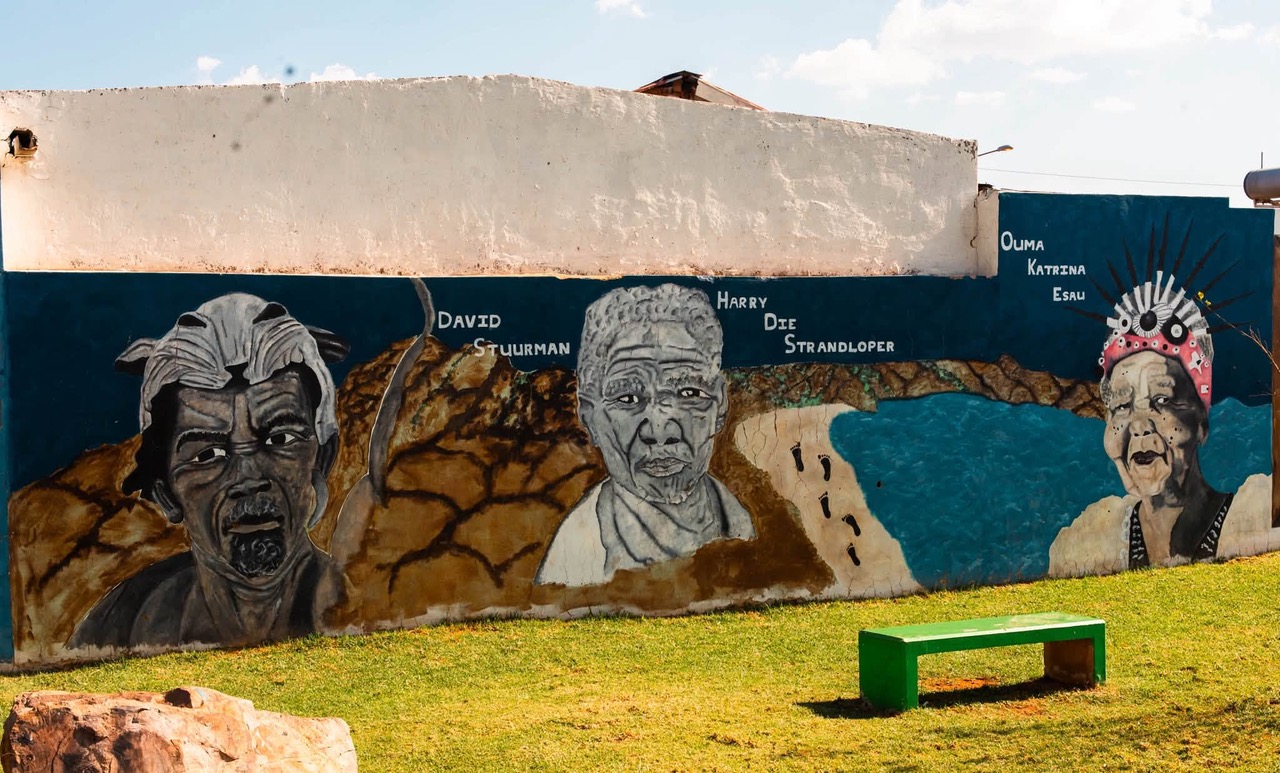
Elsewhere along the walkway, faces give those bigger stories names.
One belongs to David Stuurman, a Khoi leader remembered for resisting colonial dispossession and fighting for the freedom of his people around the turn of the 19th century. Stuurman was imprisoned on Robben Island, escaped, was captured again and was eventually exiled to Australia, where he died in 1830.
Another is Autshumao, also known historically as Harry or Herry the Strandloper. A Khoikhoi leader and interpreter, Autshumao became an important intermediary during early encounters between Europeans and indigenous people at the Cape. After conflict with Dutch settlers, he was imprisoned on Robben Island in 1659.
Related Stories
 A Little Boy’s First Steps Bring Big Joy After a Challenging Health Journey
 Libraries Are Still Relevant and They're Keeping Up With the Times!
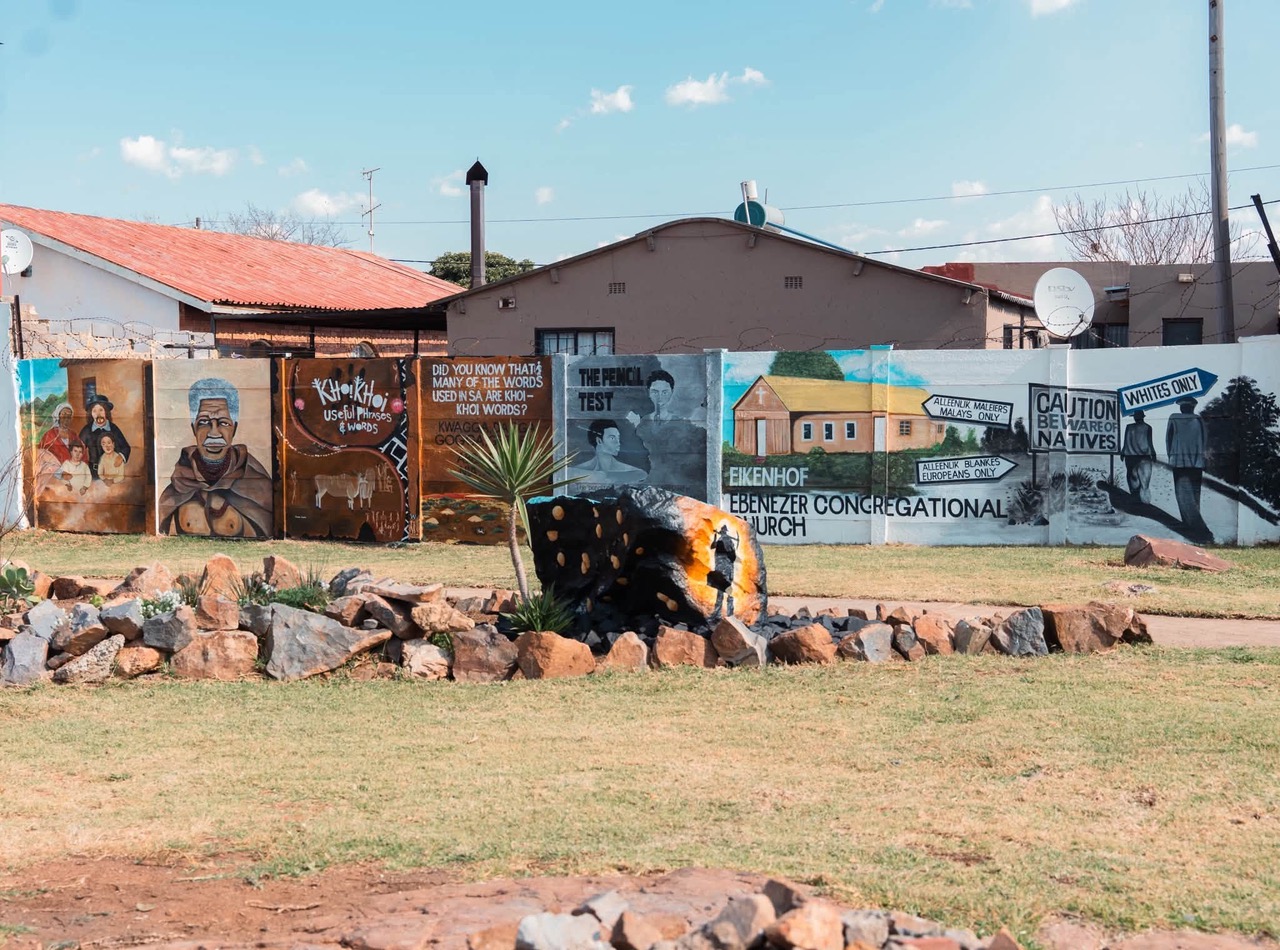
Then there is Ouma Katrina Esau.
Ouma Katrina has dedicated years to preserving N|uu, the endangered indigenous language she grew up speaking. From her home near Upington, she has taught younger generations the language and San traditions in the hope that they will continue long after her. UCT honoured her work with an honorary doctorate in 2023.
The walls aren’t only a celebration of what survived. They also make room for what happened.
One mural references the notorious ‘pencil test’, one of apartheid’s crude ways of deciding which racial box a person should be put into based on the texture of their hair. The consequences of racial classification could reach into where someone was allowed to live and even split members of the same family into different classifications.
Another artwork references the Ebenezer Congregational Church at Eikenhof, and there is a reason for its place on these walls. Historical research and oral histories collected by the City of Johannesburg indicate that a substantial Khoisan community lived around Eikenhof from the late 1800s.
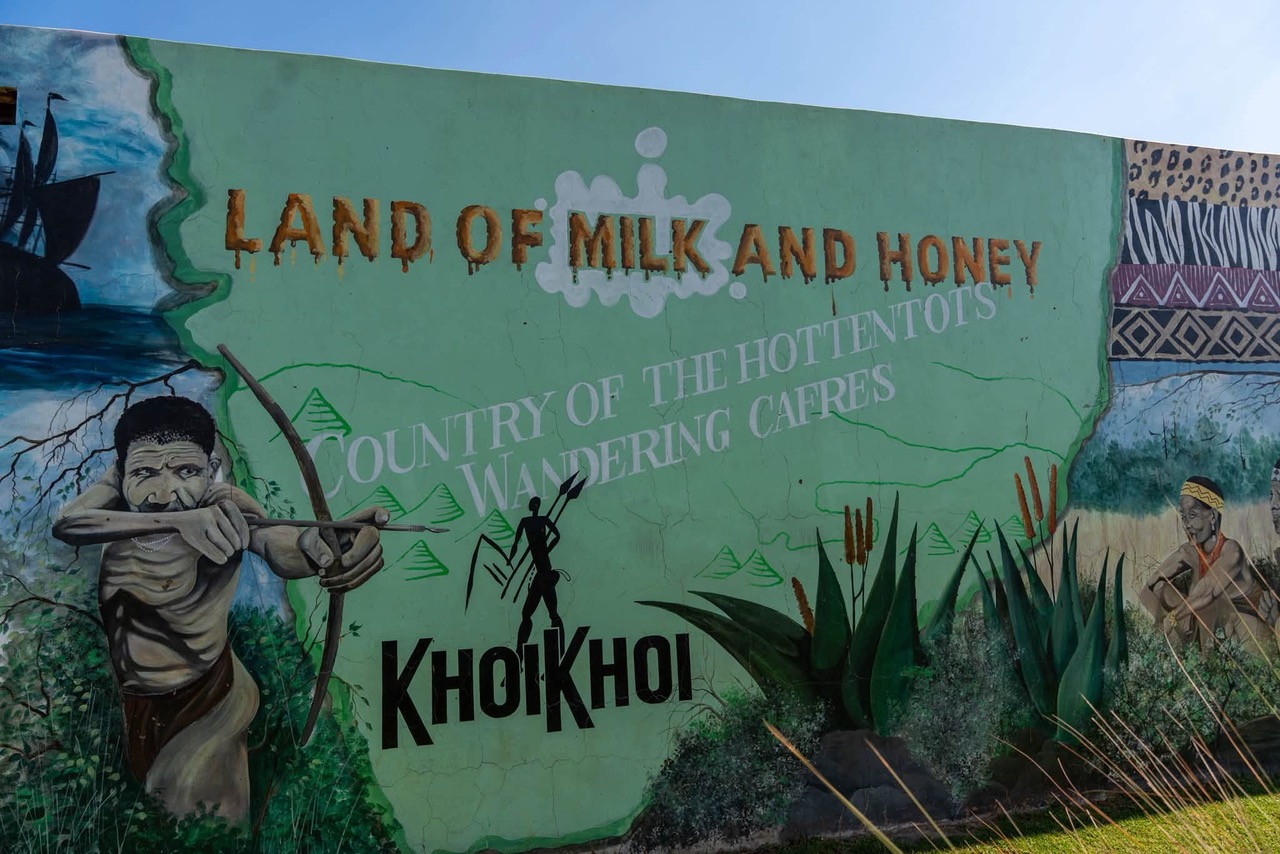
During apartheid, members of this community were classified as ‘Coloured’, despite their distinct Khoisan heritage. The settlement grew around landmarks such as the Ebenezer Congregational Church, believed to have been under construction from 1903 and today one of the last surviving reminders of the community that once lived there.
That community was later torn apart by forced removals. By the early 1960s, many Eikenhof residents had been removed from the land, with a number of families resettling in Eldorado Park. In 1965, Eldorado Park itself was formally designated for people classified as Coloured under the Group Areas Act.
These new murals reflecting a heritage carried into Eldorado Park by some of the very communities whose stories run through its walls.
Go Clean Go Green began back in 2013 when Rashid Juma, a former magician who turned his attention to green activism, rallied unemployed volunteers to tackle what had become a dangerous dumping ground in Extension 8. Long grass was cut, waste was cleared, and flowers went into the ground.
Over the years, the vision grew into an outdoor art gallery, green space and community hub where the very ground that had been neglected could become useful and beautiful again.
By 2024, the development of a Khoi Heritage Site had added indigenous art and cultural storytelling to the mix. The latest murals add to the next chapter of that story.
There are hopes that the walls will do more than make people stop and look. The bigger vision includes bringing more visitors into the area, encouraging cultural tourism and opening opportunities for local artists and other creatives, keeping Eldo’s residents at the centre of the space they helped reclaim.
 by