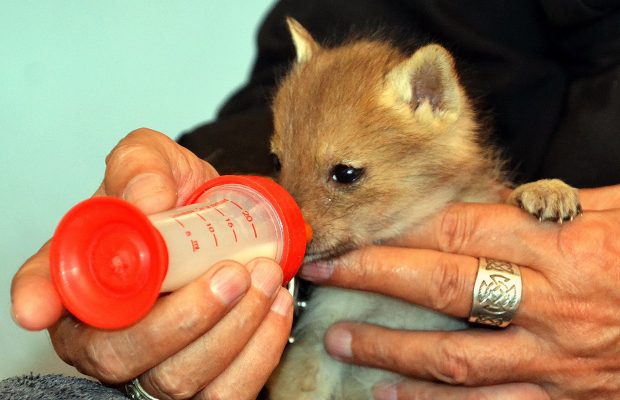
After their mother was shot by a farmer, these 6 Black-backed Jackal pups are heading to a safe haven where they will be protected and boost populations.
Wild Heart Wildlife Foundation recently received a call for help from Wild and Free Wildlife Rehabilitation. Six tiny Black-backed Jackal Babies were in immediate danger as their mother had been killed on a farm in Mpumalanga. The farmer was impatient and wanted them removed as soon as possible, or he would dispose of them. We started packing almost immediately – our Wild Hearts inspired at the thought of saving six precious lives. Early the next morning, we left on our latest mission: “Operation Jackalberry”!
The middle-veld of South-Western Mpumalanga is wide open country, with bright, blue, clear Winter skies and fields as far as the eye can see. Peppered with windmills and solid old farmhouses, this landscape is home to cattle, sheep and mealie farmers, feeding the nation. There are good people here, salt of the earth. One such person is the one who ended up taking the puppies in and making the call to get them help. He saved their lives, and due to the speed with which we reacted, is now committed to doing even more in the future to help the persecuted predators like servals, caracals and jackals.
Black-backed Jackals are widely considered as vermin in South Africa, yet they play a vital role in Ecology – they are the clever canids that keep rodents such as rats and mice at bay. Although they do cause damage to sheep farmers, killing them off has been proven to not have any noticeable effect in long-term population control. The eradication as problem animals and poaching by muti suppliers for traditional medicine has resulted in an ‘Island Effect’, where isolated populations of these animals occur in normal, stable population numbers – but in other areas they are extinct. The Southern part of the Kruger National Park and outside those boundaries is one such area – and this is the area identified where they will be released after extensive rehabilitation.
The Black-backed Jackal puppies were kept in a crate, with no padding to resemble their soft, dark, den which they had before. They were fed once only, with the big no-no of cow’s milk mixed with eggs. (Cow’s milk damages the intestines of predators and can cause a multitude of problems, often resulting in their death). The pups were severely dehydrated, constipated, and covered in ticks. They also had a huge parasitic load of intestinal worms when we found them.
We stopped a few miles away from the farm to hydrate them and make them comfortable for the four-hour journey to their new temporary home at the rehab centre. We used syringes to administer fluids (water and glucose) orally, and placed each pup carefully on a soft bed of blankets inside the transport cage. They travelled like perfect little pointy-nosed angels, sleeping quietly.
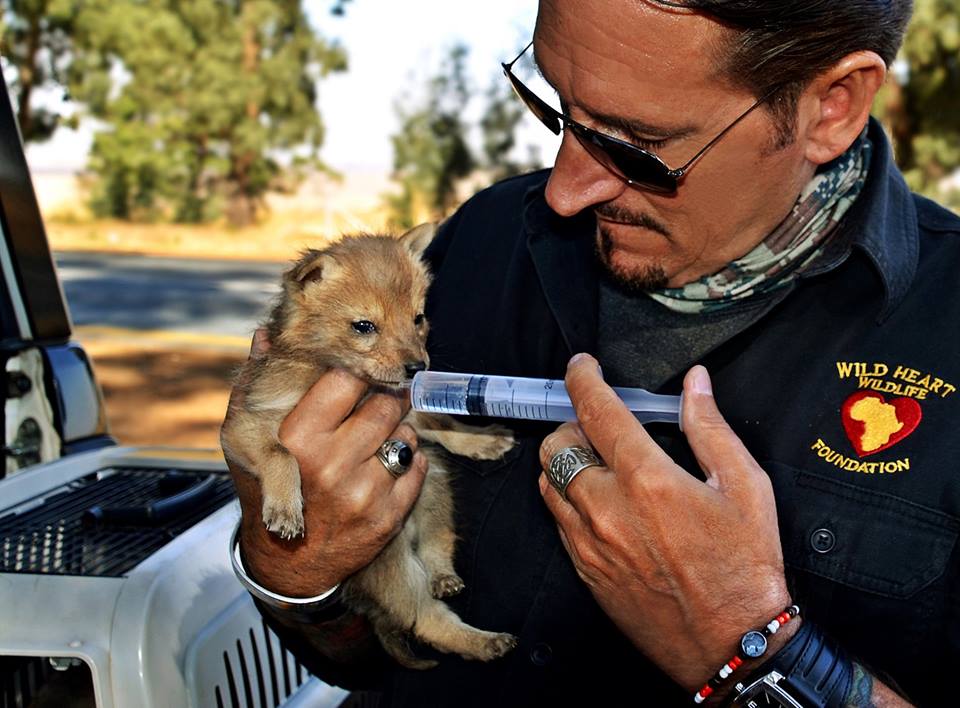
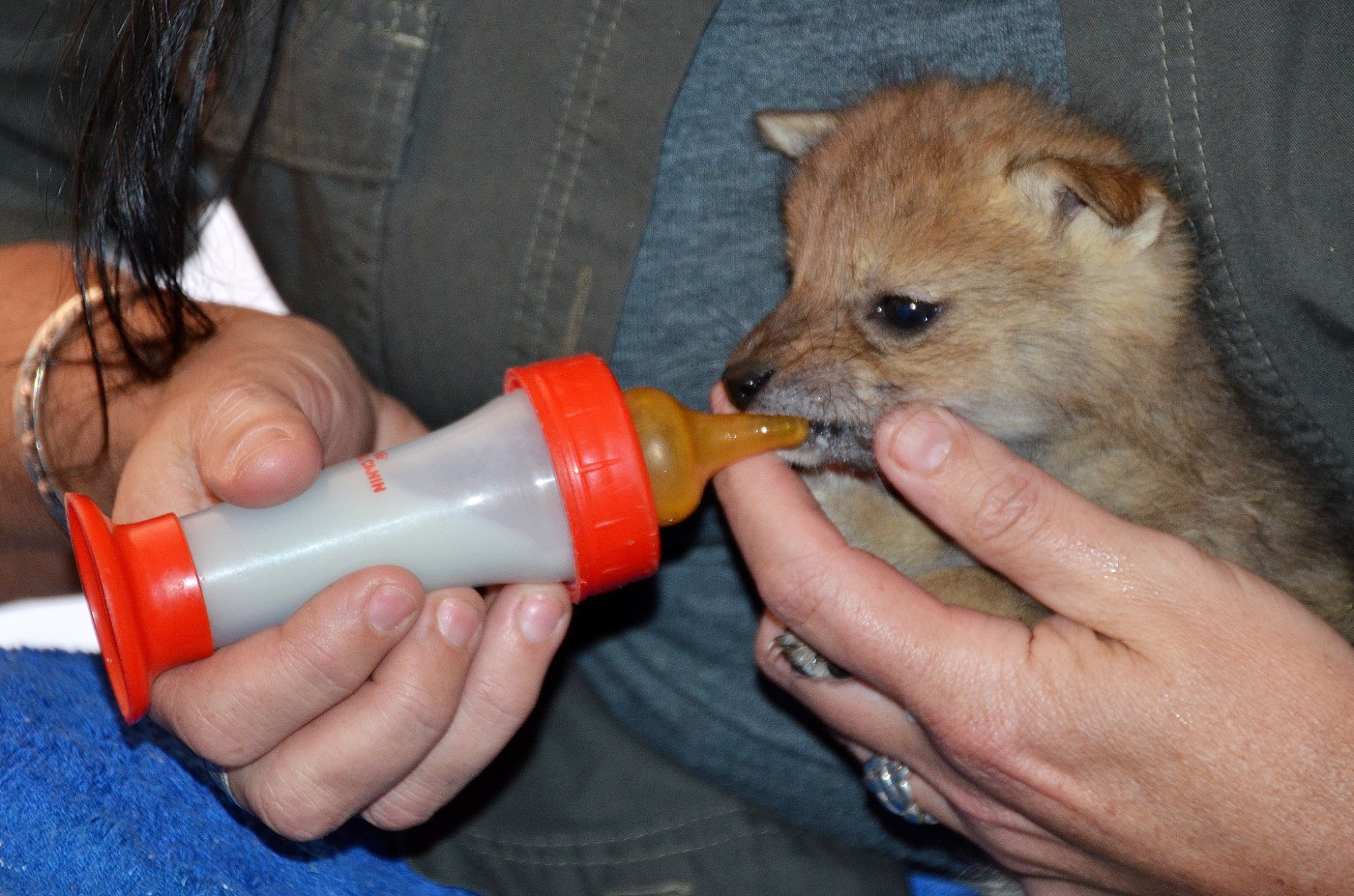
Once we arrived at the Rehab facility on the banks of the Crocodile River, the puppies were immediately treated for ticks and fleas, their stomachs were stimulated manually and they were fed the correct milk replacement formula to enable them to grow up strong and healthy. They were de-wormed and checked out for any health issues. There are three females and three males. Because they are difficult to tell apart, it was decided to paint a different toenail on each of the puppies. This enables the proper record-keeping of weight, progress and health, and effective treatment and administering of medication.
These three-week-old puppies will now enter extensive rehabilitation of two years. Having no mother to teach them to hunt, humans have to substitute and do the best we can until their natural instinct takes over and they can look after themselves. The soft-release period will be around two weeks long, while they are placed inside enclosures in the environment where they will be released, to get used to it. After a few days, the cages are opened, and the (then young adult) jackals will be free to come and go as they please. Once they stay away and stop taking the supplied food, they will be ready for the bush, and we will say our last goodbyes, in the hope that these babies will form a healthy population in an area now devoid of Black-backed Jackals.
We will, wherever possible, keep you informed of their progress, and of our involvement in their Rehabilitation.
Related Stories
 They Made It! Young Animal Welfare Volunteers Off to Cape Town
 This Dog Saw Humanity at Its Cruellest – Then Came a Little Girl With R15
Why save Jackals?
As the dominant predator in many areas of Southern Africa where the larger predators have been eliminated, the black-backed jackal plays an important role in maintaining the health of the ecosystem.
As a result of its size and adaptability, it selects antelope that are weak or sick, and in so doing, removes animals that would otherwise release enormous numbers of parasites into the environment. It scavenges when carcasses are available. Also, because there are enough people left in this world trying to kill all of them, and encroaching on their habitat – it’s time we start saving them and placing them back into the areas where they were lost and eradicated – areas now safe from persecution. And then, if you’re very lucky, maybe one day you can let your child hear their haunting calls echo over the last remaining South African Savannah.
Thank you, from the bottom of our Wild Hearts to our supporters that donated towards our fuel costs, and enabled us to respond very quickly in saving 6 precious lives. Your loving donations are what make it possible for us to directly help the wildlife most at risk.
As always, we remain dedicated to Ethical Conservation and showing you exactly how your kind support has helped our Wild Babies.
 by
by