The story of Frank, a humble sheep who stepped in as a companion and became the most unlikely hero…
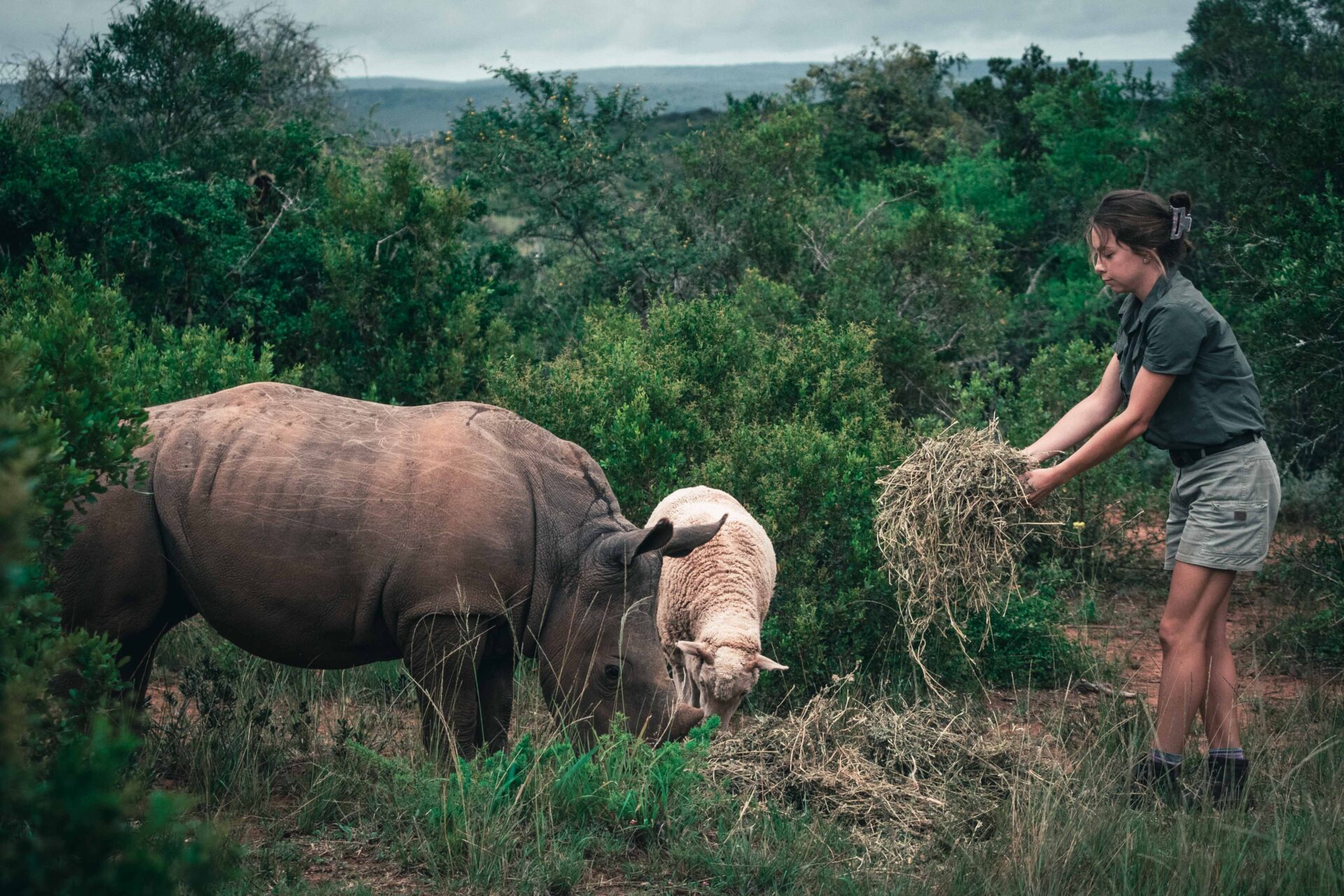
Eastern Cape, South Africa (26 August 2025) – Frank the sheep made international headlines years ago when he was introduced to an orphaned white rhino calf at Shamwari’s Wildlife Rehabilitation Centre.
The young rhino wasn’t recovering as well as vets had hoped, and Shamwari’s wildlife veterinarian, Dr Johan Joubert, suspected loneliness was the cause of it. We all need friends.
That’s when Frank was borrowed from a neighbouring farm to keep the calf company. And it worked really well. The little rhino began to heal, softened by the comfort of his new and faithful woolly friend.
And then there were some hiccups.
At the height of summer, Frank had to be shorn. When he returned, the rhino didn’t recognise Frank, and the pair had to spend a few days getting reacquainted. They did, and they became besties again.
Frank’s claim to fame is only one tale in the bigger picture of Shamwari’s Wildlife Rehabilitation Centre. One of many worth telling.
For 33 years, the facility has been a safe space for sick, abandoned and injured wild animals, working to return them to the wild whenever possible.
Today, it’s one of the largest centres of its kind on the continent.
Related Stories
 The Hope Dealers: Jozi Trails Looks After the City's Longest Green Artery
 Banjo's Best Life! Scruffy Pup Found in Bushes Gets Happiest New Beginning
Under the stewardship of Dr Joubert and ecologist John O’Brien, Shamwari has grown from a small holding pen to three dedicated centres. These now include a fully equipped operating theatre, enclosures for all kinds of wildlife ranging from rhino calves to elephants and antelope, as well as aviaries for birds of prey and owls.
Six years ago, a new centre was opened to give guests a rare behind-the-scenes look at the tough realities of conservation. Here, visitors can see how orphans are cared for, from mischievous little meerkats who once drove staff to distraction with their constant escapes, to elephant calves who were successfully rehabilitated and reintroduced to wild herds.
Guests are lucky enough to catch a glimpse of the work that goes on behind the scenes, but lengths have been taken to screen the enclosures so the animals don’t become habituated to humans. One day, they’re released back into the wild again, where they belong. Humans aren’t a part of the picture, and shouldn’t be.
The most recent addition at Shamwari is a VulPro centre launched in 2024, when 163 Cape and African White-backed vultures were relocated from Hartebeespoort in what became the largest vulture relocation ever undertaken.
Among them are two endangered Egyptian Vultures, brought in with the hope of boosting the population of the species globally.
“It is hoped the pair will breed to bolster the population of this bird, of which only 20 000 mature individuals are thought to exist, a decline of between 50% and 70% over the past decades.”
Finding orphaned rhinos new friends and working to grow dwindling numbers of endangered birds is just some of the amazing work that conservation heroes at Shamwari does.
“Shamwari’s wildlife rehabilitation operation has and continues to play a critical role in conservation,” says Shamwari CEO Joe Cloete. “Our continent’s once-bountiful wildlife is under pressure as never before. Rehabilitation of sick, abandoned or injured wildlife is an important part of wildlife conservation, and the knowledge gained helps to support future efforts.”
Frank may have been a sheep in a rhino’s world, but his friendship is proof that sometimes, wild ideas can work.
 by
by