HERD’s new dedicated research centre is coming to life and will transform researchers’ understanding of elephant well-being to ensure a safer, happier future for these magnificent giants.
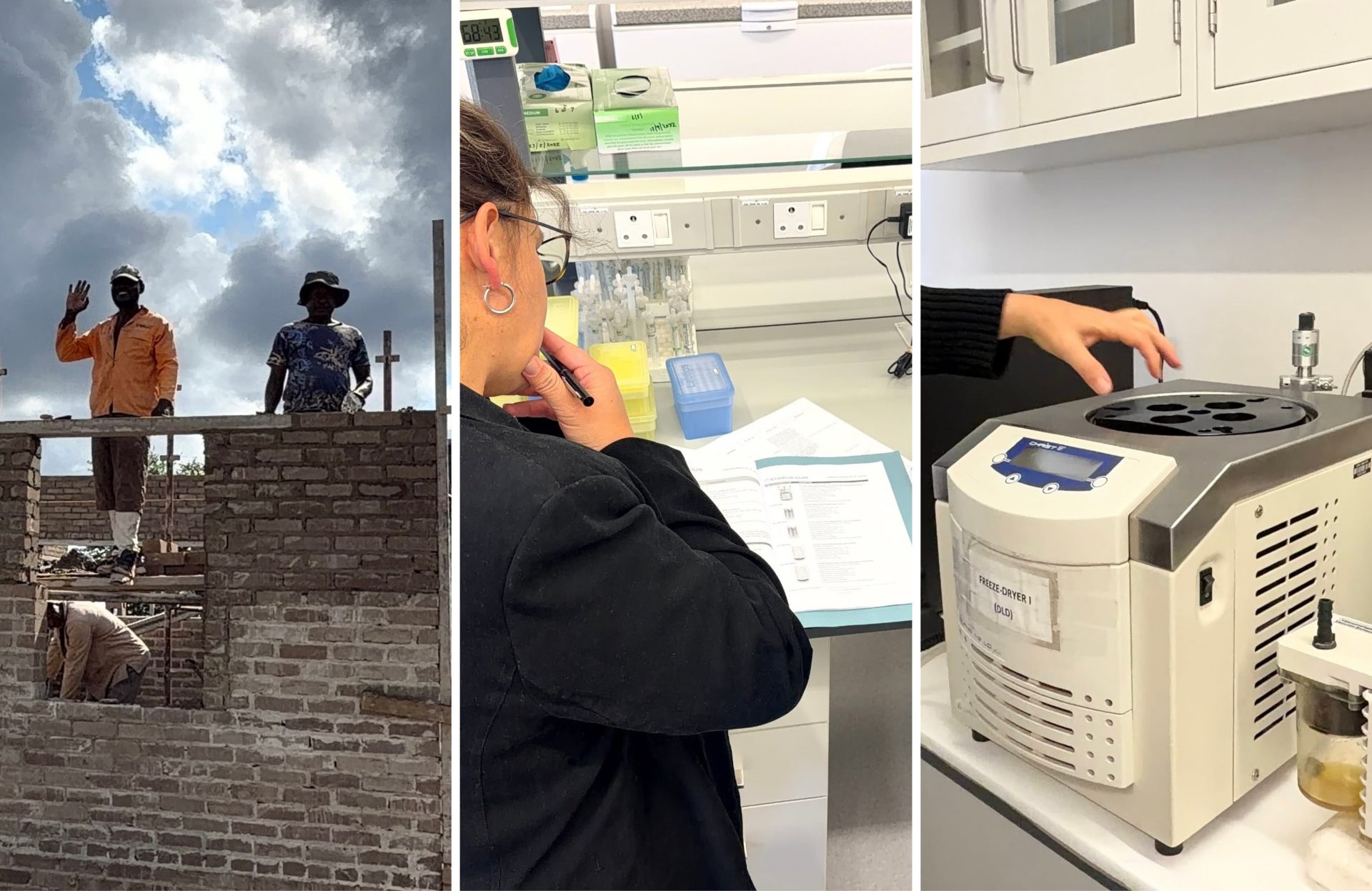
Hoedspruit, South Africa (07 July 2026) – The Hoedspruit Elephant Rehabilitation and Development’s (HERD) In Memory of Limpopo Research Centre is taking shape, with the vision of ensuring overall elephant wellbeing through ethical, non-invasive research becoming an exciting reality.
A permanent, purpose-built research space dedicated to ethical elephant research, the centre will help HERD members and scientists understand how environmental factors, including temperature, rainfall, seasonal changes, and herd dynamics, affect stress levels and overall well-being in semi-habituated African savanna elephants.
“By combining behavioural observations with non-invasive dung sample analysis, we gain a clearer picture of how elephants respond to both natural and human-influenced environments,” HERD shares.
Over the past few months, HERD has been tirelessly working to get the research centre fully equipped.
“While starting the build is a major accomplishment, setting up a fully equipped research centre is an even greater undertaking. Our main focus now is sourcing the right equipment to ensure that the analyses we conduct are accurate, reliable, and able to help us better understand what our herd is telling us,” HERD explains.
The centre will initially focus on two key areas of analysis: feed testing and faecal testing.
“Feed testing will allow us to analyse the food being fed to the elephants to determine its quality, nutritional value, and safety. This will be especially valuable when assessing the nutritional value of milk formula, helping us improve the care and safety of future orphaned elephants.”
The faecal testing will analyse the elephants’ dung to assess digestion, health, and parasite burden.
“These tests can help us understand how well elephants digest certain foods, identify parasites, assess gut function, and estimate nutrient utilisation. Faecal samples can also be used alongside hormone analyses to study stress, welfare, and overall well-being.”
 These Surprising Leopards of South Africa Also Deserve Some Love!
 Dogs Found Safe But Hijacked Vehicle Still Missing – SPCA Still Needs Eyes and Ears!
 Thanks to several educational sessions and ongoing guidance from the University of Pretoria, HERD has been able to compile a list of the most vital equipment needed for the centre.
“This is by no means an easy task, as this is a wholly new field for HERD. We are stepping beyond our primary focus of caring for elephants and into the scientific sphere. While we are very excited about the opportunity to conduct regular feed and faecal tests, we have spent many late nights discussing equipment requirements with university staff, students, and conservation specialists.”
Some of the more specialised equipment needed includes microplate readers, centrifuges, a plate washer, and upgrading HERD’s water system to produce Type 2 water (a high-purity laboratory water standard suitable for general lab applications).
View this post on Instagram
In addition to securing key equipment and collaborating with experts to get the lab furnishings right, the centre will also provide HERD with the opportunity to train future conservationists who can play a meaningful role in elephant conservation.
“The new team member will receive extensive training through the University of Pretoria to ensure they are able to produce accurate and reliable results.”
As the facility grows, so too will the opportunities to answer some of the many questions that remain about these remarkable animals.
The journey has been exciting, eye-opening and collaborative – all working towards one purpose: understanding elephants better!
“By investing in research today, we are taking meaningful steps toward a future where elephants are better understood, better protected, and better cared for. This is only the beginning of a journey that will help us listen more closely to what elephants are telling us, ensuring that their voices continue to guide our conservation efforts for years to come.”
Sources: Hoedspruit Elephant Rehabilitation and Development
Don’t ever miss the Good Things. Download the Good Things Guy App now on Apple or Google.
Do you have something to add to this story? Please share it in the comments or follow GoodThingsGuy on Facebook and Twitter to keep up to date with good news as it happens, or share your good news with us by clicking here or click the link below to listen to the Good Things Guy Podcast with Brent Lindeque – South Africa’s very own Good Things Guy. He’s on a mission to change what the world pays attention to, and he truly believes there’s good news around us. In the Good Things Guy podcast, you’ll meet these everyday heroes and hear their incredible stories:
Or catch an episode of Good Things with Brent Lindeque or our Weekly Top 5 below. The videos here are always changing, updated with the latest episodes from these two shows. Both are part of Good Things TV, created to bring South Africans balance at a time when the news can feel overwhelmingly negative. Our goal is simple: to remind you that there are still so many good things happening in our country – and to leave you feeling a little more proudly South African.
 by
by