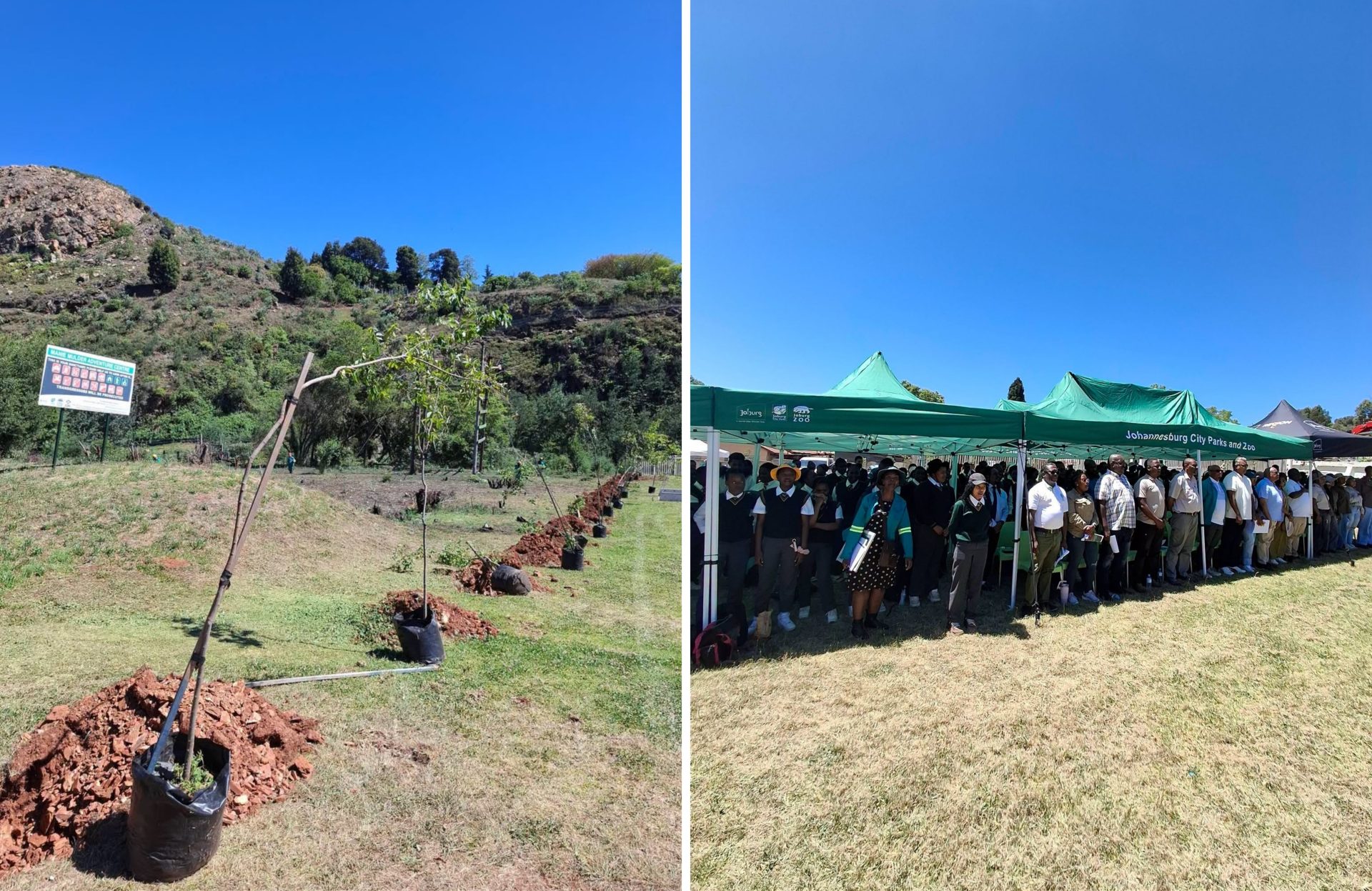
Forty indigenous trees have been planted at the Manie Mulder Adventure Centre as part of ongoing efforts to restore local biodiversity.
Johannesburg, South Africa (26 October 2026) – A healthier environment takes more than planting trees. Sometimes, it means first making room for nature to recover.
That was the message behind Johannesburg City Parks and Zoo’s activities at the Manie Mulder Adventure Centre in Roodekrans, where 40 indigenous trees were planted as part of National Invasive Species Week.
Before the planting could take place, work had already been done to remove invasive alien plants that compete with indigenous vegetation, threaten biodiversity and consume valuable water resources.
Johannesburg City Parks and Zoo (JCPZ), the City of Johannesburg entity responsible for managing public parks, cemeteries and designated open spaces, has cleared approximately 103,506 square metres of invasive vegetation.
The species removed include eucalyptus, black wattle, bugweed, lantana, blackwood and privet, among other invasive plants.
At Little Falls Resort, more than 120 large eucalyptus trees have also been removed, along with other water-intensive invasive species.
The work forms part of a broader effort to give recovering landscapes a better chance to thrive. Invasive alien plants can spread aggressively, placing pressure on indigenous species and reducing the water available to surrounding ecosystems.
National Invasive Species Week encourages communities to understand these threats and take practical steps to protect the environment.
The planting of indigenous trees is one such step, helping to restore natural vegetation and support local biodiversity.
Related Stories
 South Africans Wowed by Seeing Pangolin Walk on Two Legs!
 Soshanguve Animal Shelter Urgently Needs Your Help to Feed Vulnerable Rescue Dogs
It is a reminder that environmental conservation is not always about doing more. Sometimes, it begins with removing what does not belong and giving nature the space it needs to grow.
 by