From kitchens to communities, the Plant Based Treaty shows how South Africans can turn tradition into a tool for climate resilience.
South Africa (04 September 2025) – The plant-based movement has been steadily growing over the years as more people turn towards finding alternatives for not only their personal health, but for the planet too. In South Africa, where every community has a rich plant-based food culture, we celebrate the meals that make us proud, while learning more about the growing movement.
Launched in 2021, the Plant Based Treaty was born out of a simple but urgent truth: we cannot tackle the climate crisis without rethinking how we grow and eat our food. It has since grown into an international movement, encouraging people to think about their own food consumption habits.
The framework is built on three pillars, namely: relinquish (stop expanding animal agriculture), redirect (shift policies and subsidies toward plant-based systems), and restore (reforest and regenerate ecosystems). In other words, it’s not just about eating more veggies; it’s about transforming the system that feeds us.
The treaty has been adopted by individuals, companies, organisations and whole cities, including Amsterdam, Edinburgh and Los Angeles, to name a few. South Africa now has its own chapter, dedicated to raising awareness for the movement and inspiring locals to adopt new lifestyle choices, or dust off some old ones. What makes the treaty such a feasible idea in South Africa is that our food culture and heritage are already rich in plant-based options.
Our plant-forward traditions include pap and morogo, samp and beans, lentil curries, and amadumbe. Long before “plant-based” became a buzzword, African kitchens were serving resilient, sustainable meals rooted in the land. The Plant Based Treaty hopes to reframe that heritage as a strength to carry it forward.
As with every side of society, there can be polarising opinions around diet and farming practices. This is your reminder that nobody is asking for overnight perfection. The Treaty is about making progress, not pushing purism. Small steps like a Meatless Monday meal, working in a community garden, and helping a school feeding scheme centred on local crops; they all add up to meaningful change. Each shift lowers emissions, eases pressure on land and water, and helps communities build resilience in the face of climate shocks. And boy, has South Africa had a few of those!
While the Plant Based Treaty may sound like it’s working to enforce policy changes, what it’s really doing is working from the ground up, inspiring everyday people to take personal action, which eventually leads to policy changes and system shifts. After all, changes to how we eat start in our kitchens.
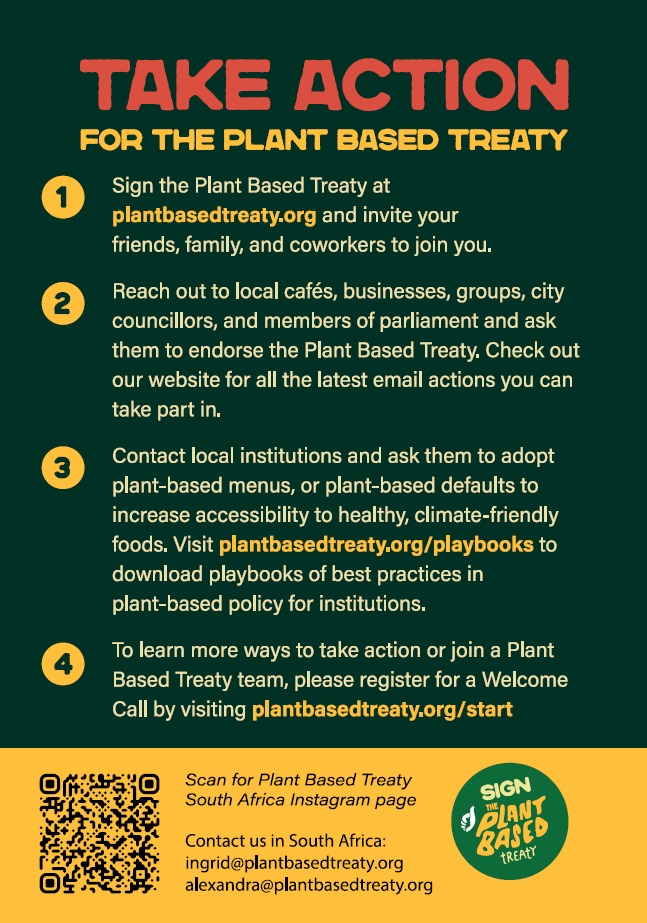
Whether wanting to go fully plant-based or add a meat-free Monday to the mix, you can endorse the idea here and share your story. The South African team are keen to engage, so share your ideas, meals and hopes via Instagram or Facebook.
Related Stories
 Ladles of Love is Calling on South Africans to Rethink What it Means to Feed a Child
 Table Mountain Venue Snags Another World-Class Win for South Africa!
Sources: Plant Based Treaty – Supplied
Don’t ever miss the Good Things. Download the Good Things Guy App now on Apple or Google.
Do you have something to add to this story? Please share it in the comments or follow GoodThingsGuy on Facebook & Twitter to keep up to date with good news as it happens, or share your good news with us by clicking here or click the link below to listen to the Good Things Guy Podcast with Brent Lindeque – South Africa’s very own Good Things Guy. He’s on a mission to change what the world pays attention to, and he truly believes there’s good news around us. In the Good Things Guy podcast, you’ll meet these everyday heroes & hear their incredible stories:
Or watch an episode of Good Things TV below, a show created to offer South Africans balance in a world with what feels like constant bad news. We’re here to remind you that there are still so many good things happening in South Africa & we’ll leave you feeling a little more proudly South African.
 by
by