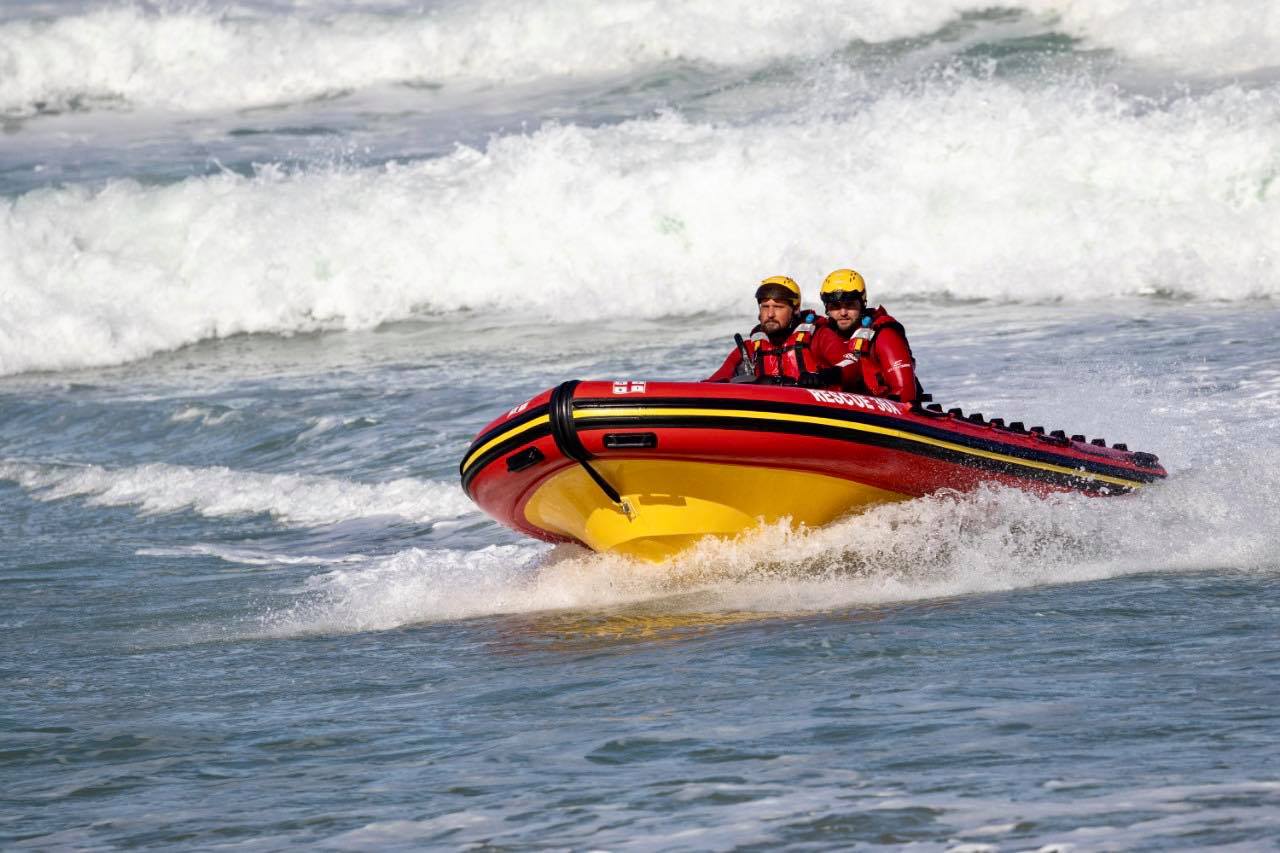
The NSRI are preparing for South African “silly-season” by asking the public to be mindful of large bodies of water and to practice caution.
South Africa (13 November 2020) – The holidays are so close we can already smell the sunscreen and pool/beachside cocktails but before getting too excited, the NSRI want us all to brush up on water safety skills.
As South Africa is blessed to have a very hot summer, it is almost a given that we will spend as much time as possible near open bodies of water, whether it be a dam, river, ocean or pool, just to stay cool.
NSRI are appealing to the public to be cautious and to adopt a safety-conscious mindset when they go down to the beach or to inland waters to swim.
Be aware of rip currents that form constantly throughout every day in normal wave action along the coastline and only swim at beaches protected by lifeguards.
Be extra cautious this weekend!
This weekend’s new moon Spring tide peaks on Sunday, 15th November, and bathers can expect the Spring tide higher than normal high tides and Spring tide lower than normal low tides.
Rock anglers and coastal hikers are urged to be cautious during the Spring high tide. Also be aware that rocky outcrops and rocky islands along the coastline can be cut off from mainland during the Spring high tide.
We are appealing to parents to always have responsible adults supervising children when they are swimming or when they are around coastal and inland waters and at residential swimming pools.
These are some helpful summer water safety tips.
- Only swim at beaches where and when lifeguards are on duty. They are only on duty from 10 am to 6 pm. Also, always swim between their flags, that way they can spot you faster should you be in distress.
- Don’t drink and swim, same applies for driving obviously.
- Don’t swim alone and also don’t leave children unsupervised ever, not even for a second.
- Children should be wearing safety floatation devices such as armbands, life-jackets and pool rings if they are not strong swimmers.
- When pools are not in use, gates should be closed, or pool nets need to be placed over the water to prevent children or animals from falling in the water.
- As mentioned, the NSRI wish for you to know how to survive a rip current. Take a look at their poster below.
“If you swim between the lifeguard flags they will make sure that you are safe and well away from rip currents. If for some reason this is not possible do not swim.”
- Take note of all emergency contact numbers for your area or the area you will be staying at and save them on your phone. The universal number for the emergencies in SA is 112 on your cellphone.
- Pool floats should be avoided when windy. They can easily be blown towards deeper water.
- All water users should avoid being distracted by social media and constantly be aware of what is happening around them.
- Learn CPR, just in case; it is a useful skill to have no matter the season or reason.

Related Stories
 Souper Troopers Has Moved Hundreds Off the Streets. Now it Needs Help to Keep its Lifeline Open
 SA's Incredible Volunteer Therapy Dogs Are the Gentlest Heroes!
The NSRI is about to embark on its busiest season, along with lifeguards and other emergency services so take care when travelling, swimming and all ’round holidaying. The NSRI rely on donations so if you would like to support them through the summer holidays, you can donate here.
 by
by