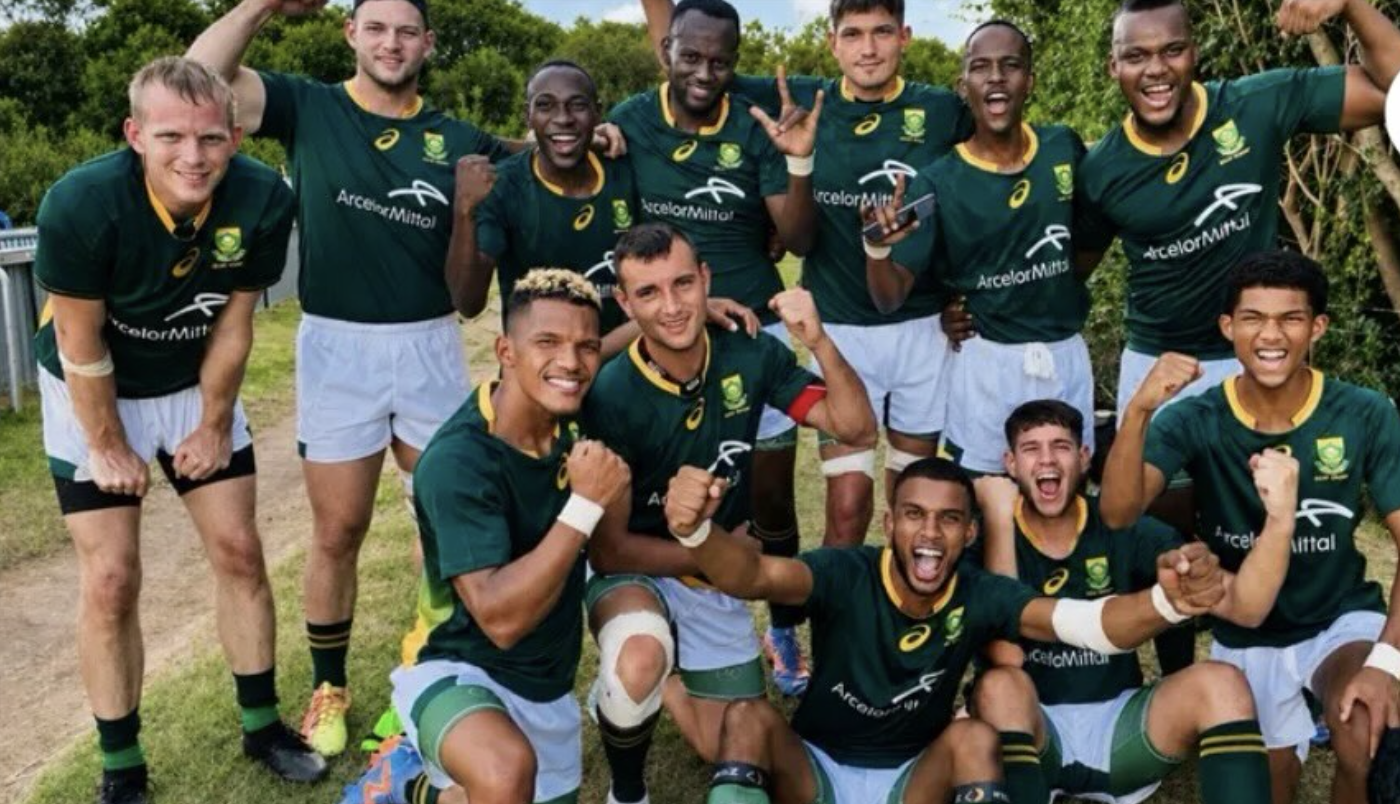
After finishing fourth at the 2023 World Deaf Rugby Sevens Championships, the team heads to Tokyo with three more years of experience behind it.
South Africa (18 September 2026) – There is no shortage of communication on a rugby field, but South Africa’s Deaf Rugby Sevens team has developed its own way of making sure everyone is on the same page.
Without hearing aids or cochlear implants during matches, the players rely heavily on visual communication, spatial awareness, trust and teamwork.
Now, after narrowly missing out on a medal at the 2023 World Deaf Rugby Sevens Championships in Argentina, Team South Africa is heading to Tokyo with unfinished business.
The 2026 tournament takes place from 31 October to 3 November, with South Africa set to face teams from around the world, including defending champions Wales.
Coach Roelof Kotze believes the three years since Argentina have made a significant difference.
“We’ve had three years to prepare for this moment, and we’re going to Japan as a very different team from the one that arrived in Argentina in 2023. Back then, we were going in completely blind. None of us had ever competed internationally before, so we didn’t really know what to expect at that level. Despite that, we came incredibly close to a medal.”
Since then, the squad has gained international experience, including hosting another tournament on home soil in 2024.
For some players, Tokyo will be their third international tournament. The team will be captained by Marnus Dercksen, who was also part of the 2023 side.
Dercksen remembers just how close South Africa came last time, and says that memory has helped fuel the team’s preparations.
Related Stories
 Chanté Mulder Adds World Powerlifting Bronze to Her Sporting CV
 Daniella Cowden Completes Six Ironmans Across Six Continents in Six Months
“Having captained South Africa at the 2023 World Deaf Rugby Sevens in Argentina, I know how close we came to bringing home a medal.”
Alongside Dercksen, the squad includes Riemerd Spreeth, Johan Liebenberg, Enrico Abrahams, Admar Claassen, Lucien Famer, Rodwin Beyers, Leon Willemans, Marchello Petro, Patrick Motothwa, Boitshepo Motlhala and Gregory Adelaar.
For the players, being Deaf does not mean being removed from competitive rugby. Many of them play regularly for hearing clubs around South Africa, bringing that experience into the national team environment.
“For the players earning their first cap, they aren’t new to competitive rugby. They play week in and week out for hearing clubs across South Africa, so they understand the level of preparation, physicality, and commitment required to compete against the best,” Kotze said.
SADRA Vice President Lauren Terras says players develop an exceptional awareness of movement and positioning because of the way they communicate and process what is happening around them.
“We see our players as superheroes with extraordinary abilities. When one sense is absent, other senses can become more finely tuned.”
Managing Director Yolanden Moodley says the focus should remain on what the athletes bring to the field.
“When you watch our South African Deaf Rugby players compete, what strikes you isn’t what they can’t do; it’s the absolute commitment, the skill, the hunger to compete on the world stage, and the way they read the game differently.”
Three years after coming within touching distance of a medal, they are heading to Japan with more experience, more preparation and a chance to show exactly how far South African Deaf Rugby has come.
 by
by