A liberation movement that shaped generations of activists and thinkers finds a home at Stellies University, as the institution moves to honour a more inclusive past.
Stellenbosch, South Africa (04 June 2026) – According to a report by Desmond Thompson for Stellenbosch University, the university has launched the Unity Movement Collection.
It is a major new archive that preserves more than 80 years of political and intellectual history linked to one of South Africa’s most influential but least recognised liberation movements.
The Non-European Unity Movement brought together a broad coalition of organisations opposed to apartheid and racial oppression – among them the All-African Convention, the Teachers’ League of South Africa, and the Anti-Coloured Affairs Department Movement. After a split in 1958 and years of repression that drove parts of the movement underground or into exile, its successor – the New Unity Movement – was formed in 1985 and continues to operate today.
Despite its significant role in shaping anti-apartheid thought, the movement has largely been left out of mainstream liberation narratives.
As Prof Crain Soudien, sociologist and former Deputy Vice-Chancellor at UCT, put it at the launch – during the 1940s and into the 1950s, the Unity Movement was as significant in thinking about South Africa’s future as the ANC yet today, “there’s almost erasure” in how it is remembered.
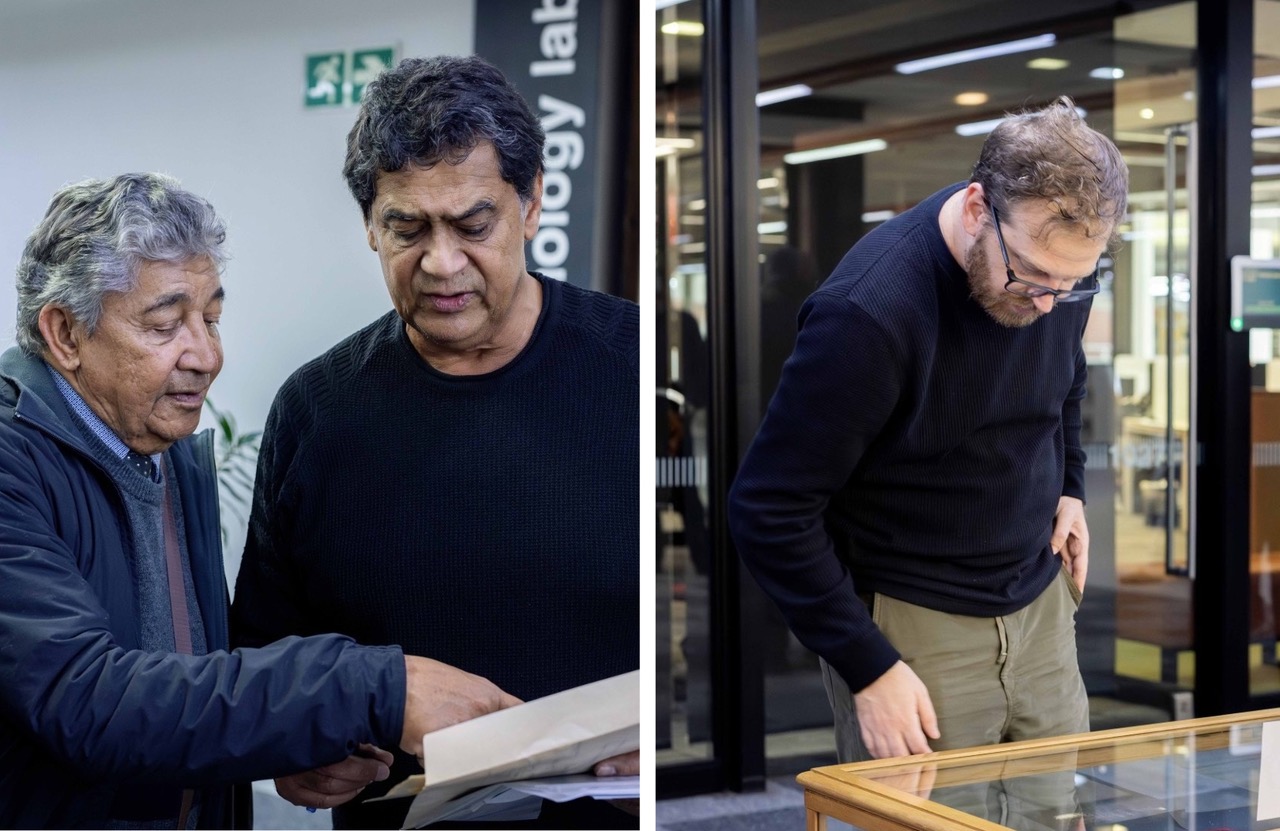
The collection was launched at the SU Library on 22 May and brings together rare documents, correspondence, photographs, newsletters, constitutions and policy records.
The collection was donated to SU in 2023 and catalogued over two years, and is now described as the largest deposit the New Unity Movement has made at any institution.
Unity Movement archives are also housed at the University of Cape Town, the University of the Witwatersrand, the University of Fort Hare, Nelson Mandela University and the University of the Western Cape.
Related Stories
 A Christmas Tradition Is Bringing Joy to Hundreds of Durban Grannies and Grandpas!
 SA's Academy of Science Recognises the Nation's Leading Scholars
The decision to place the archive at Stellenbosch was a recurring theme throughout the launch. The university has deep historical ties to apartheid ideology, which the SU Deputy Vice-Chancellor Professor Nico Koopman acknowledged openly.
“This University was perhaps the most prominent intellectual home of apartheid,” he said. “But we are on a journey to really become one of the intellectual homes of a democratic South Africa.”
The hope now is that the collection will eventually be digitised, opening it up to a new generation of South Africans who may be encountering this history for the first time.
 by