One young whale’s death cannot be undone, but the science gathered from her can help researchers understand the challenges facing South Africa’s whales and the oceans they call home.
Hermanus, South Africa (24 August 2026) – There are some moments in nature that are difficult to witness, particularly when they involve an animal as magnificent as a whale. But even in the sadness of a young southern right whale washing ashore near Hermanus, there was an important reminder of how much we can learn when scientists, conservationists and communities work together.
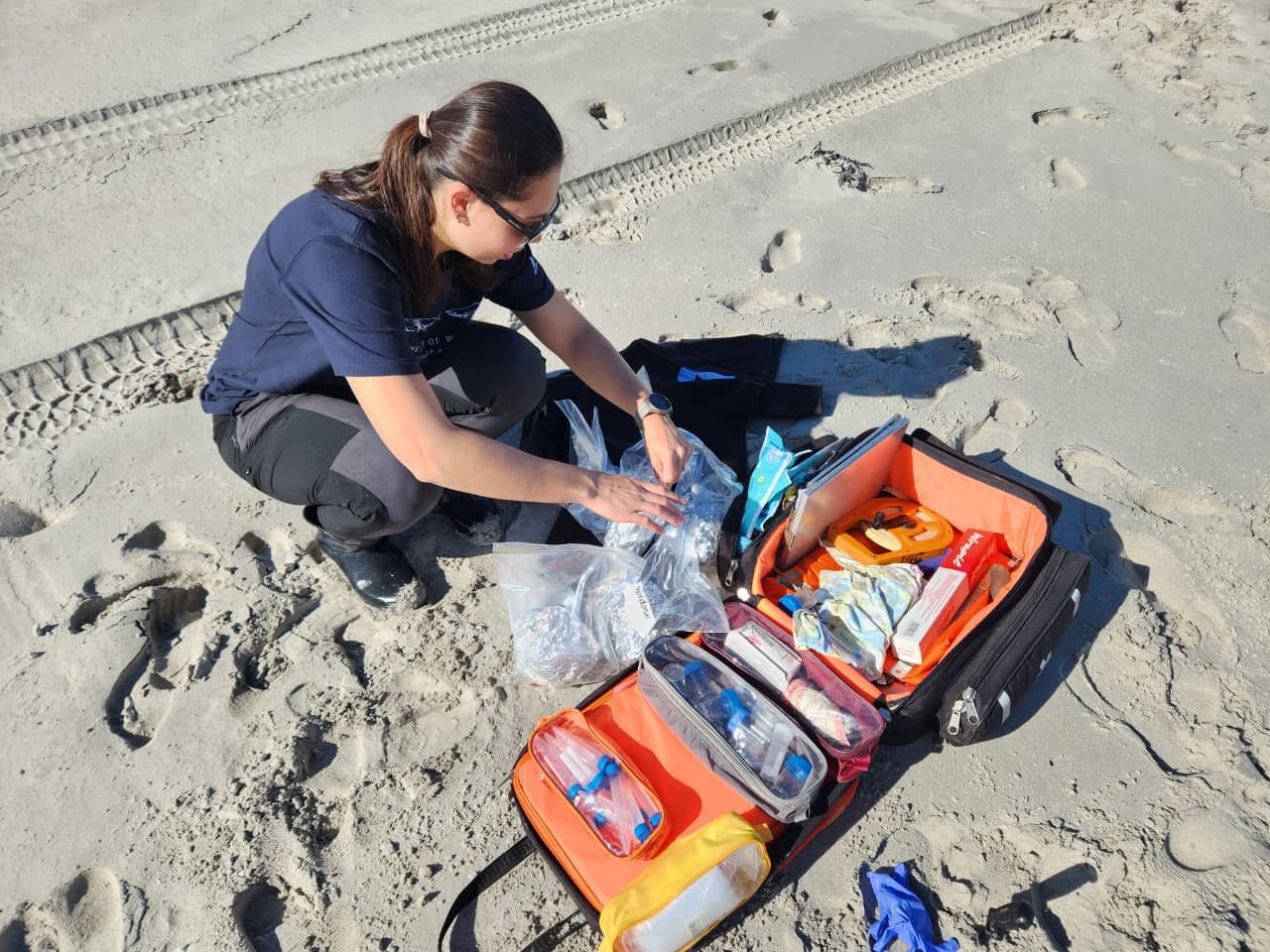
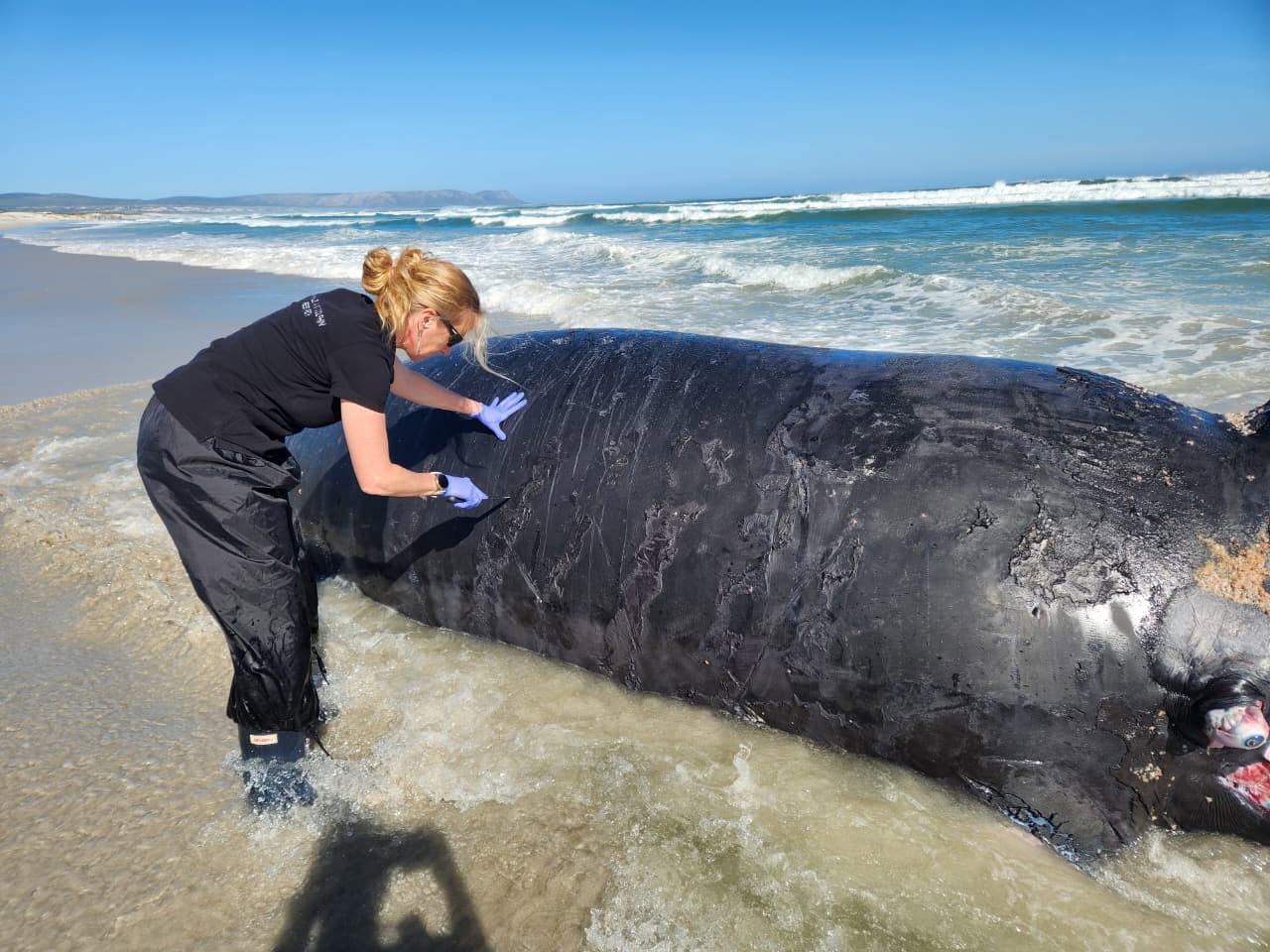
The female calf was found near Sopiesklip, measuring approximately six metres in length. The circumstances surrounding her death are still being investigated, but rather than allowing the tragedy to pass without answers, researchers from the Whale Unit at the Mammal Research Institute responded to the stranding and began the careful work of understanding what had happened.
Working with Southern Right Charters, the team collected a wide range of biological samples and measurements and examined the calf for evidence that could help determine a possible cause of death. Further analysis is still underway, meaning there are questions that scientists cannot answer just yet.
And that is an important part of science. Sometimes, the answers do not arrive immediately. They are built slowly through samples, measurements, observations and years of research that allow scientists to see patterns that would otherwise remain hidden.
The response was made possible through the South African National Stranding Network, a remarkable collaboration that stretches along the country’s coastline. The network brings together government departments, conservation organisations, NGOs, universities and other partners, creating a collective ability to respond when marine animals are found stranded.
There is also an especially important group within that network that does not always get the recognition it deserves. Naturalists are members of the public living along the coast who report stranded animals and, in many cases, assist researchers on the ground.
It is a beautiful example of how conservation is not something that happens only in laboratories or behind the gates of research facilities. Sometimes, it starts with someone walking along the coast, seeing something unusual and making a call.
The Whale Unit itself has been building knowledge about marine mammals for decades. Marine mammal research at the Mammal Research Institute began in the 1970s with work on Antarctic and Subantarctic seals, before the Whale Unit was established in 1985 to consolidate research into southern African cetaceans.
Today, the Unit is a global African research, conservation and education facility focused on whales, dolphins and porpoises across the southern African region and surrounding oceans. Its work spans ecology, population dynamics, behaviour, conservation, education and the development of marine research capacity.
Related Stories
 These Surprising Leopards of South Africa Also Deserve Some Love!
 Dogs Found Safe But Hijacked Vehicle Still Missing – SPCA Still Needs Eyes and Ears!
 The goal is ultimately bigger than understanding one animal.
By studying individual whales and the circumstances surrounding their deaths, researchers can contribute to a much larger picture of how whale populations are changing, how they interact with their environment and what threats they may be facing.
The Whale Unit’s research includes monitoring large whale populations and their movements, investigating feeding ecology and migratory behaviour, studying cetaceans in South Africa’s offshore waters and exploring issues such as microplastic exposure and pollution pathways. Its work also contributes to conservation management and policy, ensuring that decisions about marine ecosystems can be informed by evidence.
That makes this particular stranding difficult, but also valuable.
The loss of a young whale cannot be undone. But the information gathered from her can become part of a growing body of knowledge that helps researchers understand the pressures facing whales and the oceans they depend on.
And perhaps that is one of the most hopeful things about good science. It does not pretend that difficult things do not happen. Instead, it asks what we can learn from them and how that knowledge can help us do better.
Along the Hermanus coastline, one whale calf became the focus of a careful scientific response involving researchers, whale-watching operators, conservation partners and members of the public. Together, they are making sure that even in a moment of loss, something useful can emerge.
You can find out more about the Mammal Research Institute here.
 by
by