


The “Let Them” theory has swept the world, offering a simple yet profound message: let people be who they are. But beneath the global acclaim lies a quieter legacy – one rooted in Cassie Phillips’ raw, viral words and a reminder that the most transformative ideas are not owned but shared.
Johannesburg, South Africa (13 January 2025) – Last week, I shared the “Let Them” theory – a concept that’s swept across the world, largely thanks to Mel Robbins. The idea resonated deeply with many worldwide, becoming a kind of gospel for those striving to reclaim their peace.
But if I’m being completely honest, it would be remiss not to acknowledge Cassie Phillips, who may very well be the original voice behind “Let Them”.
Mel Robbins is a powerhouse. A lawyer turned motivational speaker, author, and podcaster, she’s made her mark inspiring millions to take control of their lives. One of her standout contributions in the last year has been the “Let Them” theory – a philosophy about relinquishing control and embracing the freedom that comes with letting people simply be who they are.
Sounds simple, right?
People will think, act, and behave however they choose – so rather than trying to manage their every move, you just… let them.
When I first shared the “Let Them” theory, a wave of voices reached out to question its origins. Some even accused Mel of lifting the concept from others. And while I hesitate to entertain claims without evidence, it’s crucial to acknowledge that this philosophy of “letting go” is far from new.
“Let go and let God,” “Let it be,” “You do you, boo” – variations of this idea have echoed through self-help books, philosophical texts, and spiritual teachings for generations.
But then there’s Cassie Phillips – a name that, until last week, I’d never heard.
Cassie is a writer, an author of sorts, and the creator of a poem called “Let Them,” which she penned in 2022.
Related Stories
 St John's Choir 'Heals the World' with Michael Jackson Performance
 Dear Tired Humans, You’re Actually Doing Okay!
Her words, raw and profound, struck a chord with millions, becoming a lifeline for survivors, a rallying cry for acceptance, and a message of hope for those navigating life’s messiest emotions. The poem went viral. Like, properly viral. It was shared in therapy sessions, domestic violence support groups, and across social media. Cassie’s words were a gift to the world – freely given.
A year later, Mel Robbins introduced a concept with the same name, bearing strikingly similar themes, on her podcast. By the end of 2024 – the “Let Them” theory was the centrepiece of her bestselling book – a $30 (R570) hardcover flying off shelves. Mel claims her insights came from personal experiences, yet Cassie’s poem, because it went viral, may very well have planted the seed (if Mel had ever seen it or heard about it).

What struck me most wasn’t the parallels between Cassie’s poem and Mel’s theory but Cassie’s grace in the face of it all. When asked about Mel’s book, she hasn’t lashed out.
Instead, she said, “How can I tell a newly single mom, a domestic violence survivor, that the answer to letting go is in a $30 book? My words were for anyone who needed them. They were free. They were real. And they belonged to everyone.”
Cassie doesn’t endorse Mel Robbins. She believes her work was used without acknowledgement, yet she remains steadfast in her purpose: to help others.
“Find your place in the world and never let someone make you doubt it. People will be who they are – unapologetically. Let them. And it’s time for you to be you – unapologetically. Let you. Sink your teeth into your self-worth and never let anyone take it away. Leave claw marks on this world, and when you go, leave it better than you found it.”
You see, it’s not just about the theory. It’s about legacy, about living in alignment with your values and not compromising your integrity, even when the world tries to claim what’s yours.
It reminded me of something incredibly personal.
A few years ago, I publicly voiced my frustration – like many of us – about constantly having to buy Woolworths shopping bags. Shortly after, I came across a Reddit post showcasing a brilliant idea overseas: a “take a bag, leave a bag” initiative. It was a simple wall with hooks where people could share reusable bags. Inspired, I shared the concept online and even pitched it to Woolworths as a “free” suggestion. The post reached hundreds and thousands of people. But Woolies didn’t really do anything with it. So, I took the idea to SPAR, adding my own twist: make it a tree. Within two weeks, SPAR rolled out “bag trees” in 100 stores.
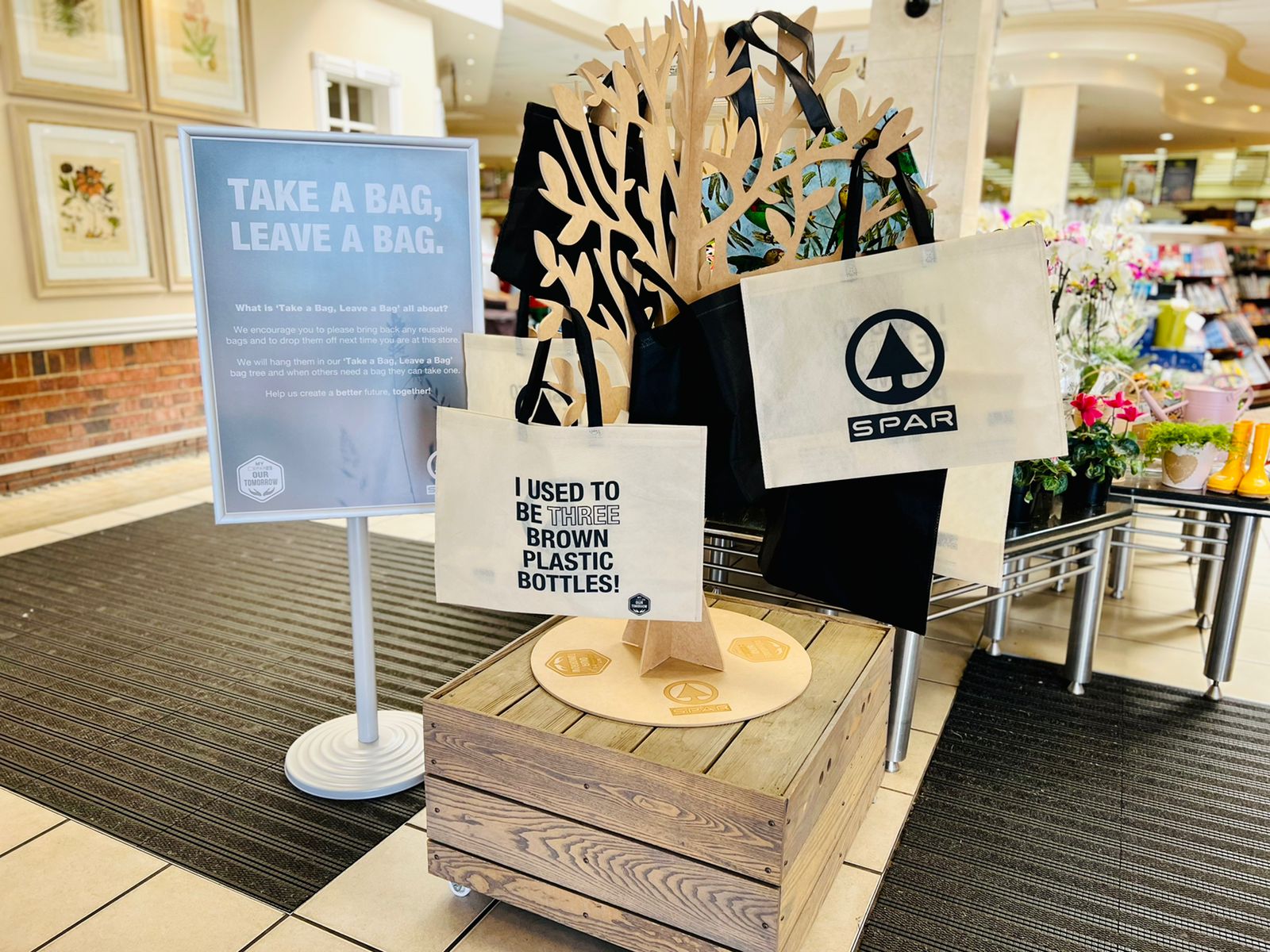
Six weeks later, Woolworths followed suit with their own tree – clearly no coincidence – and even issued a press release claiming it as their innovation. After some public outcry, they retracted that statement and finally acknowledged me.
But here’s the thing: it was never about who owned the idea. I didn’t “own” the idea. I got it from a Reddit post. I also didn’t profit off of it. I didn’t make any money. I just shared it. And I think that’s what’s important. It was about the difference it made. The real goal was simple – helping us all save a little money and reduce waste by sharing bags.
Impact over ego. Always.
So, where am I going with this?
Did Mel Robbins intentionally take Cassie Phillips’ idea? Did she even see it? I can’t say for sure. No one can (except for Mel).
But here’s what I do know:
You don’t need to buy her book to understand the concept. You don’t need a bestselling author to validate a truth that’s already within you.
Let Them is not a new idea.
And Cassie’s words, freely given, remind us of something far more profound: the most powerful ideas aren’t owned – they’re shared. They flow through us, shaping the way we heal, grow and connect.
It’s not about who said it first, who said it loudest, or who profited from it.
It’s about who was changed by it.
Maybe the real power of the “Let Them” theory isn’t in the books or the podcasts or the credit at all. Maybe its power lies in the quiet moments where someone reads it, feels it, and decides to let go.
To stop carrying burdens that were never theirs to bear.
To set boundaries without guilt.
To simply be.
The world will always amplify the loudest voices, celebrate the flashiest names and immortalise the biggest brands. But real legacy? That’s quieter. It’s found in the hands you held, the lives you lifted and the whispers of kindness that ripple long after you’ve gone.
So, let them. Let them be who they are, do what they do. And then… let you. Let you stand in your truth. Let you embrace your worth. Let you leave this world better than you found it, perhaps with claw marks, proof that you tried, that you gave it your all, that you loved.
Yes, let them but ultimately, let you.

 by
by 









great take on this! really resonated with me in the digital world of ‘ownership’, recognition of source etc etc
I found your article because I came to the same conclusion and started googling Cassie and Mel and Let Them. Hence, I heard Mel’s Let Them Theory then learned about Cassie and the poem that went viral. If she has not heard of Cassie’s poem by now I would be shocked. I would like to see Mel take the high road and acknowledge Cassie. My guess is Mel’s lawyers would advise against it.
Hi – I was very interested to read your piece – thanks so much for writing it.
I used Cassie’s poem on my YouTube channel. I made every attempt to contact her to ask permission, to no avail, so as it was widely available on social media, I read her poem giving her credit both spoken and written. This was simply the right thing to do. I also, as a therapist, followed it with some words of my own.
My post went viral and a friend of Cassie’s contacted me to pass on her thanks for the acknowledgement. I was so pleased to receive this.
I, as a therapist, have been using this approach with clients for over 20 years and I presume that I am not the only one to have done so. Far from new – just hadn’t given it a title.
Now I am in the position of my piece being copied and shared not only on YT but also on Insta and TikTok… in the vast majority of cases without and request or acknowledgement apart from sometimes being referred to as ‘an old lady’ reading a poem.
Hey ho, guess this is life at present ?- owt for nowt as we used to say.
Take care
Dee (Chadwick)