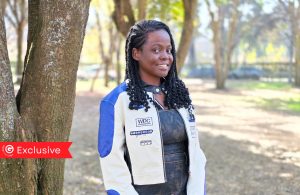
Stellenbosch University’s Dr Monika Moir has landed a major R14 million international research grant that will help scientists monitor and prepare for potential West Nile virus outbreaks.
Stellenbosch, South Africa (18 May 2026) – A recent report released by the Centre for Epidemic Response and Innovation (CERI) at Stellenbosch University shares that a South African doctor and researcher has been awarded an international grant worth R14 million to help the world better understand and predict, the spread of a dangerous mosquito-borne disease.
It’s positive news for public health across Africa. The research is aimed at building better disease monitoring systems and stronger preparedness. This could help health systems act before potential outbreaks occur, which scientists warn may be made possible due to climate change and shifting ecosystems.
Dr Monika Moir, a researcher at CERI, is currently focused on research involving a virus spread by mosquitoes that has flown somewhat under the radar across Africa, despite it being present here for a very long time.
Most people have heard of malaria, dengue, or Zika, but West Nile virus is less commonly discussed, even though it can cause serious illness.
“This project is about understanding how climate change is reshaping the spread of West Nile virus in Africa,” said Dr Moir. “Although the virus is endemic to Africa and can cause severe neurological disease in humans, it remains surprisingly understudied across much of the continent.”
It’s carried by mosquitoes and circulates between birds and insects long before people start getting sick. The way it spreads is part of what makes it difficult to track. In many parts of Africa, it goes undetected because the monitoring systems to catch it don’t exist yet.
“One of the main reasons for the lack in local knowledge is that surveillance in many African countries remains limited and inconsistent,” Dr Moir explained. “West Nile virus is endemic in Africa, meaning it is regularly circulating, but many infections probably go undetected or unreported.”
The R14 million grant comes from a partnership between the South African Medical Research Council (SAMRC) and UK Research and Innovation (UKRI), funded through the UK’s International Science Partnerships Fund.
It will run over three years and will fund a collaboration between research institutions in South Africa, Ghana, Kenya, Tunisia, and the United Kingdom.
Related Stories
 Saturday Good News Wrap Up: A Million Acts of Kindness and So Much to Celebrate!
 Cape Town Kayakers Rescue Starving African Penguin Far Out to Sea
Together, the team will collect mosquitoes across all four African countries, test them for the virus, and use genomic sequencing (reading the virus’s genetic code) to understand how different strains of West Nile virus are evolving and moving across the continent. They’ll then combine this data with climate and environmental information to build maps that show where outbreaks are most likely to occur and why.
As mentioned, scientists warn that climate change is causing a shift in ecosystems. Because of this, mosquitoes are expected to move into new areas, bringing disease to places they haven’t been before.
Dr Moir’s project, supported by the three-year grant, aims to anticipate these outbreaks before they happen and create better preparedness. The project also includes a strong training component, which will build skills and expertise among African public health scientists so that this kind of advanced disease monitoring doesn’t depend on outside help in the future.
“I think the grant reflects growing international recognition of the importance of African-led research and collaboration in addressing global infectious disease threats,” she said, adding that “Africa is central to the ecology and evolution of many emerging pathogens.”
 by
by