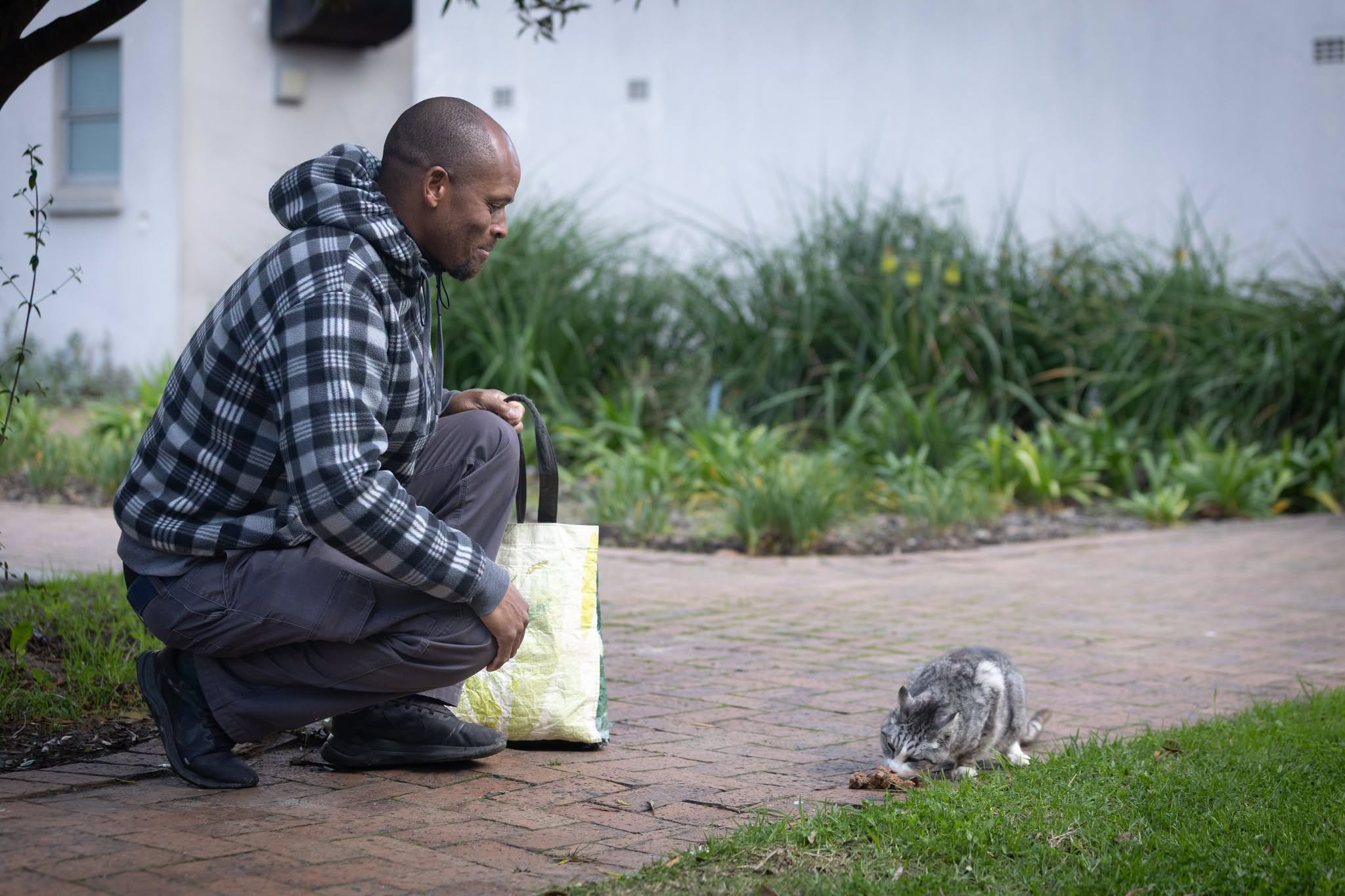
Though Patrick Lupuzi has always considered himself more of a dog lover, the feral cats he cares for at the University of the Western Cape have purred their way into his big heart, always eager for his visits and gentle touch.
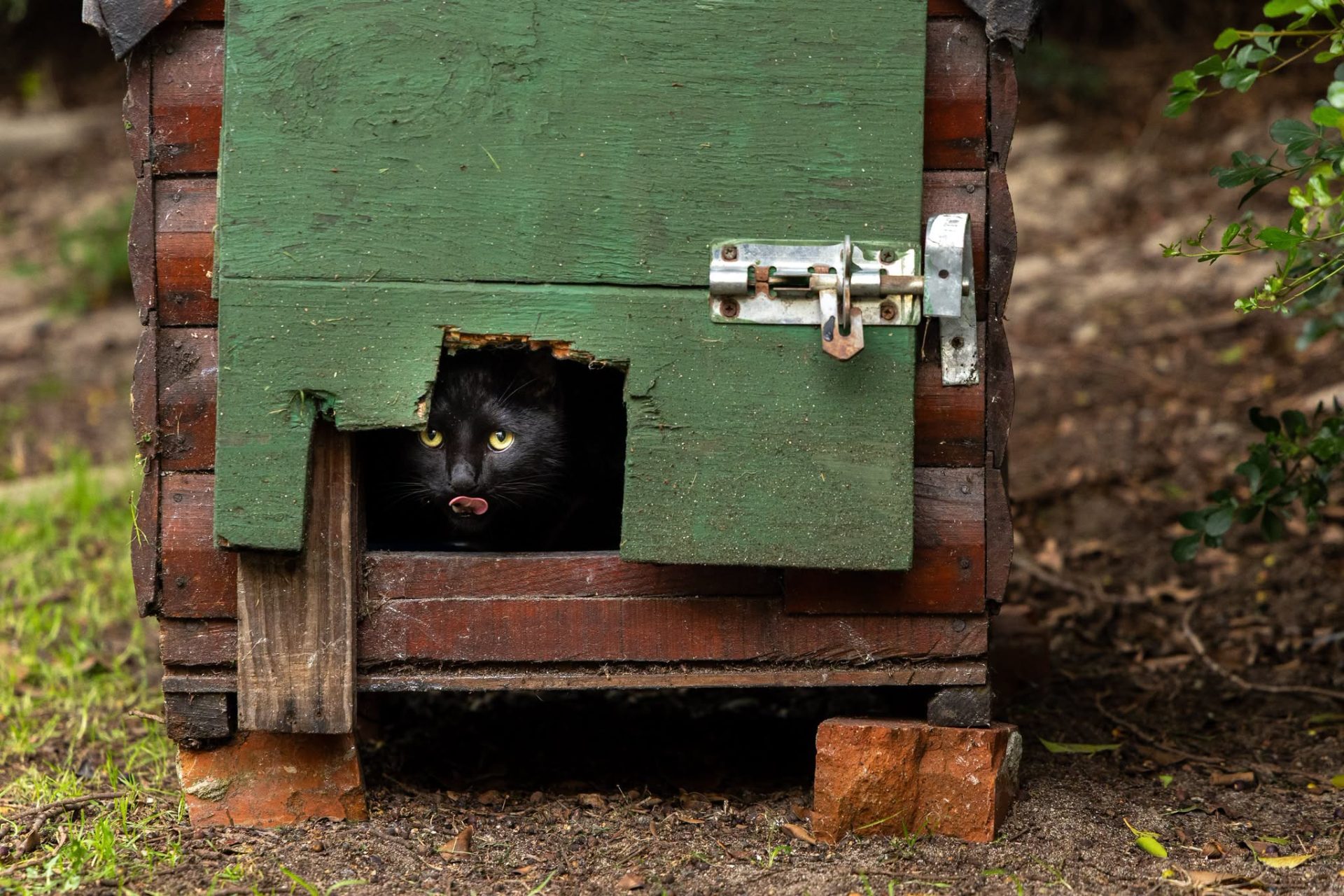
Western Cape, South Africa (24 July 2026) – Most of us know the University of the Western Cape as one of the most recognised and diverse universities in Africa, but to around 113 cats, it’s simply the place they call home!
One dedicated man, Patrick Lupuzi, has made their well-being his personal mission. Six days a week, starting as early as 6:20 am, he can be found walking across campus, making a distinct clicking sound. Within moments, cats emerge from beneath parked cars and the leafy shelter of shrubs to greet him.
He offers them wet cat food to draw them close, using the time to check on their health and shower them with affection. Some are happy with a gentle brush, while others eagerly wait for a cosy scratch behind the ears.
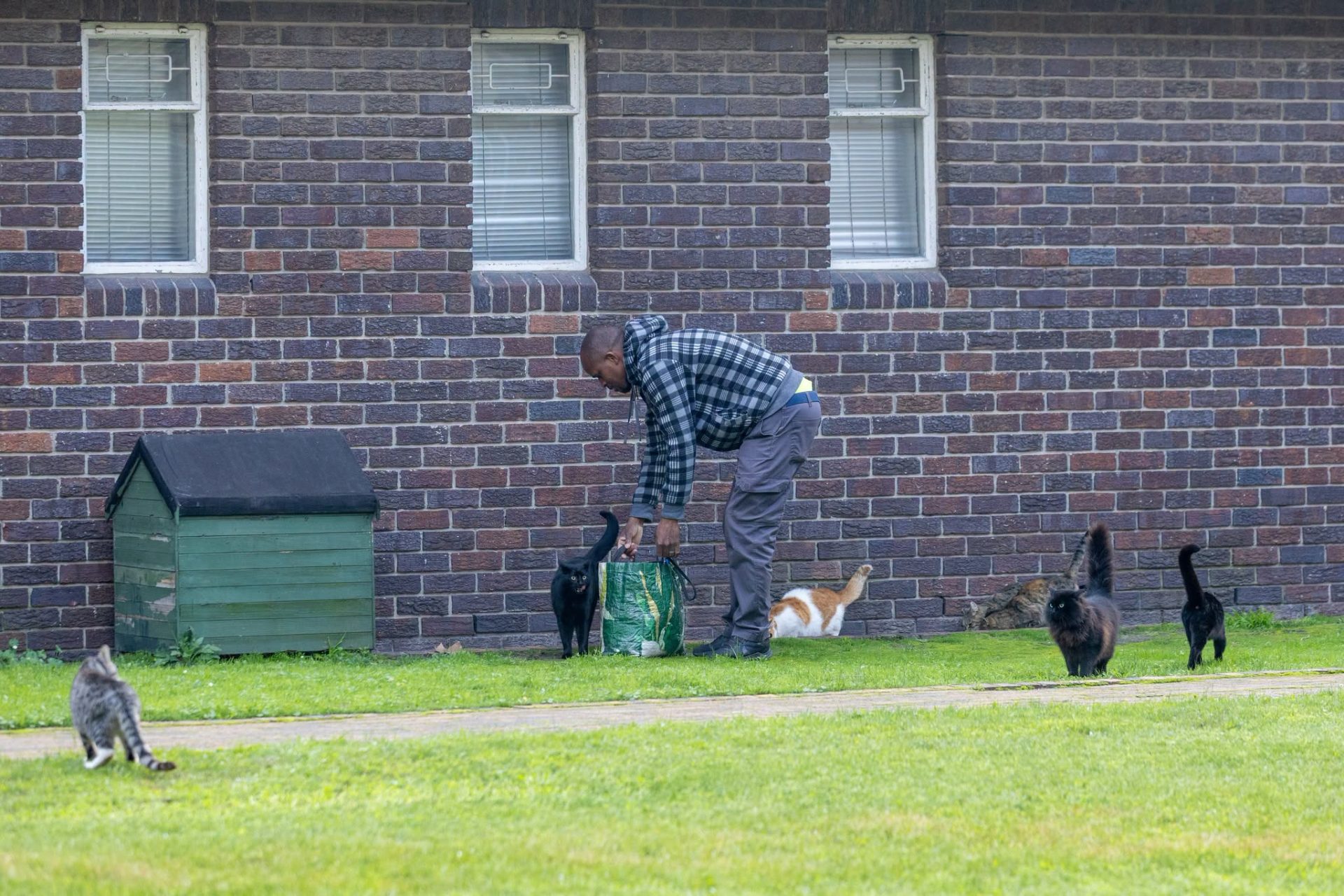
Patrick even looks out for Meisiehond, a dog who wandered onto campus one day and decided to stay forever.
Interestingly, Patrick has long considered himself more of a dog lover than a cat person. However, these cute furbabies have managed to find their way into his big heart.
“I wasn’t actually a cat person at first. I love dogs mostly. But as time went on, I’ve grown to love them,” said Lupuzi, who admits that caring for these campus cats has also been a stress reliever.
These felines have been around for years, and caring for them has become a tradition at the University. Back in 1997, Dr Sharyn Spicer and the late André Oppelt founded The UWC Feral Cat Project (TUFCAT) to make sure these resident cats are fed daily, sterilised, and given all the veterinary care and check-ups they need.
According to UWC, during the project’s first cat audit in 1999, there were about 165 cats on campus. Through its trap-neuter-return (TNR) programme, the cat population has been stabilised and gradually reduced over the years.
The cats also give back to the campus by preventing potential rodent problems. TUFCAT receives support through donations and the sale of second-hand books. For more information on how to support TUFCAT, visit www.tufcat.co.za.
Related Stories
 Ancient Fossilised Nests Found in the Karoo Named After Calitzdorp
 5 Reasons to Take Part in the Southern Hemisphere's Biggest Nature Survey This Month!
Sources: University of the Western Cape
Don’t ever miss the Good Things. Download the Good Things Guy App now on Apple or Google.
Do you have something to add to this story? Please share it in the comments or follow GoodThingsGuy on Facebook and Twitter to keep up to date with good news as it happens, or share your good news with us by clicking here or click the link below to listen to the Good Things Guy Podcast with Brent Lindeque – South Africa’s very own Good Things Guy. He’s on a mission to change what the world pays attention to, and he truly believes there’s good news around us. In the Good Things Guy podcast, you’ll meet these everyday heroes and hear their incredible stories:
Or catch an episode of Good Things with Brent Lindeque or our Weekly Top 5 below. The videos here are always changing, updated with the latest episodes from these two shows. Both are part of Good Things TV, created to bring South Africans balance at a time when the news can feel overwhelmingly negative. Our goal is simple: to remind you that there are still so many good things happening in our country – and to leave you feeling a little more proudly South African.
 by