From childhood learning to switching off from screens, here’s why printed books still matter in an increasingly digital world.
South Africa (14 September 2026) – In a world of smartphones, tablets, e-readers and endless scrolling, there is something wonderfully simple about picking up a book, turning a page and getting lost in a story. And while technology has transformed the way we access information, learn and communicate, the humble printed book still has an important role to play.
International Literacy Day, celebrated on 8 September, marked its 60th anniversary this year, offering a timely reminder that literacy begins with something remarkably simple: a person, a book and the ability to read it. But the conversation around literacy is about far more than simply being able to read words on a page. It is about how we learn, how we understand the world around us and, particularly for children, how we develop a lifelong love of reading.
“We cannot underestimate that paper books can determine how deeply we read, how much we remember, and how children learn to love reading,” says Samantha Choles, communications manager for the Paper and Allied Manufacturers of South Africa (PAMSA).
That doesn’t mean technology doesn’t have a place in the conversation. Smartphones and tablets can be incredibly useful tools, particularly in communities where physical books are scarce. They can make reading material more accessible, portable and affordable, opening up opportunities for people who may otherwise struggle to access books.
But there is still something special about print, particularly in a world where so much of our attention is competing for space.
Sometimes, putting down the screen is good for us
A printed book offers something our increasingly connected lives can make difficult to find: an opportunity to slow down and switch off. Research from Mindlab International at the University of Sussex has suggested that reading can significantly reduce stress levels, while reading a physical book before bed can also avoid the blue-light exposure associated with screens, which can interfere with sleep and melatonin production.
There is also a simplicity to reading a physical book that can be increasingly difficult to find in our always-on lives. There are no notifications competing for attention, no emails waiting to be answered and no temptation to quickly check social media. There is simply the story, the reader and the page.
And when it comes to children, the benefits of printed books may go even further.
Why print can make a difference to learning
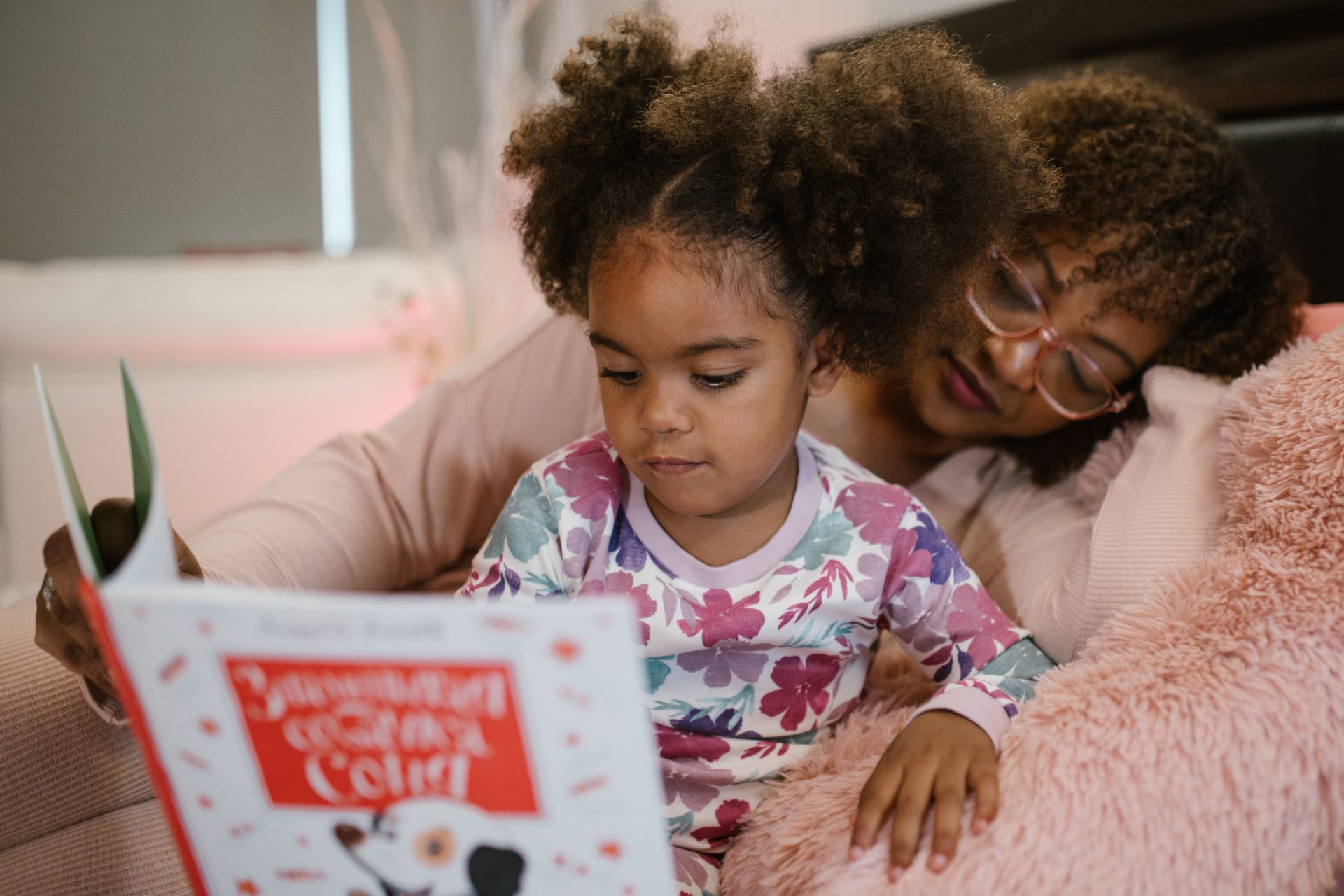
There is a growing body of research looking at how children learn from physical books compared with digital devices. With a printed book, reading becomes a physical experience. Children turn pages, hold the book, write notes, underline things and sometimes even doodle in the margins. Those small physical interactions can help create a mental map of what they are learning, with the position of information on a page becoming another way for the brain to locate and retain it.
Related Stories
 The Gin Squad Drops 5 Tonnes of Pet Food on Tshwane SPCA!
 South Africans Put Their Hats On for Children Who Need More Care and Compassion
Research from the Norwegian University of Science and Technology has found differences in how children who learn to read and write on digital devices distinguish between similar or mirrored letters, such as “b” and “d”. Other research has also suggested that reading on screens can be less effective for comprehension and retaining information than reading printed material.
And perhaps surprisingly, younger generations aren’t necessarily choosing digital over print.
The 2021 Academic Reading Format International Study surveyed more than 21,000 students across 33 countries and found that the majority preferred printed material for academic reading. Almost 82% said they were able to focus better when reading in print, while more than 70% felt they remembered material better when reading from a physical page.
It is a reminder that while digital technology has transformed education, the printed page hasn’t necessarily become outdated.
It doesn’t have to be print versus technology
The answer doesn’t have to be one or the other. In fact, perhaps the strongest learning environment is one that embraces both.
Digital resources can open doors to information that may otherwise be out of reach, while printed books offer a slower, more tactile way of learning and engaging with information. Some education systems are already reconsidering how much technology belongs in the classroom, with countries including Denmark moving towards bringing more physical textbooks back into schools.
Because progress doesn’t always mean replacing everything that came before it. Sometimes it means finding the right balance and using different tools for different needs.
A book can open a window
Ultimately, literacy is about so much more than knowing how to read. It gives people the tools to understand information, ask questions, think critically, solve problems and participate more fully in the world around them. It is a foundation for learning, opportunity and being able to make sense of an increasingly complex world.
And for a child, a book can be the beginning of something much bigger. It can be the first story they fall in love with, the first character they see themselves in, or the first time they discover a place they’ve never visited. A book can introduce a child to ideas, people and possibilities far beyond the world immediately around them.
“We are doing humanity a great disservice without access to printed books and reading material,” says Choles.
It is a sentiment that feels particularly relevant in a world where children are growing up surrounded by screens. Technology has an important role to play, but so does the simple act of sitting down with a book and turning the page.
As educational reformer Horace Mann once said, “A house without books is like a room without windows.” And in an increasingly digital world, those windows may be more important than ever.
 by