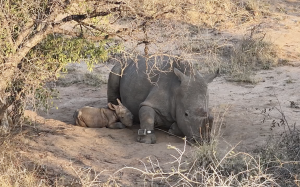
Police and customs from 109 countries collaborated with Interpol to bring down animal traffickers and people exploiting the natural world.
Lyon, France – In collaboration with 109 countries, Interpol had a fantastic year at cracking down on animal traffickers. Like something from a James Bond movie, the organisation partnered with hundreds of authorities to catch people in the act of committing crimes against nature.
From trafficking wildlife to trading in animal parts, poaching fauna and flora and exploiting nature. The buck stopped with Interpol.
The intelligence-led operation identified trafficking routes and crime hotspots ahead of time, enabling border, police and environmental officers to seize protected wildlife products ranging from live big cats and primates to timber, marine wildlife and derived merchandise such as clothing, beauty products, food items, traditional medicines and handicrafts.
A team of customs and police officers together coordinated global enforcement activities from an Operations Coordination Centre at INTERPOL’s Global Complex for Innovation in Singapore.
They intercepted hundreds of people, leading to the arrests of 582 and potential for more as they continue their investigations.
“Wildlife crime not only strips our environment of its resources, it also has an impact through the associated violence, money laundering and fraud,” said INTERPOL Secretary General Jürgen Stock.
“Operations like Thunderball are concrete actions targeting the transnational crime networks profiting from these illicit activities. We will continue our efforts with our partners to ensure that there are consequences for criminals who steal from our environment,” added the INTERPOL Chief.
This is how they did in 2019 so far…
Global seizures reported to date include:
Related Stories
 They Made It! Young Animal Welfare Volunteers Off to Cape Town
 This Dog Saw Humanity at Its Cruellest – Then Came a Little Girl With R15
- 23 live primates;
- 30 big cats and large quantities of animal parts;
- 440 pieces of elephant tusks and an additional 545 Kg of ivory;
- Five rhino horns;
- More than 4,300 birds;
- Just under 1,500 live reptiles and nearly 10,000 live turtles and tortoises;
- Almost 7,700 wildlife parts from all species, including more than 30 kg game meat;
- 2,550 cubic meters of timber (equivalent to 74 truckloads);
- More than 2,600 plants;
- Almost 10,000 marine wildlife items, such as coral, seahorses, dolphins and sharks.
It is unclear of South Africa’s involvement in operation Thunderball, but the organisation celebrates the fact that this year they only seized five rhino horn compared to the fifty they got last year.
“As clearly illustrated by the results of Operation Thunderball, close cooperation at international and national levels to combat wildlife crime must never be under-estimated,” said WCO Secretary General Kunio Mikuriya.
We honour the men and women who have worked tirelessly to catch criminals, preventing these people from succeeding in their exploits of our beautiful world.
 by
by