Your heart’s in the right place, but you need to be sure your rescue efforts don’t do more harm than good. Here’s some expert-informed guidance on helping chameleons after the Garden Route storms!
Garden Route, South Africa (21 May 2026) – South Africans are famous for their big hearts. Following the severe storms that recently battered the Garden Route, leaving hundreds of uprooted trees in their wake, the community rallied to save displaced chameleons and other tiny critters.
As the great clean-up continues, CapeNature is stepping in with a gentle, vital reminder for all our well-meaning wildlife heroes. Please don’t go saving chameleons unnecessarily!
The outpouring of compassion is incredible, but conservation authorities want to ensure that our good intentions line up with sound ecological principles. In short, some chameleons actually just want to be left alone.
Chameleons play an incredibly important role in our local ecosystems, including in our gardens. However, moving them when they don’t actually need help can do more harm than good.
CapeNature has clarified that only animals found on fallen branches, uprooted trees, or trees specifically earmarked for removal should be rescued.
“While we commend residents and organisations who have shown concern for wildlife affected by the recent storms, it is important that rescue efforts are guided by sound conservation principles,” says CapeNature CEO, Dr Ashley Naidoo. “In many cases, the best action is to leave animals undisturbed unless they are in immediate danger due to fallen vegetation or clearing operations.”
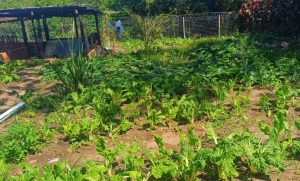
If a chameleon is hanging out in a tree, a bush, or an area untouched by storms or clean-up crews, they are perfectly fine. Wildlife that is not directly threatened in the wake of debris should be left exactly where it is to support local conservation.
If you do find a little friend trapped in a pile of debris or on a fallen tree, how you relocate them matters, too. CapeNature advises keeping their move as short as possible.
Small wildlife removed from fallen branches should be placed right back onto natural vegetation as close to where they were found as possible, preferably on the same property.
Related Stories
 Dogs Found Safe But Hijacked Vehicle Still Missing – SPCA Still Needs Eyes and Ears!
  Terrifying Hijacking Hits Germiston Bedfordview SPCA – South Africa Can Help!
If you rescue a chameleon, do not drive it for long distances, even if you have every best intention to ‘get help’. Translocating animals over far distances can negatively impact biodiversity and ruin the animal’s chances of survival.
If you’ve rescued a critter from a garden refuse dumping site where there is no suitable habitat nearby, they can be released in a safe, natural area close by.
If you have rescued a chameleon from a storm clearing site and can’t find a safe, nearby natural area to release them, don’t act without being informed.
You can contact CapeNature’s George office on 087 087 3037 to enquire about where to responsibly take them. If the animal is injured, trapped, or in distress, the Garden Route SPCA remains available on 044 878 1990 (or 082 378 7384 for after-hours emergencies).
Thank you to every single person keeping an eye out for our environment. Let’s keep being heroes for the Garden Route…responsibly and mindfully!
 by
by