Motorists in Stanford are urged to mind the road for migrating toads!
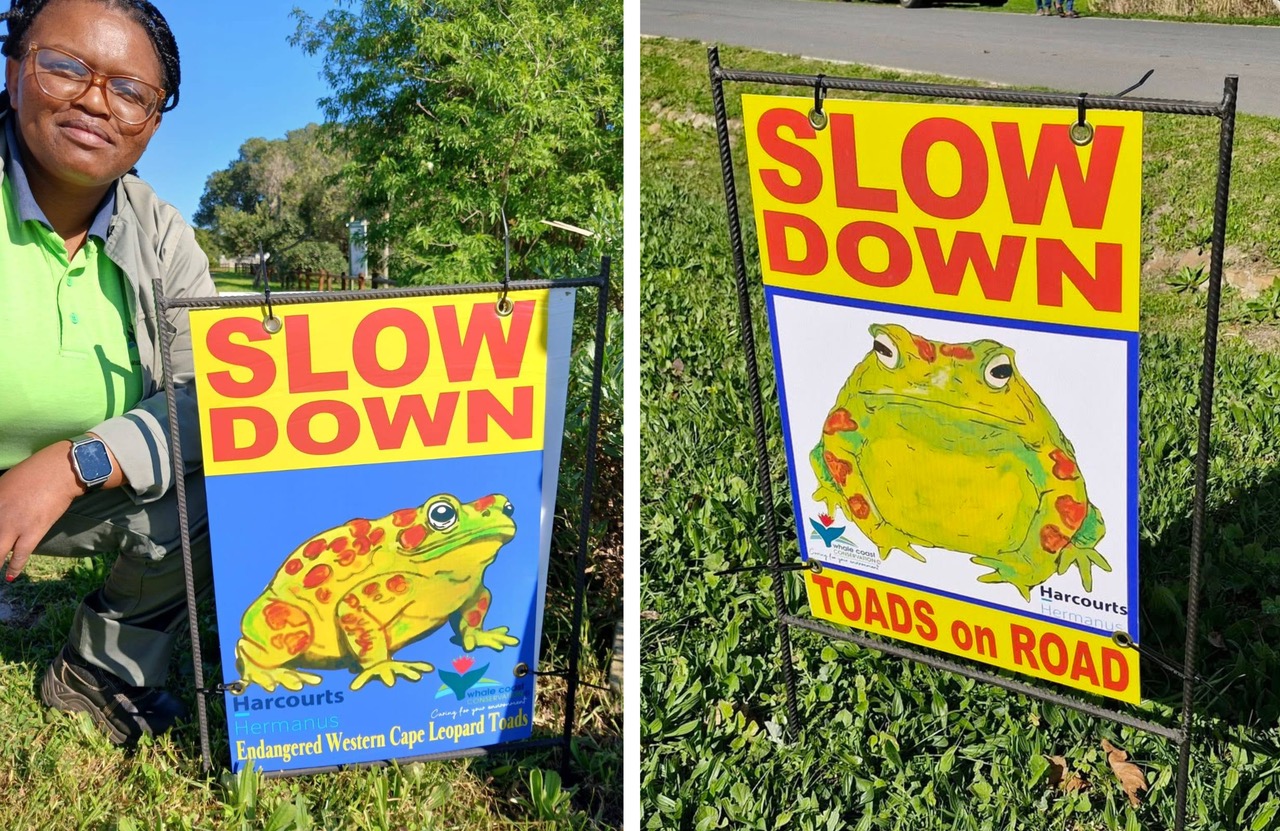
Western Cape, South Africa (14 July 2026) – Bright new road signs have appeared around Stanford, with an important message for motorists to slow down, because Western leopard toads are on the move.
Whale Coast Conservation has installed the colourful signs along roads where large numbers of toads have previously been killed while making their annual journey to breeding sites.
“It’s peak migration season for Western Leopard Toads in Stanford. We’re making an effort to encourage residents to be aware of this Endangered species by putting up signage along the streets where we identified toadkills,” the organisation shared.
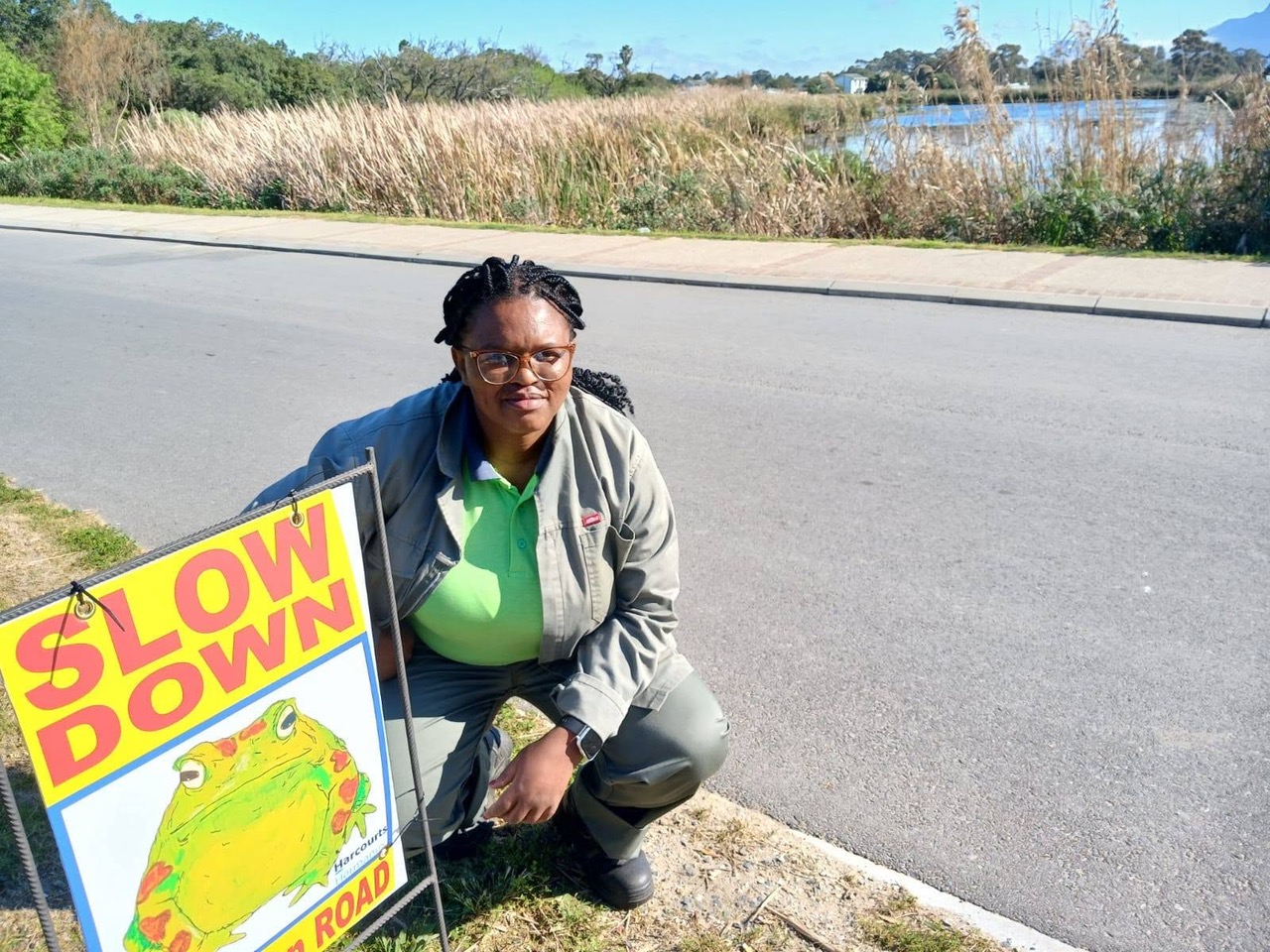
The project has received great support from the local community, with neighbours around the Millstream getting behind the initiative and a local real estate company funding the printing of the illustrated signs.
As per CapeNature, the Western leopard toad is one of South Africa’s most distinctive amphibians. It boasts bright yellow colouring, chocolate-brown patches and a yellow stripe that often runs down its back. These little toads can grow to around 14 centimetres long.
Although they spend much of the year tucked away in gardens, vegetation and natural areas, late July through to September is when they become much easier to spot, when thousands of them head towards permanent water sources like dams, rivers and wetlands to breed.
The males announce their arrival with a deep, snoring call that, when hundreds are calling together, has been compared to the sound of a tractor or motorcycle engine.
After breeding, females lay thousands of eggs in long, jelly-like strings. More than 10 weeks later, tiny toadlets, each only about 11 millimetres long, leave the water in their thousands. Sadly, only a small number survive long enough to become adults.
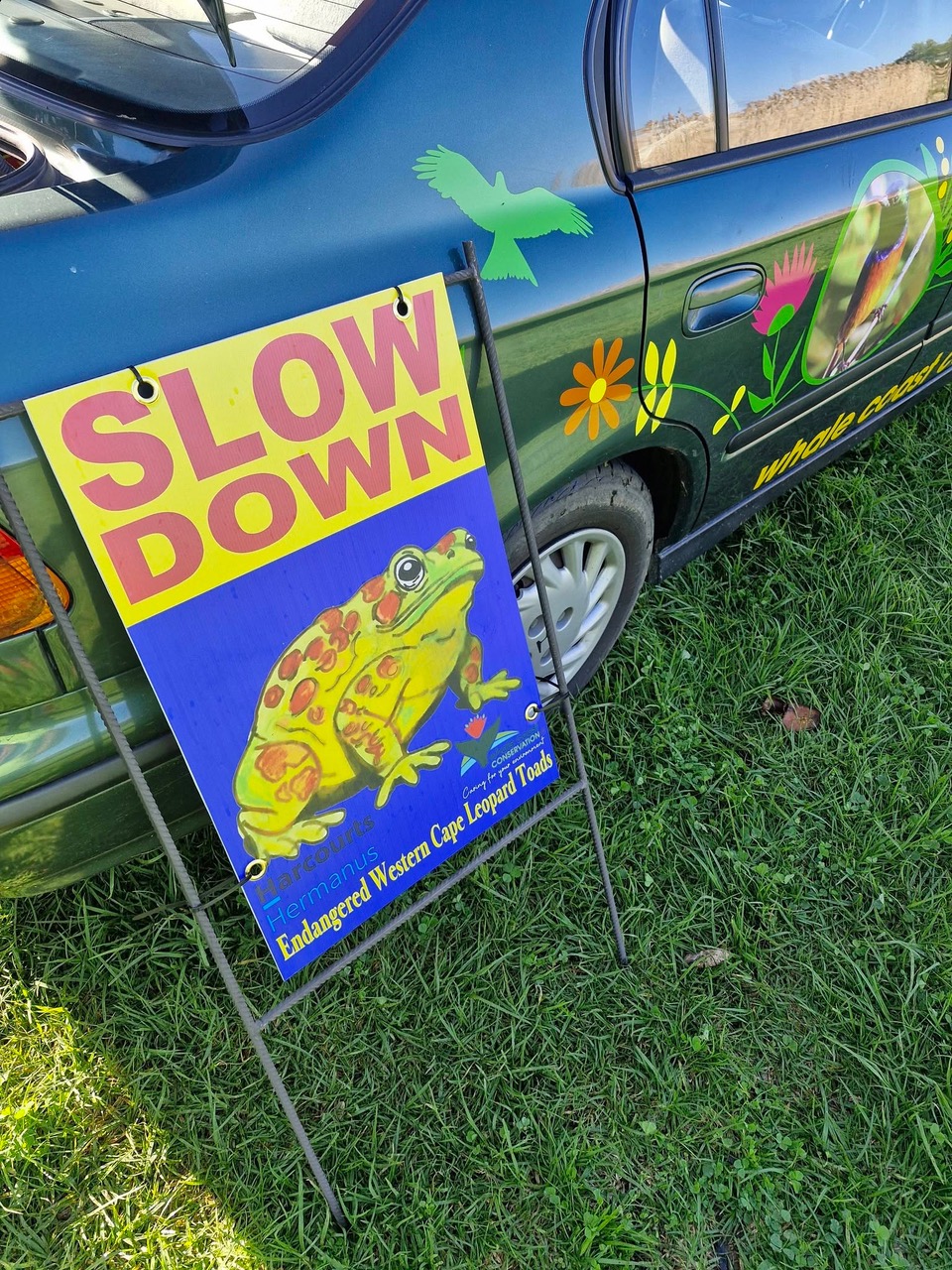
Roads are one of the biggest dangers these toads face during their migration. Every breeding season, hundreds are killed while trying to cross busy streets to reach their breeding grounds, which is one of the reasons the species is listed as Endangered.
Related Stories
 Your Old Laptop Could Power a Young Conservationist’s First Year in the Field!
 TEARS Brings Animal Care Lessons to Life in Local Primary Schools
They’re worth protecting too. Like all toads, Western leopard toads feast on insects, making them excellent natural pest controllers in gardens and surrounding ecosystems.
If you do happen to be travelling through Stanford this August, easing off the accelerator for a few moments could help protect the toads.
 by
by