A bright pink buoy on a Port Alfred beach helped turn Christmas morning from tragedy to relief… and became the latest chapter in a programme that has already saved 231 lives.
South Africa (30 December 2025) – When a life hangs in the balance, seconds matter. And across South Africa’s coastline and inland waterways, bright pink rescue buoys are turning ordinary people into everyday lifesavers.
Since the programme launched in 2017, these buoys, created and managed by the National Sea Rescue Institute (NSRI), in cooperation with municipalities, have helped save 231 people through bystander rescues. That is 231 families who got to hug someone again. 231 moments that could have ended differently. 231 reminders that preparedness, partnership and public access save lives.
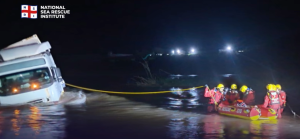
The latest rescue happened on Christmas morning at Kelly’s Beach in Port Alfred. A Durban couple, visiting family, noticed a 29-year-old man in distress almost as soon as he entered the water. Rip currents pulled him out, and panic began to set in. Instead of simply calling for help, the couple acted. The husband ran in first, followed by his wife carrying the pink rescue buoy stationed on the beach. A local young man joined them. Three strangers, one piece of equipment and a shared determination to get someone home safely.
Gerrit Cloete, NSRI Port Alfred station commander, shared the moment, “At 07h45, Thursday, 25 December, NSRI Port Alfred duty crew were activated following reports from an NSRI Port Alfred crewman, who happened to be at the scene at the time, of a drowning in progress at Kelly’s Beach, Port Alfred.”
He went on to add that the local rescue resources responded quickly but the initial intervention by bystanders made the difference.
“The husband, a Good Samaritan, entered the water to assist the casualty man who was caught in rip currents. He was followed by his wife, a Good Samaritan, armed with the NSRI pink rescue buoy that is stationed at Kelly’s Beach, to assist… Together, assisted by the NSRI pink rescue buoy, they were able to get the casualty man safely to the beach.”
The man was treated and transported to hospital in a stable condition, with no injuries reported for the rescuers. And crucially, as the NSRI highlights, no harm has come to any bystander using a pink rescue buoy to aid a rescue. That is the point: this programme is designed not only to save those in trouble but also to protect those who step forward to help.
As South Africans head into the heart of summer, these pink buoys stand as practical proof that we are not powerless against the water. We are not passive spectators to risk. We are capable, together, of creating safer shores.
 The Hope Dealers: Jozi Trails Looks After the City's Longest Green Artery
 Banjo's Best Life! Scruffy Pup Found in Bushes Gets Happiest New Beginning
 by
by