


South Africa just dipped to 41 000 active cases… while seeing a steady decline for the past 102 days now!!!
South Africa (06 November 2020) – As of the 6th of November 2020, South Africa’s active cases have dropped by almost 10 000 cases, while recoveries have increased by over 11 000!!!
The last time we had this few active cases was on the 21st of June 2020… 138 days ago. Our active cases keep fluctuating but stay relatively low, and have been under 55 000 for 53 days while on a steady decline for over 102 days now.
Today we only have 41 158 active cases and can celebrate 671 579 recoveries!!! Also, we currently have a 97,5% recovery rate in closed cases and are making our way to even more recoveries every single day.

COVID-19 is the greatest global shock in decades. Hundreds of thousands of lives have been lost, and the world’s economy likely faces the worst recession since the 1930s. The resulting loss of employment and income will cause further damage to livelihoods, health, and sustainable development.
The numbers can often seem confusing. As of today, South Africa has conducted 4 917 625 tests and had 732 414 total positive results, but positive results change daily as people recover, so even though there have been over 700 000 positive results, only 41 158 South Africans are currently positive. See confusing.
Here is a different way to report the numbers while still using the same numbers:
- Recoveries: 671 579 (11 394 more than yesterday)
- Active Cases: 41 158 (9 620 LESS than yesterday)
- Deaths: 19 677 (92 more than yesterday)
We know that this pandemic is significant, and many will suffer, and we also know not everyone will survive, but the majority of South Africa (and the globe) will recover!
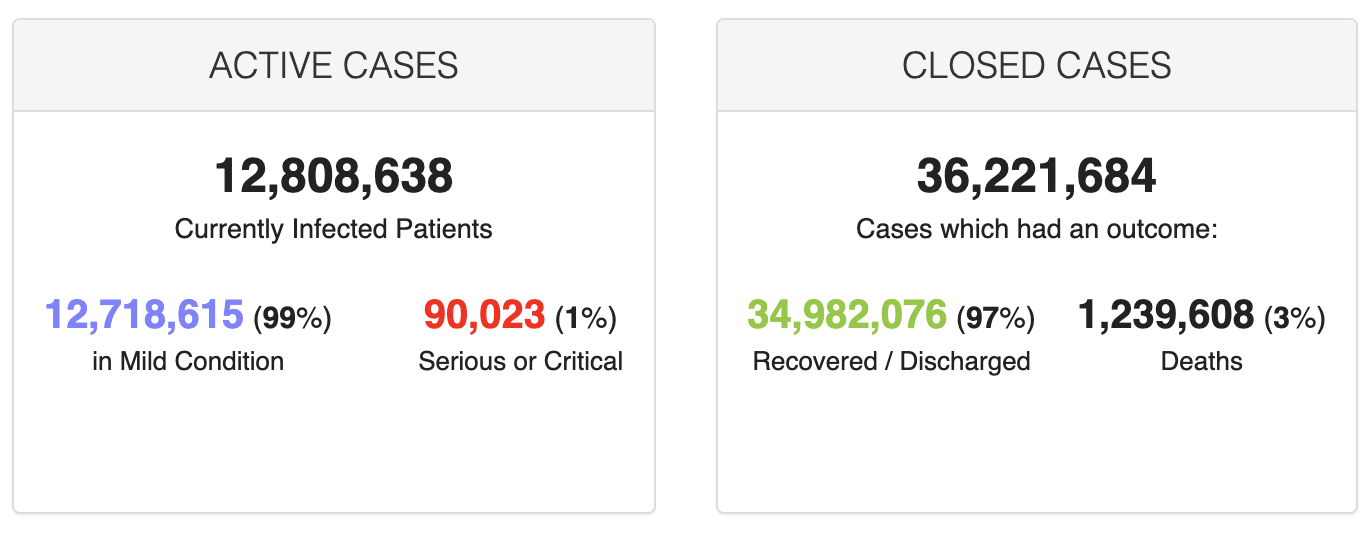
Currently, the Worldometers website states that over 97% of global cases (that are no longer active) have recovered. In comparison, South Africa’s closed recovery rate sits at around 97,5% (closed cases are the recoveries versus deaths after moving from active).
Here in South Africa, a COVID-19 support group has been created on Facebook for people who have recovered, and people who are looking for hope. Everyday South Africans are sharing their inspirational recovery stories which really does bring a different perspective to this pandemic.
You can find the group by clicking here.
Societies need to protect themselves, and to recover, as quickly as possible. But we cannot go back to the way we did things before. Increasing numbers of infectious diseases, including HIV/AIDS, SARS and Ebola, have made the jump from wildlife to humans – and all available evidence suggests that COVID-19 has followed the same route. Once human-to-human transmission of COVID-19 began, national and international surveillance and response systems were not strong or fast enough to completely halt transmission. And as infections spread, a lack of universal health coverage has left billions of people, including many in rich countries, without reliable and affordable access to medical treatment. Massive inequalities have meant that deaths and loss of livelihoods have been strongly driven by socioeconomic status, often compounded by gender and minority status.
Attempting to save money by neglecting environmental protection, emergency preparedness, health systems, and social safety nets, has proven to be a false economy – and the bill is now being paid many times over. The world cannot afford repeated disasters on the scale of COVID-19, whether they are triggered by the next pandemic, or from mounting environmental damage and climate change. Going back to “normal” is not good enough.
In adversity, the crisis has also brought out some of the best in our societies, from solidarity among neighbours, to the bravery of health and other key workers in facing down risks to their own health to serve their communities, to countries working together to provide emergency relief or to research treatments and vaccines. The “lockdown” measures that have been necessary to control the spread of COVID-19 have slowed economic activity, and disrupted lives – but have also given some glimpses of a possible brighter future. In some places, pollution levels have dropped to such an extent that people have breathed clean air, or have seen blue skies and clear waters, or have been able to walk and cycle safely with their children – for the first times in their lives. The use of digital technology has accelerated new ways of working and connecting with each other, from reducing time spent commuting, to more flexible ways of studying, to carrying out medical consultations remotely, to spending more time with our families. Opinion polls from around the world show that people want to protect the environment, and preserve the positives that have emerged from the crisis, as we recover.
Let’s hope that the lockdown in South Africa has achieved the same great results from around the world. And as always, thank you to all the incredible frontline heroes who are helping us get through this.

 by
by 