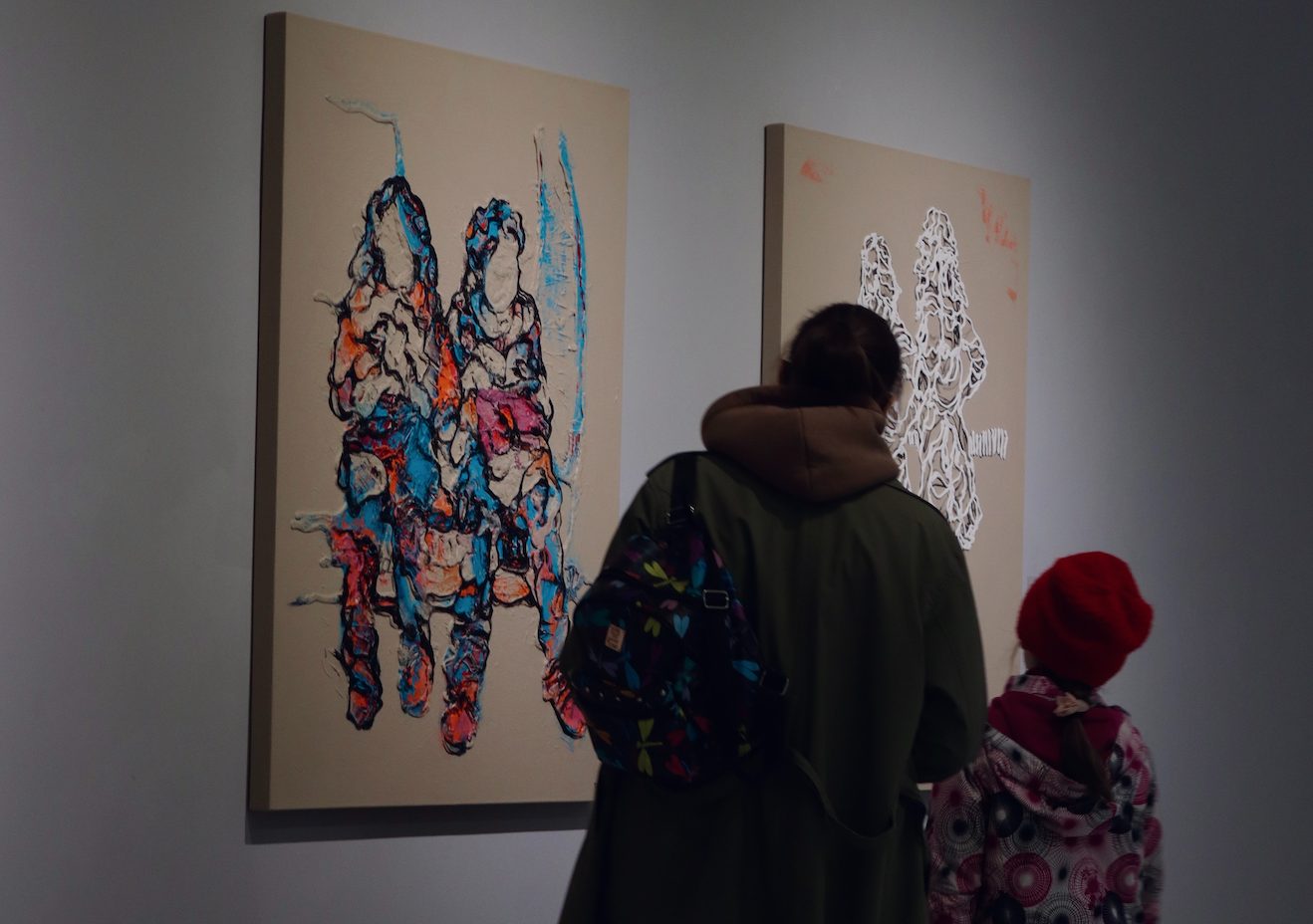
A new study has revealed the secret ingredient to kinder kids. Not a new vitamin, the magic lies in things like trips to the art gallery. Here’s why!
Global (28 March 2023) — During childhood, the world often felt like it had a filter on. Colours seemed brighter, the most ordinary things were an adventure, and feeling small in comparison to the Christmas tree was one of the best feelings in the world; our own personal art gallery to explore. As it turns out, these feelings would become more important than we could’ve known. Recently, a new study by psychologists shared what can make kids kinder, and the answer is not a new vitamin or organic smoothie.
Taking your kids to an art gallery can make them kinder!
That’s exactly what researchers FOR the Journal of Psychological Science believe. Of course, creating art has long been tied to important parts of growth. Building memory, learning patience, unleashing creativity and the like, are just some benefits of letting those creative juices jive. However, appreciating art has something of a different impact.
According to the psychologists’ work, the secret ingredient is awe—a feeling linked to appreciating art.
What’s Awe Got to Do With It?
The researchers share that:
“Awe makes individuals feel small, thereby shifting their attention to the social world.”
Art engagement has a history of powerfully affecting children’s emotions, as anyone whose parents blasted classical music on the way to school will know. Still, the research on awe in children hasn’t been quite as explored, until now.
Building on this, the researchers explain that the mystery of awe can actually make kids behave more prosocially— with kindness, generosity and empathy.
How did they measure this? According to the Psychological Science Blog:
159 volunteers (age 8-13) were asked to view various clips. Some of the clips were linked to joy, others were neutral, and the rest were awe-inspiring. The volunteers were then asked to complete different tasks after watching.
Related Stories
 Table Mountain Venue Snags Another World-Class Win for South Africa!
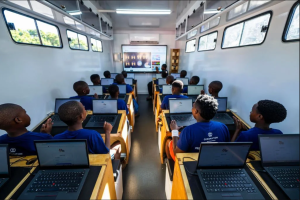
 Vusa Launches Upgraded DigiBus to Boost Digital Learning for Langa Schoolchildren
“In the first task, the children were asked to count items in a spreadsheet to help determine what had been donated to a university food drive for local refugees. In the second task, the children were presented with the opportunity to donate their reward for completing the study—a ticket to a nearby museum—to a refugee family or to keep it for themselves.” — Psychological Science Blog
The kids who saw the awe-inspiring clips counted 50% more items for the local refugees than the joy-evoking clip watchers. and, more than twice that of the neutral clip viewers.
They were also 2-3 times more likely to pass their free ticket on than the other children.
Another study they did also shared positive results. Here, they measured the respiratory sinus arrhythmia (RSA) of 384 children. RSA is part of the parasympathetic nervous system (PNS) that works to help our breathing and heart rate coordinate. In this case, the kids were even more likely to donate their reward (a snack of choice).
The Art of Kindness
As the researchers express:
“Our research provides concrete evidence for art’s behavioural consequences on outcomes that promote other people’s well-being.”
All in all, awe is a more mysterious emotion than we know. It leads us to step outside of ourselves and realise we’re part of something bigger, even when the paintings aren’t bigger than us anymore.
 by
by