


Rescuers work through the night to assist a student left stranded as river levels rose rapidly following heavy rainfall
Stellenbosch, South Africa (22 April 2026)- A Stellenbosch University student is recovering at home after a tense overnight rescue operation in Du Toitskloof, where he was stranded beside a rapidly rising river following flash floods.
A group of four hikers made the call to head back, but by the time they reached the Elandspad River crossing again, the water had surged into a fast-moving, dangerous current.
Three of the hikers managed to get across before conditions worsened. Realising the risk, they chose not to attempt another crossing and instead moved to higher ground to get signal and call for help. Their fourth group member was left on the opposite bank, where he remained for nearly 24 hours in cold, wet conditions.
Wilderness Search and Rescue (WSAR) teams, supported by CapeNature and SAPS Search and Rescue, responded swiftly. On arrival, they were met with a river that had already swallowed sections of the trail. The strength of the current, combined with fading light, ruled out any immediate crossing.
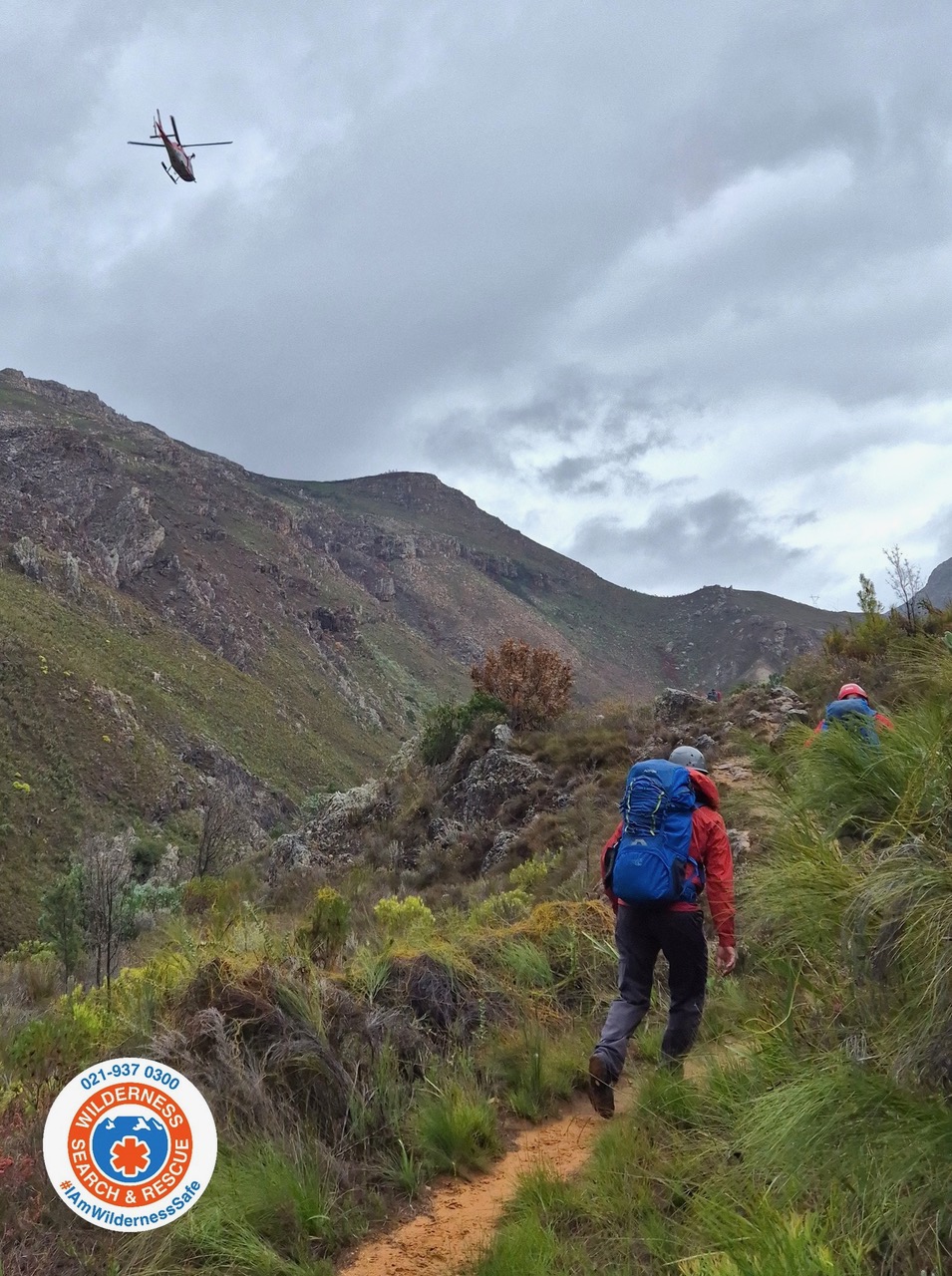
By early Monday morning, there was a shift. As water levels dropped slightly, rescuers were able to get a line across the river. Using it, they sent over warm clothing, hot drinks, food and a two-way radio, allowing for direct communication.
“That early morning breakthrough, getting vital supplies and communication across the river, was a turning point,” said Wilderness Search and Rescue spokesperson David Nel.
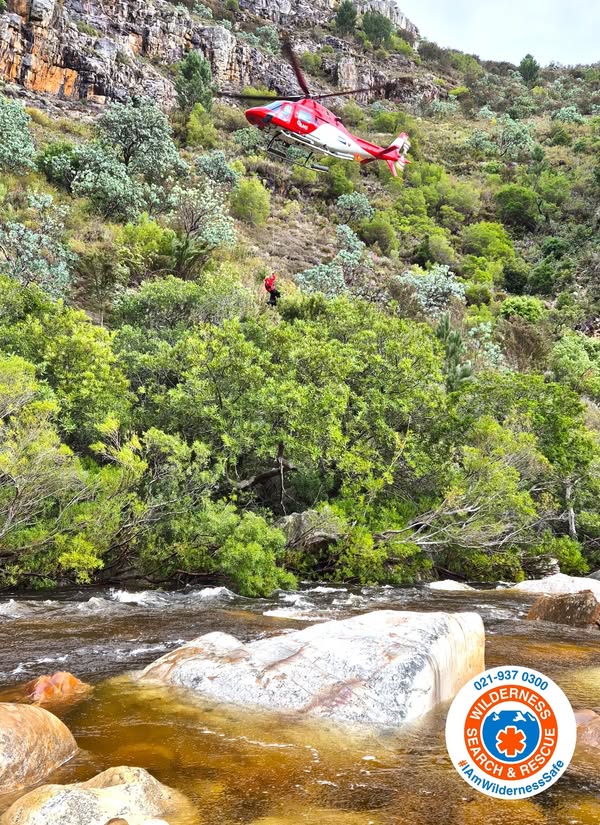
With conditions improving and additional teams on site, a rescue helicopter was brought in to complete the operation. A rescuer was lowered across, secured the student, and he was airlifted to safety before being transported to hospital for assessment.
“It stabilised a rapidly evolving situation and gave the patient renewed reassurance that help was not only close, but actively closing in.”
He added that the overnight effort reflected the kind of discipline and patience required in high-risk rescues.
“Remaining on scene through a cold, uncertain night requires real composure. The team held position, monitored the river, and made sure the patient was never alone in that space of uncertainty.”
Following medical checks, the student has since been discharged and is now recovering at home with his family.
 by
by 