


Boys need safe spaces, strong supportive systems, and to know that their feelings – all of them – are valid. The Character Company is encouraging parents, teachers, and all of us to be mindful of the language we use when we talk to boys to help nurture healthier and more emotionally resilient men for future generations.
South Africa (06 November 2025) – Boys and young men need love, support and safe spaces too. Across South African cultures, boys are still being taught that the right way to be a boy is to suppress emotions like sadness and fear, mask their pain and grapple with life’s challenges all by themselves.
More often than not, this outdated view on masculinity only hurts boys and those around them – a sentiment shared by Jaco van Schalkwyk, Founder of The Character Company, which is a non-profit organisation working with boys with absent fathers.
“The expectations of boys to ‘toughen up’, even when they are very small, take a heavy toll on boys and men. Suppressing normal emotions can ignite lifetime battles with mental health issues. It also causes the stunting of emotional intelligence that puts males at a lifelong disadvantage, especially in a world that is placing more and more value on emotional and social intelligence.”
While the masculine ‘toughen up’ imperative can devastate individuals (such as causing emotional distress that can lead to long-term mental health disorders), there are implications for society too, such as the prevalence of Gender-based violence (GBV), and the high rates of crime and substance abuse amongst men.
Changing the boy code
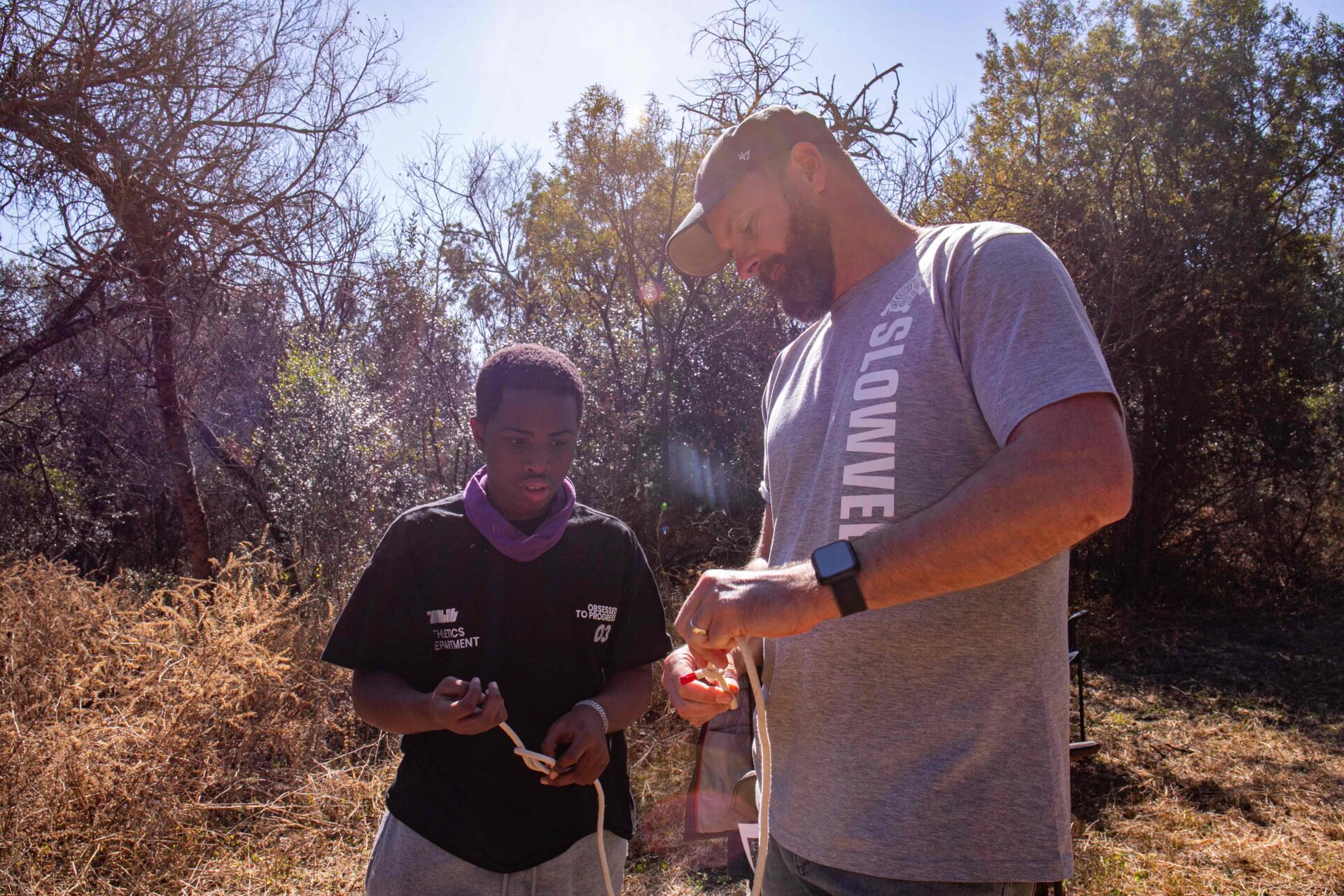
Over the past 13 years, The Character Company has paired hundreds of ‘fatherless’ South African boys with volunteers (social fathers) to provide them with committed, positive male role models.
Through the programme, they are rewriting the masculinity code by providing values, mentorship and safe spaces for boys. Weekly mentorship sessions, as well as frequent nature activities and yearly camps, help boys express, reflect, and cope in healthier ways.
“The legacy of traditional masculinity leaves us with a long-standing problem where there is a basic lack of capability to identify and deal with our emotions as boys and men. So many boys don’t have the words to express challenging emotions because there’s a lack of emotional literacy being passed down from men to boys over the generations,” Jaco says.
Jaco adds that without words and without safe spaces, he is witnessing greater numbers of boys becoming socially withdrawn and isolated, disassociated from their personal relationships and instead more vulnerable to developing parasocial relationships with manosphere influencers.
“When it comes to real, durable strength, boys need to learn from a young age that the strength of our masculinity lies in our gentleness. It is what we use to harness our warrior spirit to be protectors and not abusers.”
What boys really need to hear
Parents, teachers, sports coaches and social fathers all need a new ‘boy script’. Here are some examples of the changes we need to make:
- Boys don’t cry – It’s okay to feel, and feeling hurt is normal
- Boys don’t get scared – Everyone feels scared sometimes, and it’s brave to talk about your feelings
- Men go it alone – Boys and men need good friends. We belong in a community. It’s normal to sometimes need help, and it is an act of courage and responsibility to find the help you need.
“We need to teach boys from a young age to surround themselves with positive male role models so that they have safe spaces to be vulnerable and accountable to their friends and mentors – a committed group that encourages and supports the best versions of themselves,” Jaco adds.
- Men don’t talk about their feelings – Everyone needs to understand their emotions and learn how to regulate their emotions. You don’t have proper control over your emotions if you pretend they don’t exist.
“There is a direct link between boys not being taught how to regulate their emotions and gender-based violence as a result of men not showing up to teach boys this crucial skill set,” says Jaco.
Raising boys to be emotionally literate, creating safe spaces for boys and changing our language when we talk to boys are essential to supporting their mental health.
Jaco sums it up, saying:
“We also need to see more South African men actually stepping up for our boys in crisis. It’s important to get involved, to speak out against the societal attitudes that are hurting boys, to actively create the safe spaces boys need and be positive role models for them.”

Sources: Supplied
Don’t ever miss the Good Things. Download the Good Things Guy App now on Apple or Google.
Do you have something to add to this story? Please share it in the comments or follow GoodThingsGuy on Facebook & Twitter to keep up to date with good news as it happens, or share your good news with us by clicking here or click the link below to listen to the Good Things Guy Podcast with Brent Lindeque – South Africa’s very own Good Things Guy. He’s on a mission to change what the world pays attention to, and he truly believes there’s good news around us. In the Good Things Guy podcast, you’ll meet these everyday heroes & hear their incredible stories:
Or watch an episode of Good Things TV below, a show created to offer South Africans balance in a world with what feels like constant bad news. We’re here to remind you that there are still so many good things happening in South Africa & we’ll leave you feeling a little more proudly South African.
 by
by 